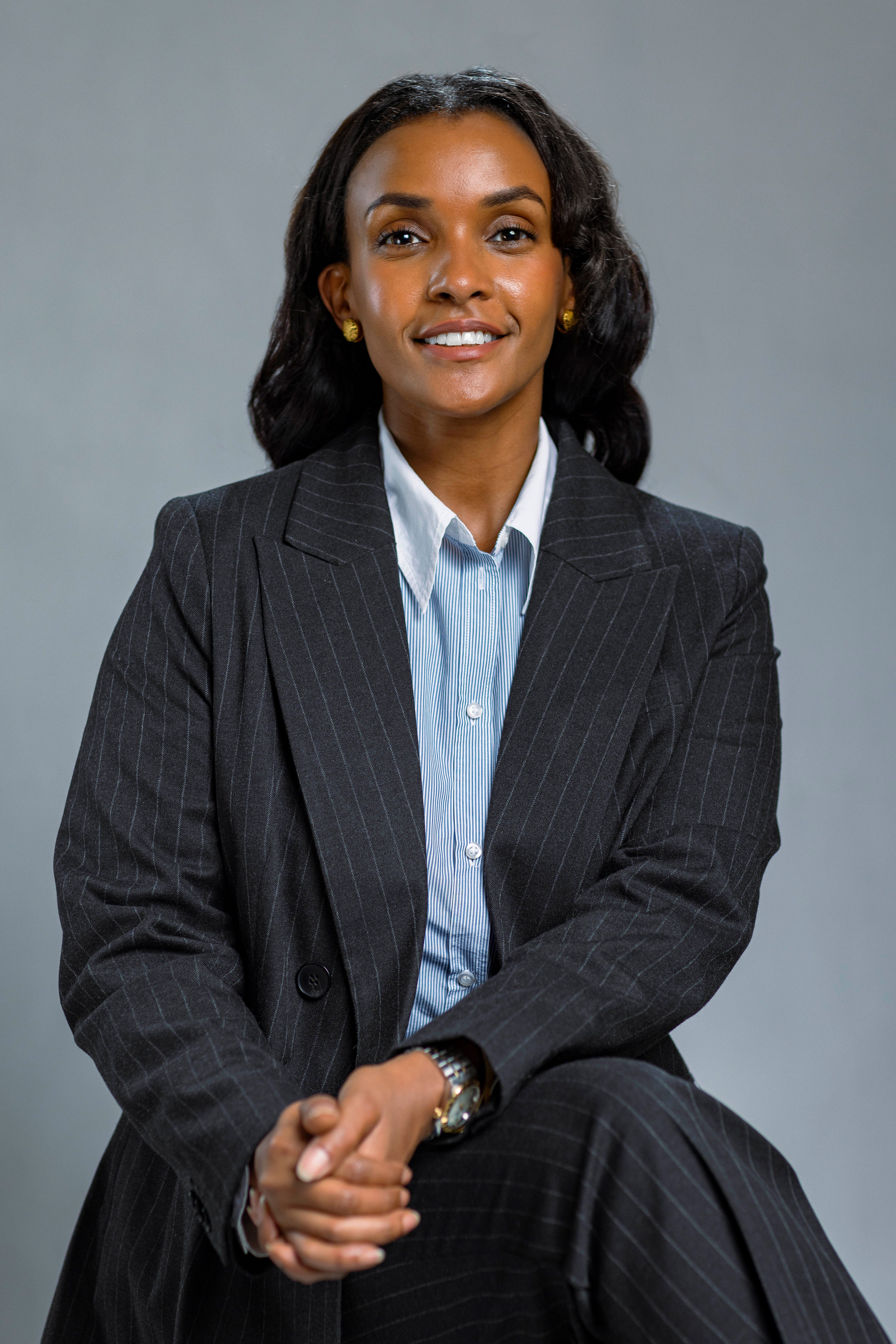
Often, when African stories of cultural duality are told, they are framed within the context of the diaspora stories of navigating Western modernity while holding onto African traditions. But this is not one of those stories. This is not about a woman caught between Africa and the West. This is a story of an African woman navigating two Africas. This is my story, a full-time performance of identity, lived between two worlds, constantly shifting between versions of myself, depending on where I am and what is expected of me.
One version of me wears suits, navigating the boardrooms of Addis Ababa, speaking the language of policy, reform, and development where progress is measured in accolades and the degrees under your belt.
The other is draped in the diraac of Somali tradition, working in the Somali Region, navigating centuries-old conservative and religious norms, occupying spaces where the culture often believes women do not belong. And in living this truth, I have come to realize that my story is not mine alone.
So, I am writing this for the African woman who was born, raised, and educated on her own continent, yet is still forced to navigate multiple Africas within herself.
I am writing this for the woman who is applauded when she speaks in conference halls in her capital city, yet is shamed for being too loud, too bold, or too “Westernized” when she returns to the regions and rural spaces that also call her home.
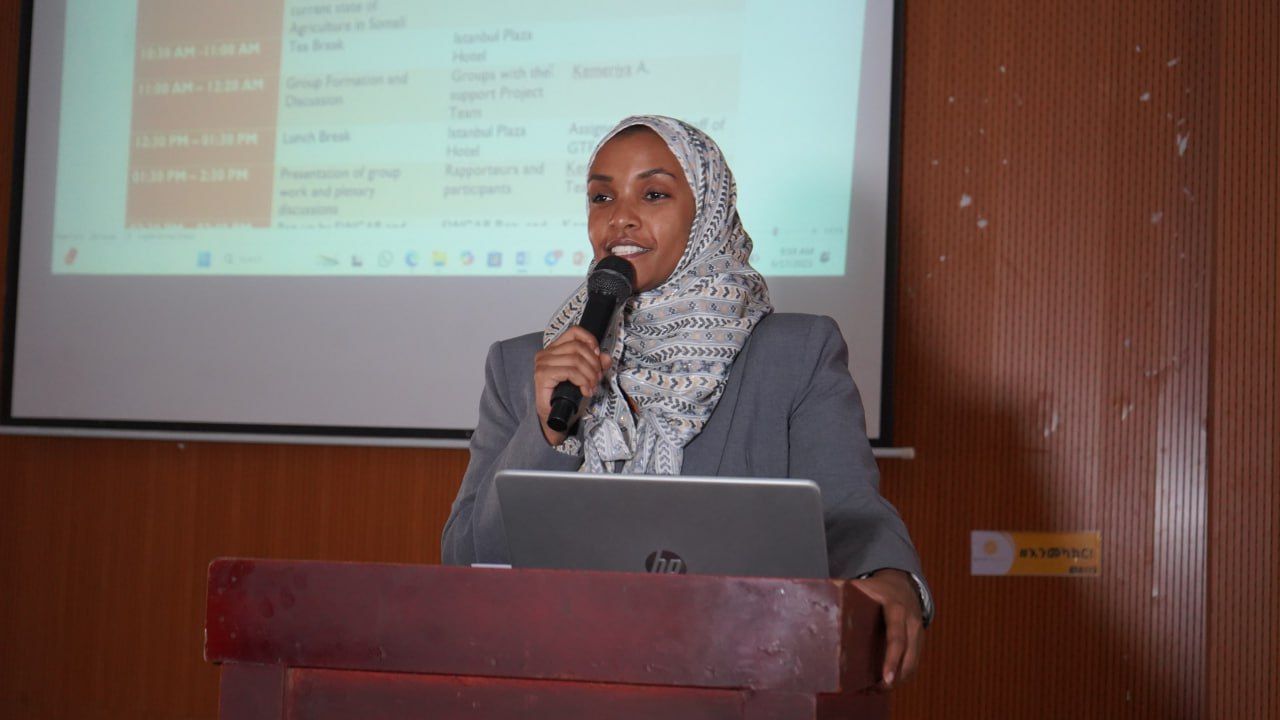
The version of me who wears suits, navigating the boardrooms of Addis Ababa. Source: The author
I am writing this for the woman who has had to fight emotionally and mentally to earn the right to exist in between, to justify her voice, and to build the hybrid identity she now carries with pride, resilience, and quiet defiance.
The Cambridge dictionary defines duality as the state of combining two different things. As a Somali girl, born to a father who is half Ethiopian and half Somali and a mother who is half Yemeni and half Somali, but born and raised in the capital cities of Ethiopia, I grew up with my family telling me I was too Ethiopian and my friends telling me I was too Somali. It was something I struggled with for the longest time, as I felt like maybe I wasn’t doing a good job of being both. Being accepted by the Somali side was always the hardest.
People usually think I am an Ethiopian who learned to speak Somali. Especially when I refer to myself as an Ethiopian Somali. A term, although just like a Kenyan Somali, or an American Somali, or a British Somali, exists, but most Somalis especially in the diaspora take offense too because of Ethiopia's history in the Somalia war. So, as I grew up, I made it my mission in life to perfect both languages, both cultures, both ways of life and traditions. I embraced being the beauty of what diversity means as a child born to the horn of Africa.
Identity formation in a globalized world is a multifaceted process shaped by influences such as cultural mixing, social relationships, economic contexts, and rapid technological change. As societies become increasingly interconnected, people move between different cultural spheres and hold overlapping identities. In many African contexts, identity formation is shaped by the enduring effects of colonialism, the richness of ethnic diversity, and the pressures of globalization. It is also in the intricate nature of post-colonial identity politics, where national identity exists alongside strong ethnic loyalties and growing transnational ties.
Findings from Afro-barometer surveys across the continent further illustrate this complexity, showing that people often hold multiple layers of identity at once, expressing strong connections to their ethnic group, their nation, and even a broader pan-African identity. This fluid movement contributes to the development of hybrid identities, where individuals combine aspects of various cultural traditions and experiences into a single sense of self.
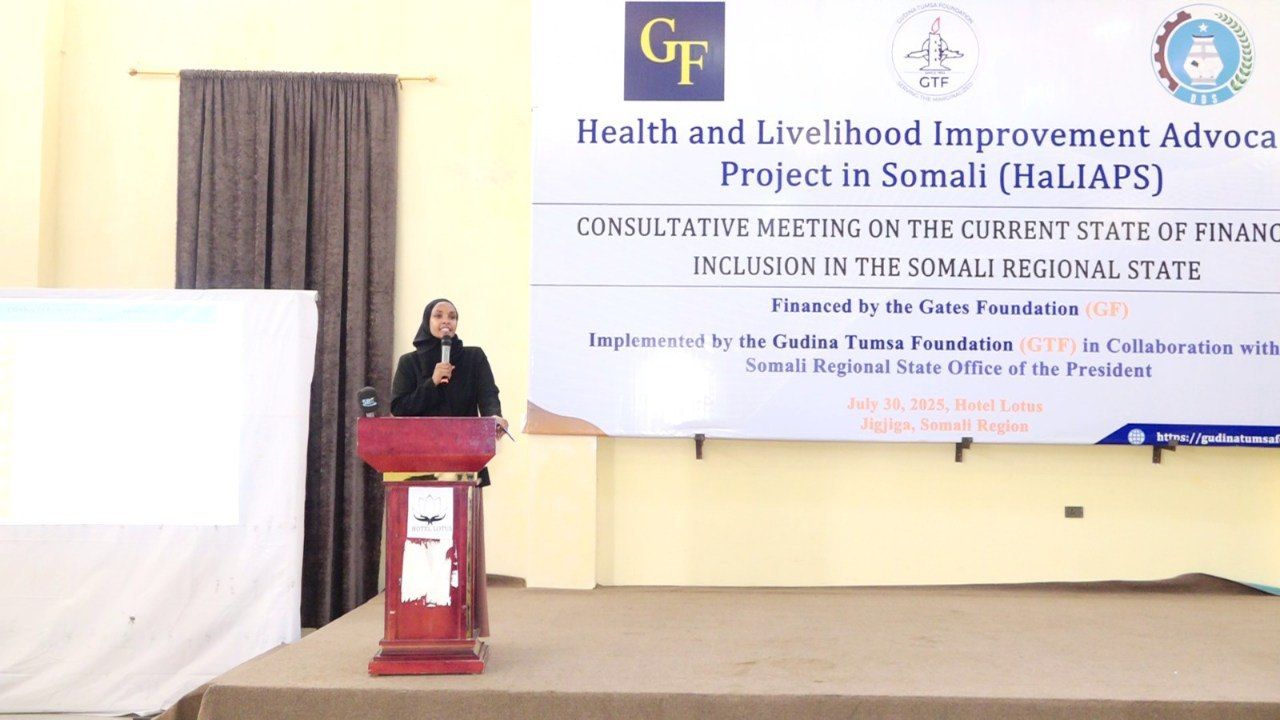
A woman in action. Source: The author
So that is what I became: a woman carrying a hybrid identity, holding my Ethiopianness and my Somaliness together as seamlessly as I can.
Born and raised in Dire Dawa and Addis Ababa, my work has always been rooted in service to my country. As the daughter of a long line of civil servants, I naturally found my own path in service, studying international relations and political science, working in international organizations, and contributing to policies that shape my country and continent. In Addis Ababa, I assimilate easily. In my suits and tailored trousers, no one questions where I belong until I speak Somali, or wear my diraac. Then come the questions:
“Oh, I didn’t know you were Somali?”
“Why are you dressed like a Somali?”
“Why are you so loud when you speak to your Somali friends and family?”
I often laugh, understanding where the assumptions come from. But I also take those moments as opportunities to remind people that Somalis, like all people, exist in many forms, appearances, and expressions. But those moments also shaped the choices I would go on to make. In the course of my career, I shifted and dedicated my energy, skills, and talent to my region, the Somali Region of Ethiopia. A region where religion and cultural norms shape every interaction. A region where I often sit in rooms full of men who would rather direct their questions to my male colleagues, even when I am the one leading the project. I remember once facilitating a workshop when a man approached me during a break and asked:
“Don’t you have male colleagues in the audience?”
When I said yes, he replied:
“They should be on the stage giving the training, and you should be seated among the women.”
In the Somali Region, I adapt.
I wear my diraac and abayas. I soften my tone. I become deeply aware of how women like me are perceived, and I navigate that perception intentionally. At times, I find myself carefully framing ideas in ways that make them more acceptable sometimes, even allowing them to be voiced through male colleagues to ensure they are heard. I measure my words. I am mindful of my gestures. I carry not only myself, but my family name, my upbringing, and my reputation into every room.
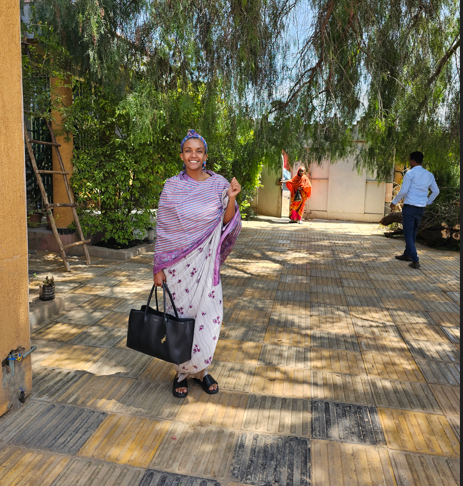
Me at home in Jigjiga. Somali Region, Ethiopia. Source: The author
In these spaces, my degrees and professional achievements do not define me. Instead, it is whose daughter I am, the family I come from, and whether I am married, that shape how I am received.
The Somali Region of Ethiopia much like many societies globally operates within a deeply rooted patriarchal political structure, where traditional gender expectations and clan dynamics work together to limit women’s visibility, participation, and leadership in political arenas. Women who step into public or political roles often encounter resistance or backlash, and those pursuing political office are frequently accused by both men and women of embracing or advancing values perceived as foreign (gaalnimo) and incompatible with Somali cultural norms.
But I am trying slowly and deliberately to shift that narrative. To exist in these spaces as a woman who contributes meaningfully and confidently, without abandoning the traditions that shaped her. It is a delicate balance that requires constant negotiation between who I am and who I am expected to be.
It is tiring, yes. Switching between languages, expectations, and versions of myself is not easy. But it is also a practice. One I have chosen. One I return to again and again, because it allows me to remain rooted while still moving forward. This is what intra-African modernity means to me: a reality where Africans who are born and raised on this continent shape their own paths to modern life. It is about integrating cultural values, traditions, and indigenous knowledge with contemporary progress on our own terms.
My life is not a contradiction.
It is a design.
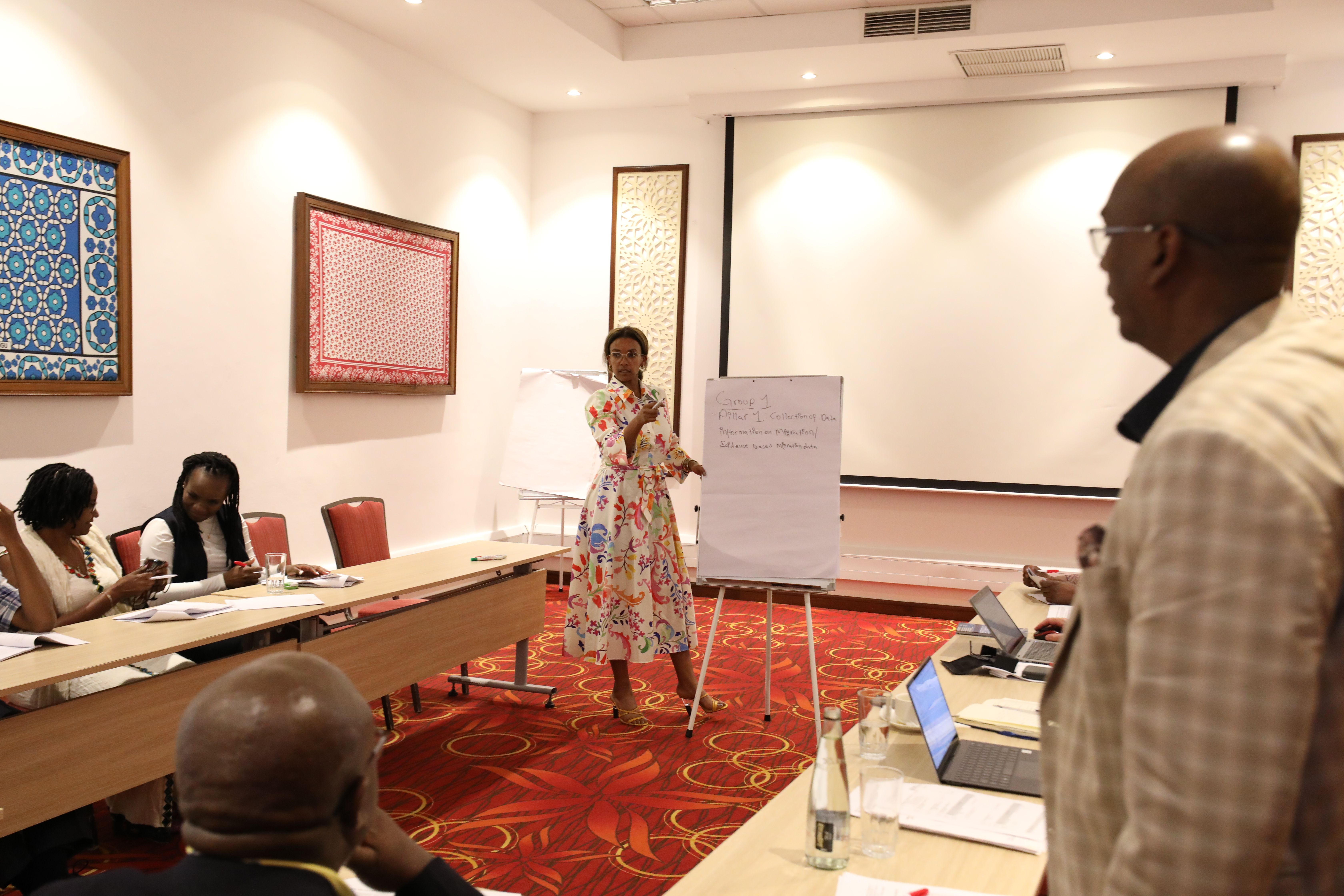
Switching between languages, expectations, and versions of myself is not easy. Source: The author
Some days, I feel like I am carving out a path that never existed for women like me, women who can draft policy briefs in English yet navigate clan etiquette in Somali; women who can hold a microphone in front of a room full of officials but lower their voices at community gatherings so they are not dismissed as too bold, too modern, too outspoken.
I want to show that African women like us carry identities in layers.
That we can honor where we come from while expanding its boundaries.
That we can show respect without diminishing ourselves.
That we can embody our traditions without losing our voices.
And maybe, if I continue to walk this path, the young girls watching the ones who hold their dreams softly, unsure of where they fit between these worlds, will one day step into these rooms without hesitation. They won’t feel the need to justify why they belong, to dim their light to fit a familiar mold, or to translate their worth between cultures just to be understood.
I am not just trying to redefine this balance for myself. I am choosing it repeatedly, consciously, and with purpose. And in doing so, I am widening the doorway for every Somali woman navigating the beautiful complexity of African identity and modernity, who will walk this road after me.