When my grandmother died, all the surviving little old ladies gathered around her body all day and all night as was the old Buganda culture. I watched as they mourned in rituals that have long been discarded in favour of Christian ceremonies. In one ritual, a strip of wet banana trunk would be given to each mourner to ‘wash’ my grandmother’s face. You must not weep while you care for her one last time or else, “death will follow you from this house”, they cautioned. Together we grappled with the complex emotion of grief and when I left that room, it was replaced with quiet acceptance.
This intimacy was foreign to me because in Uganda, as young as five years old, children are sent to boarding schools where the lifelong separation from one’s culture starts. Adults are incentivised to work in cities and return to their ancestral homes perhaps once a year. Outside the traditional ways of belonging, new identities have been adopted; modern political ideologies, religions and other options made available by the forces of globalization.
At the most primal level, culture represents humanity's accumulated wisdom for survival; a set of practices, beliefs, and institutions refined over generations to enable people to thrive within their environment and coexist as a community. In Buganda for example, it was customary to prepare extra fingers of bananas with each family meal, one was honoured if a passer-by accepted their invite to share a meal. It was a clever way that the community accommodated special individuals or those down on their luck. Practices such as these are only a small part of a culture that has been eroded over time, while the suffering visible on our city streets remains the elephant in the room, and an uncomfortable consequence of modernization that many have learned to ignore.
While seemingly not absolute, cultural erasure is such that ancient custom and values are mostly relegated to a performance rather than the guiding principles for a fulfilling life. Since no custom is redundant and no value misguided, the gaps are eminent where custom once served a purpose; in grounding the person in what is important and guiding the community towards continuity and self-preservation.
For example, a young bride in Uganda may wear the traditional "Gomesi" on her wedding day while disregarding the taboo against publicly displaying her groom's gifts. Yet such customs were not merely arbitrary restrictions; they functioned as social safeguards, discouraging ostentatious displays of wealth, protecting important relationships from envy and resentment, and shifting the focus of marriage away from spectacle and toward the union itself.
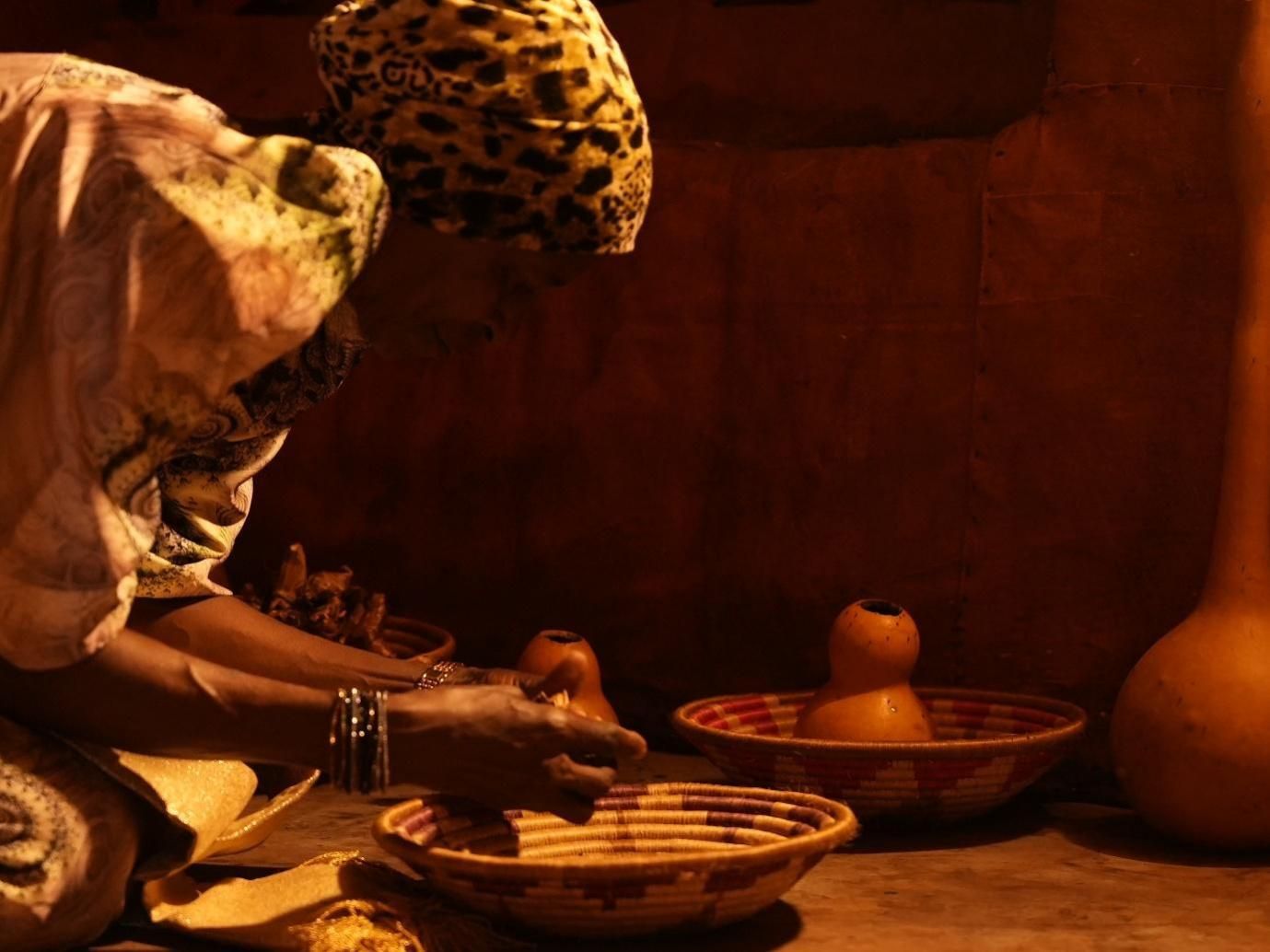
A woman at a cultural tourism site performs a traditional welcoming ritual once practiced in Ugandan homes. Photo by Abul Ajak
Beyond decolonial discourse, the lived experience fuels self-erasure
Cultural erasure happens when an external, more dominant force deliberately suppresses the traditions, practices and artifacts of a people, disrupting the natural development of their culture, as seen in colonized societies, war-torn regions, and communities subjected to forced assimilation.
In Uganda, like many communities across Africa, withdrawal of the colonial systems did not reverse the effects on our cultures. It left behind belief systems that fuel contemporary attitudes that these traditional ways of doing things are a thing of the past with no place in modernity.
Living within my community, I have observed more subtle and practical reasons why individuals reject traditional ways of being that have been passed down through generations, reasons often overlooked in decolonial discourse. These lived experiences within households and individual lives help explain why people act against the natural tendency to preserve the cultural traits that form part of their identity (Smith, 1987, p. 43).
In a burial practice of ritual care, my grandmother’s body was wrapped in four sheets of barkcloth before she was placed in a wooden casket. The community has largely moved away from this ritual due to association of barkcloth with witchcraft and evil, to instead wrap the body in more socially acceptable white polyester bedsheets.
Barkcloth is made in a prehistoric technique in which the Mutuba tree (Ficus natalensis) is stripped of its bark, which is then pounded with a wooden mallet until it stretches into a large sheet. The people of Buganda invented the craft in the 13th century, and for generations it was one of the strongest markers of our identity and a vessel for continuity.
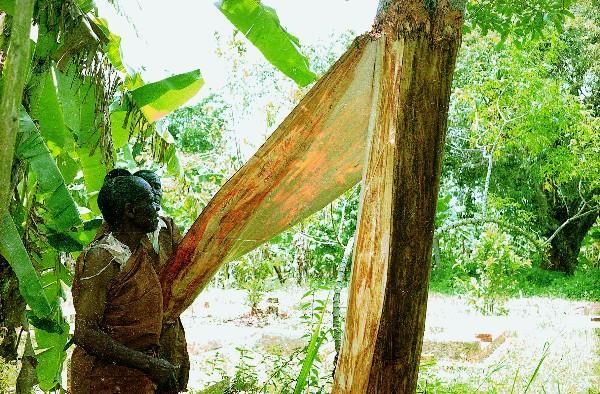
Harvesting tree bark for the making of barkcloth. Source: UNESCO.org
Barkcloth was dress for kings and common folk alike; women wrapped it just above their breasts, fastening it around the waist with a sash, and the men made a knot on one shoulder to keep it in place. It would be wrapped lovingly around the deceased to preserve and give their remains dignity. Strings of barkcloth were used to close Caesarean section wounds in the first ever recorded performances of the procedure, and softer, more worn barkcloth would be used as bedding.
During a conversation at my grandmother's funeral, I explored the experiences and attitudes of the older generation that influenced their ability and willingness to pass on an appreciation for barkcloth to their children.
"You know, long ago, kings were buried in 800 sheets of barkcloth so they would not rot," one old lady said to me. "The barkcloth would dehydrate the body as it decomposed, and the person would dry out beautifully instead." I pulled the material onto my lap, pushing aside my own conditioned fear of barkcloth. The piece I held had the rich colour of rusted iron and had been carefully stitched in places. Otherwise, it remained one large sheet, and it was hard to believe it had come from nothing more than a thin strip of tree bark.

The colour and texture of barkcloth. Photo by Abul Ajak
The room of mourners turned to our conversation. One of the ladies declared that all her children already know not to allow a single barkcloth in her casket. “They must bring an iron casket from Germany and wrap me up in silk bedsheets. I must be sent off like a rich man.” I provoked her, “But you will decompose like a rat in that metal case. Don’t you want to return to the earth beautifully in barkcloth? You’ve said yourself the body will simply dry out!”
“I will already be gone. I don’t care.” She nearly screamed in mirth. “Tombulila enaku y’embugo.” Which translates loosely to “Don’t involve me with the abject poverty of barkcloth.”
The other ladies started to laugh and mock my interest in the material. They told nostalgic stories of nights spent in barkcloth as bedding when they were children, and yet they thought it funny that I saw any beauty in it.
As I listened to their stories, I finally understood that barkcloth had come to embody poverty in their minds, its cultural significance obscured by the social and economic realities produced by colonial rule. Through the complex machinery of colonialism, many traditional practices had come to be associated with backwardness, leaving subsequent generations eager to distance themselves from them in pursuit of dignity, opportunity, and modernity.
Understanding this history enriches decolonial discourse by incorporating the lived experiences of those who inherited colonial structures and revealing how cultural erasure is often mediated through everyday choices, memories, and aspirations.
The colonial roots of self-erasure
In late nineteenth-century Tanganyika, the Germans imposed a head tax of three rupees on every adult male, a measure designed to push people out of a subsistence economy and into the colonial cash economy. The British later inherited and expanded this system of taxation and labour control, introducing hut and poll taxes throughout British East Africa, including Buganda.
Taxation soon reached extraordinary levels. As Mahmood Mamdani notes, in Fouta (Guinea), colonial authorities imposed a "death levy" of two oxen or 10,000 francs, which heirs were required to pay to secure the right of succession; failure to do so resulted in the confiscation of family land (Mamdani, 1996, p. 57). In Tanganyika, tax defaulters faced equally coercive measures, including being compelled to serve as porters for colonial safaris.
My grandmother used to tell stories of the days when tax collectors descended upon villages in Buganda, sending residents fleeing into bushes. Some young men would dress up as girls to escape notice (this rarely, if ever, worked as many cross-dressed young men were seen chained up and dragged off into overcrowded prisons).
Coercively, self-preservation was given a new face when every self-respecting adult male worked in the cotton fields to earn the English man's coins that he would then offer back to him as tax to stay out of prison. The more coins one had the worthier of human dignity he and his family were, and they were marked by their possession of the white man's clothes and shoes, essentially effecting dystopian attitudes of bourgeoisie.
Mamdani describes decentralized despotism, a form of indirect rule through which colonial authorities exercised economic coercion by governing through traditional chiefs, as a system which often enabled widespread abuse and exploitation. Taxation served not only the colonial state's need for labour and revenue but also the personal enrichment of compliant chiefs. As Mamdani observes, in some cases "the point was to ensure that the chief in question be able to purchase a house, an American car and finance a pilgrimage to Mecca".
Abandoned were the pre-colonial customs, where the wealthiest were skilled artisans in ceramics, barkcloth craftsmen, people who excelled in some way in curving nature to their will, and where even the ordinary person found wealth in a home built with one's effort, and a Mutuba tree in your banana plantation meant human dignity.
While for me a lot of the abandoned traditions hold intrigue, for some elders it holds connotations of lack and consequently, of shame. This is the tragedy of our communities and the fuel behind contemporary beliefs that our cultures have no place in the modern world.
Cultural evolution versus Erasure
While it is true that cultures must evolve for communities to fast track innovation and problem solving for the modern world by learning from other communities, it is important to make clear the difference between evolution and erasure. What we are dealing with is not the natural evolution of our cultures, rather a culture erasure that destroys the identity and social cohesion of communities, introducing vices such as internalized helplessness and a loss of self-worth.
Natural adaptations can take the form of knowledge, techniques, institutions, and tools. For cultural evolution to be both natural and beneficial, it should follow a process similar to biological evolution. Just as biological evolution occurs through modifications to existing genetic material, with useful adaptations being retained over time, cultural evolution should build upon inherited foundations rather than discard them altogether.
New ideas, technologies, and practices should be applied to existing cultural processes, refining and expanding them while remaining grounded in values and knowledge that have been tested across generations. In this way, innovation becomes an extension of tradition rather than a replacement for it.
Very prominent among the vices mentioned above is a cycle of dependence that can be best demonstrated by the case of vernacular architecture.
In Tribe, Piers Gibbon describes the Matses people of the Rio Javari as a traditionally nomadic community that was pressured into permanent village settlements by missionary organizations, which made access to healthcare and education contingent upon abandoning their mobile way of life. While this arrangement enabled greater administrative control over the population, it also generated new challenges for which the Matses possessed no inherited knowledge or cultural practices. Concentrated settlement led to sanitation and sewage problems previously unknown in their nomadic existence, creating conditions for the spread of disease. As a result, the community became increasingly dependent on these very missionary institutions, particularly for medical care. (Gibbon, 2010, p.g 66)
In Uganda, architectural traditions evolved in close dialogue with the local environment. The technique of shaping grass into elegant pavilions, often finished with mud, provided comfortable and durable dwellings for centuries. These structures were remarkably well suited to the climate, remaining cool during periods of intense heat and warm during the rainy season. Similar wisdom is evident elsewhere on the continent, particularly in the thermally efficient clay and mud architecture of West Africa, which demonstrates a sophisticated understanding of local materials and environmental conditions.
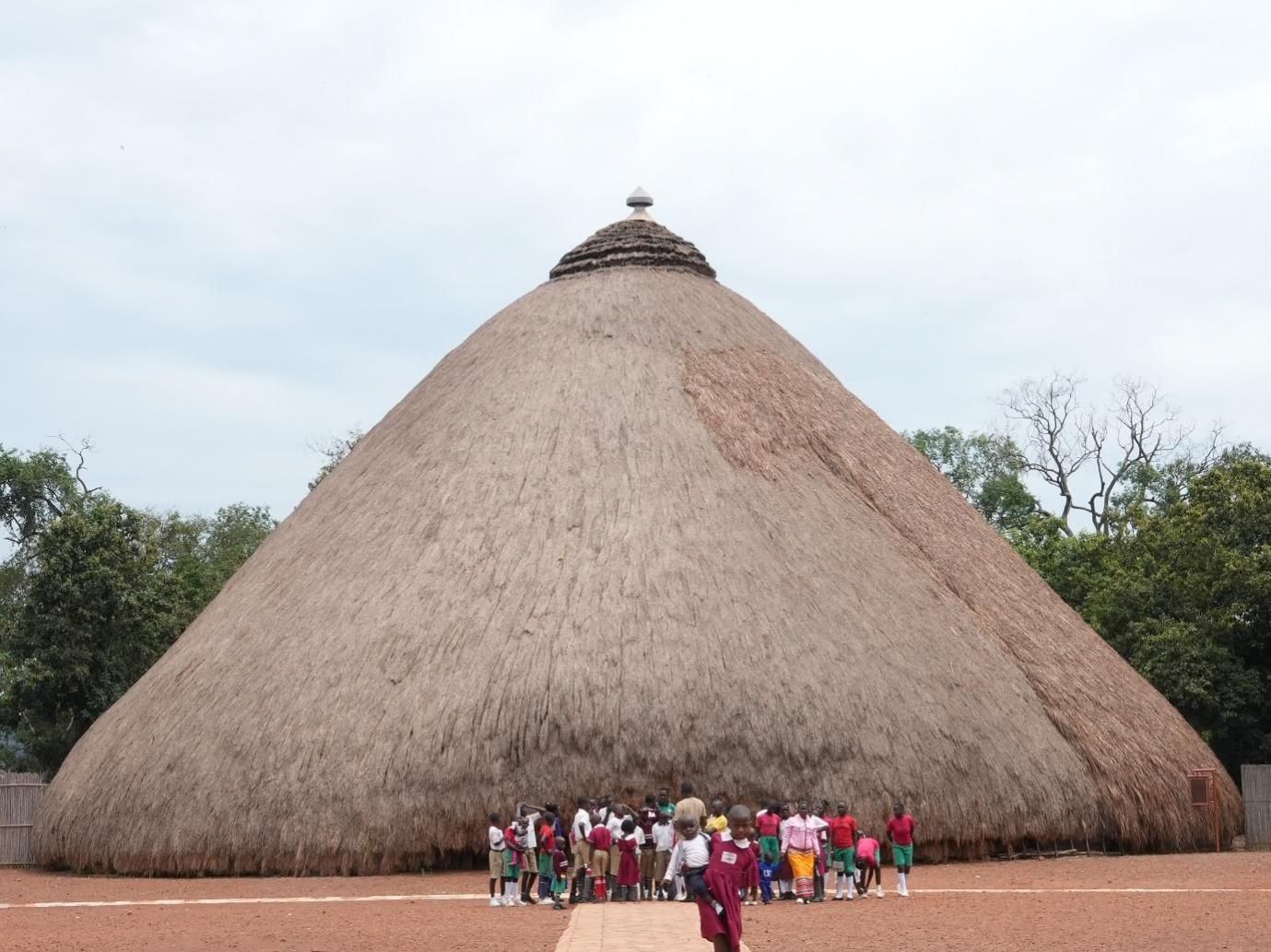
A king's house showing the architectural legacy. Photo by Abul Ajak
Having largely abandoned these architectural legacies, many African societies have become increasingly dependent on imported building technologies and infrastructure, including artificial air-conditioning and energy-intensive construction methods.
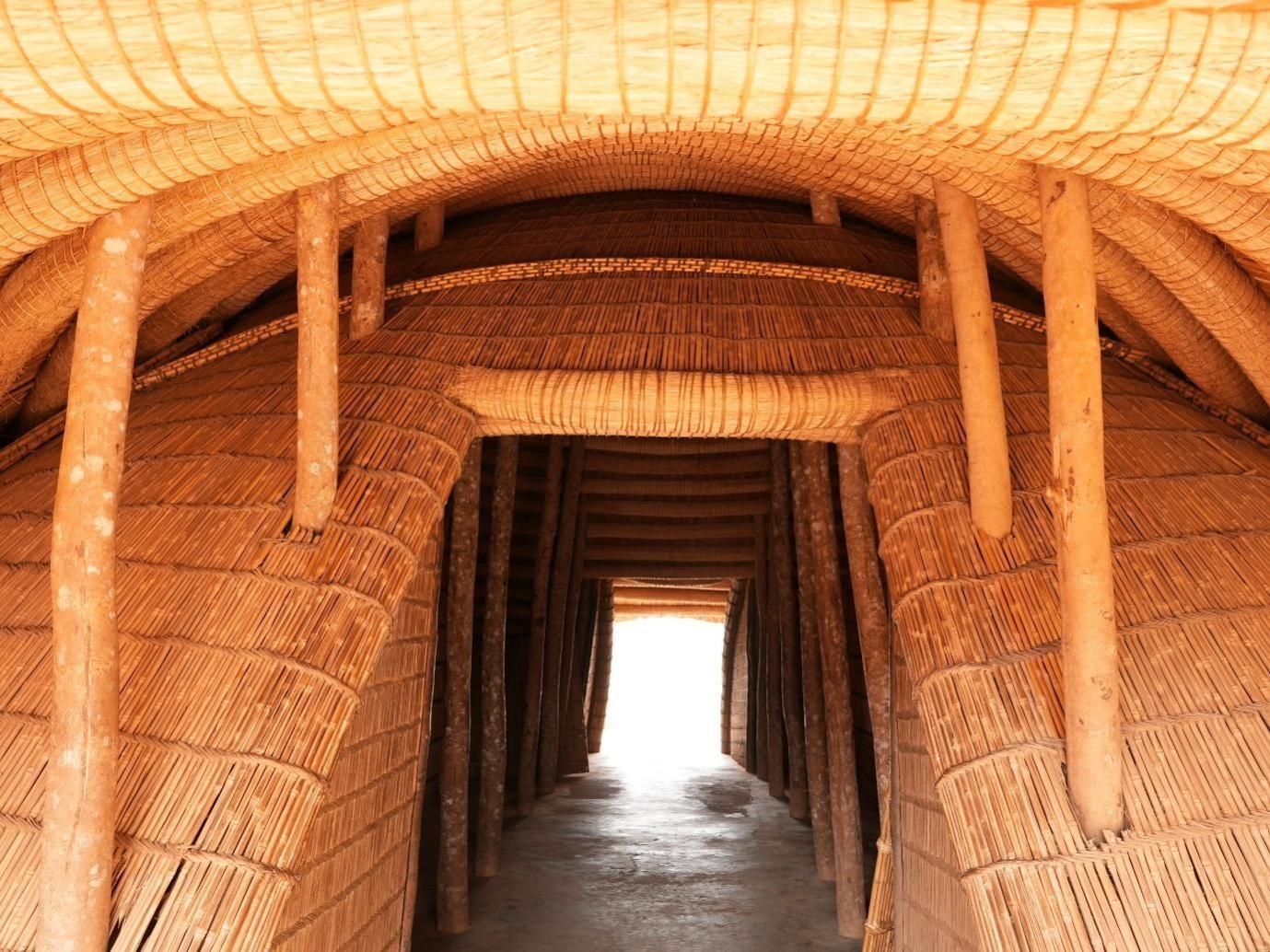
The detail of reed designs in a traditional house in Buganda. Photo by Abul Ajak
A return to sovereignty
A more beneficial way to participate in globalization is not through the wholesale abandonment of our cultures, but through the adoption of new knowledge and technologies that build upon existing cultural foundations. By integrating innovation with generations of accumulated environmental knowledge, social wisdom, and sustainable design practices, African societies can develop solutions that are both modern and deeply suited to their own realities. Such an approach allows cultures to evolve naturally, adapting to contemporary challenges without severing themselves from the lessons of the past.
While the trauma of colonization remains a central cause of cultural erasure across the continent, it is equally important to examine the contemporary beliefs and habits that continue to perpetuate that erasure. The recovery of cultural confidence requires more than acknowledging historical injustices; it demands a conscious effort to question assumptions that dismiss indigenous knowledge as inferior or obsolete.
Ultimately, the restoration of cultural memory is not an act of nostalgia but a foundation for renewal. To take ownership of our circumstances is profoundly empowering, for it shifts us from the role of victims of history to active participants in shaping the future. Only through such self-examination and cultural reclamation can meaningful healing begin for the land, and for its communities.