Since the outbreak of the war on 15 April 2023, tekiyas (community kitchens), emergency response rooms, community-based support networks, the Dara mechanism, and other initiatives have become essential means of survival across large parts of Sudan, particularly in the Darfur and Kordofan regions. As markets and public services collapsed and millions were displaced, access to a meal, a dose of medicine, a drop of water, or a place to stay increasingly depended on people's ability to organise themselves and support one another.
Yet this experience cannot be reduced to a story of communities standing together in the face of war. Alongside initiatives that have saved lives, more complex questions have emerged: Who receives assistance, and who is left out? Who decides how resources are distributed? What happens when a small volunteer initiative grows into an organisation managing donations and resources needed by hundreds of people? And who bears the daily burden of keeping it running?
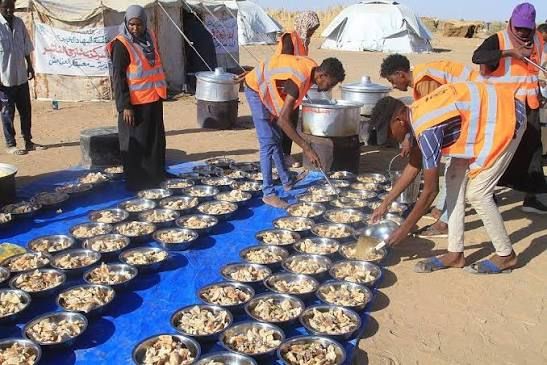
The takiyya serves as a lifeline for war-affected communities, providing food to those most in need. Source: AFP
The Tekiya: When food becomes a matter of justice
Tekiyas and communal kitchens are among the most prominent forms of grassroots response to the war. Their role has expanded as markets have been disrupted, food prices have soared, millions of families have been displaced, and many people have lost their sources of income. Community kitchens and tekiyas are no longer simply initiatives providing an occasional meal. In areas severely affected by the war, such as El Fasher, Khartoum, El Obeid, and Nyala, they have become essential food sources, spaces where volunteers and beneficiaries come together, and platforms through which assistance is coordinated and priorities are established.
In practice, however, these efforts draw on a much longer history of community cooperation in Sudan, including nafeer (collective voluntary work), faza'a (mutual aid in times of need), solidarity among neighbours, as well as volunteer initiatives and community associations. The war has repurposed these established practices under very different circumstances. Providing assistance, in whatever form, is no longer limited to social occasions or short-term emergencies. For millions of people across Darfur and Kordofan, it has become part of the everyday struggle to sustain life.
In an interview conducted by the author in September 2026, researcher and humanitarian worker Abdullah Mohamed Ahmed Quraidah links these practices to a collective social memory built through various forms of community cooperation, including nafeer, tekiyas, cooperative societies, and women's associations. He argues that the war has revitalised these experiences as the capacity of formal institutions to meet basic needs has declined.
Reports on communal kitchens in Khartoum illustrate how their role has extended beyond providing food to include social support and the creation of spaces for communication and collective action, as well as, in some cases, educational and cooperative activities. At the same time, these reports document recurring challenges, including irregular funding, rising food costs, insecurity, and difficulties in maintaining a consistent supply of meals.
This is where the broader significance of the tekiya becomes clear. It redistributes an essential resource, food, beyond the limits of purchasing power alone. But this does not mean that the distribution of assistance automatically becomes fair.
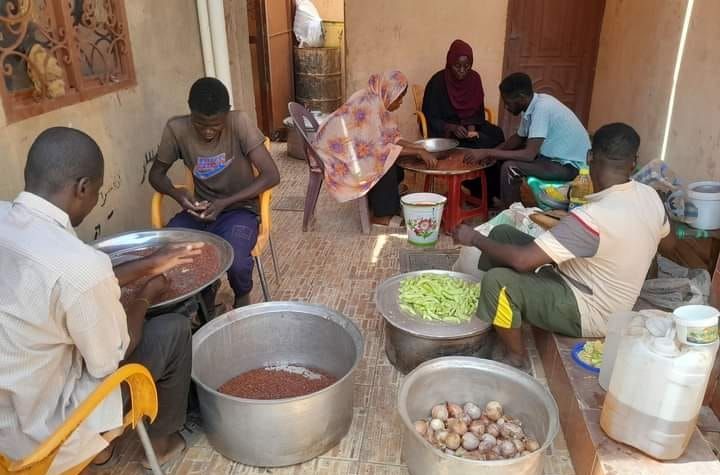
Volunteers working in a community kitchen in the Janoob Al-Hizam area, Khartoum. Source: Madameek
Across many initiatives, particularly in Darfur, where access for humanitarian assistance has become increasingly difficult, whether from UN agencies or international organisations, practical and ethical questions have emerged. When available resources fall short of people's needs, who gets a meal? How are priorities determined? Are those in greatest need given preference, or families known to volunteers, or simply those who are easiest to reach? And how can decisions be reviewed without putting beneficiaries or aid workers at risk?
These questions have already exposed instances of favouritism and discrimination within some tekiya initiatives. This highlights the need for clear rules adapted to the circumstances of each area, appropriate mechanisms for receiving complaints and correcting mistakes, stronger and more effective oversight of committees and initiatives, and transparency about available resources and their limitations.
In an environment characterised by insecurity and food shortages, justice does not mean that a tekiya must be able to meet everyone's needs. Rather, it means that its priorities are understandable and that decisions are made on fair, transparent, and accountable grounds. Otherwise, its operations risk becoming subject to suspicions of corruption and mismanagement.
Emergency Response Rooms: From local response to the challenges of coordination
Tekiyas did not operate in isolation from other forms of grassroots organisation. Emergency Response Rooms (ERRs) in conflict-affected areas across the country became an important part of the local response, drawing on neighbourhood networks and organisational experience accumulated before the war, including that of Resistance Committees, Change and Services Committees, and community-based initiatives. Their activities ranged from communal kitchens and healthcare assistance to water provision, evacuations, and coordinating aid according to local needs.
One of the main strengths of these initiatives lies in their direct knowledge of the neighbourhoods and communities they serve. They are closer to households and are sometimes better placed to identify needs that humanitarian organisations struggle to reach. However, the expansion of the response and the growing needs of the population created a demand for effective coordination among local initiatives, communication channels with Sudanese and international organisations, and mechanisms for managing funding and setting priorities.
Without these, organisational, financial, and ethical gaps were bound to emerge. As a result, coordination structures emerged at different levels, including the Local Coordination Councils, commonly known as the LCC, which describes itself as a mechanism for linking grassroots initiatives with humanitarian efforts, coordinating responses, and facilitating resource sharing. The council's stated principles emphasise participation, transparency, disclosure, accountability, and the fair distribution of resources. However, the existence of a coordination structure did not necessarily mean that all participants had an equal influence on its decisions.
Controversial discussions brought forward questions about the representation of states within coordination structures, how representatives speaking on behalf of Emergency Response Rooms are selected, and the extent to which the priorities of different regions are reflected in discussions about funding and needs assessments. These questions relate to the nature of community-led work as it moves from local initiatives to broader structures engaging with donors and humanitarian partners at regional and international levels.
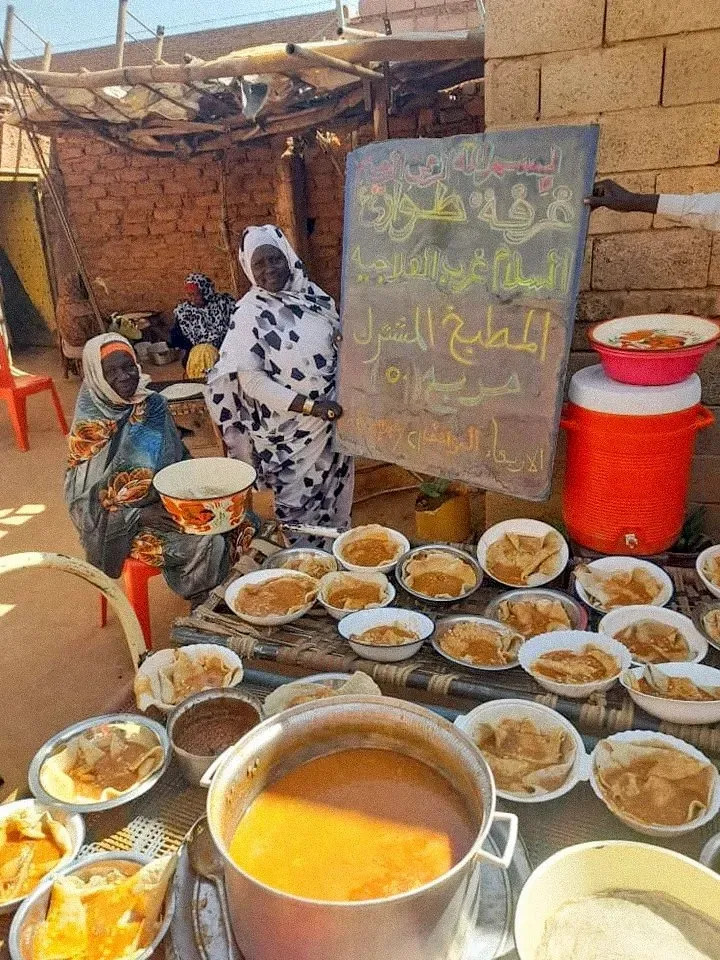
One of the many Emergency Response Rooms that helps those in need. Source: MutualAidSudan.org.
The disengagement between Emergency Response Rooms and coordination councils: What does the incident reveal?
Last May, an incident involving the disengagement of Emergency Response Rooms from state-level coordination councils came to the fore. It deserves closer examination, not as conclusive evidence of the failure of community solidarity, but as a starting point for understanding the tensions that can arise when multiple levels of coordination emerge and participants hold differing views on representation and resource management.
Indeed, this development emerged as a consequence of questions raised by everyday practice that had not been adequately addressed. Tensions intensified around the independence of local initiatives, the requirements of partnerships and funding, and mechanisms of accountability. Among the key questions were: Who has the mandate to speak on behalf of local initiatives? How are joint decisions made? What are the limits of a coordination council's authority over the initiatives it claims to represent or works with? And how should resources be distributed among areas that differ in population size, displacement levels, and the severity of their needs?
These questions are not merely administrative. Coordination decisions have directly affected the extent to which food, medicine, and funding reach communities affected by the war. Consequently, some participants felt that the priorities of their areas were inadequately represented and that decisions were being made without their meaningful participation. Gradually, confidence in coordination mechanisms declined, while accusations of corruption, favouritism, and mismanagement emerged, even as all parties agreed on the need to continue humanitarian assistance.
Who Gets Access to Assistance?
Family ties, neighbourhood relationships, and networks of trust have been among the most important resources on which Sudanese people have relied during periods of hardship throughout this war. Relatives have often taken in families displaced from conflict zones, family members living abroad have transferred money to help cover the costs of water, food, and medicine, and neighbours have provided water and shelter when public services became unavailable. Amid the collapse of public services and state institutions as a result of the war, these networks have made a decisive difference between having the means to survive and being left without options.
However, these networks have not been equally accessible to everyone. A family with relatives in a safe area or abroad may receive support unavailable to a household that has lost its resources, home, and social connections. Displaced people who know no one in the areas to which they have fled have also struggled to access information and services, even when humanitarian initiatives are operating nearby.
Three volunteers who had previously worked with Emergency Response Rooms and tekiyas in El Fasher told the author, while requesting anonymity, that they had concerns about access to certain assistance services in several parts of North Darfur, particularly in El Fasher. They said that access was sometimes influenced more by family ties, friendships, and personal connections than by objective assessments of need, regardless of kinship, ethnic, or regional affiliations.
Who Pays the Price of Solidarity?
The continued operation of tekiyas and grassroots initiatives cannot be understood without examining the work that makes them possible. Preparing food involves purchasing ingredients, transporting and storing them, cleaning utensils, lighting fires or securing fuel, cooking, and distributing meals. It also requires organising volunteers, monitoring needs, caring for children, and supporting families facing difficult health or social circumstances.
Women undertake a substantial share of the cooking, caregiving, and needs-coordination work in many initiatives and communities. This work is added to their household responsibilities and the burdens they may already face as a result of displacement, loss of income, and caring for family members. Reports on the Sudanese crisis have documented the disproportionate impact of the war on women and girls, including economic, social, and security risks, as well as protection needs.
When meals are prepared for dozens of people, the value of food is not the only cost involved. There are also hours of labour for which those performing the work may receive no financial compensation and which are rarely recorded in initiative budgets. When a woman prepares food for a tekiya and then returns home to care for her children, elderly relatives, or sick family members, the continuation of assistance depends, in part, on her time, effort, and personal resources.
Celebrating women's resilience, therefore, should not obscure the question of the costs they bear. Resilience is not an unlimited resource, and volunteering does not eliminate the need for rest, support, or protection. If initiatives rely on the sacrifices of female and male volunteers over the long term without distributing responsibilities or providing resources to sustain their work, solidarity can turn from a means of protecting lives into an additional source of exhaustion and strain.
This also relates to the ability of families to continue providing assistance. A household may contribute whatever it can, but sometimes at the expense of its own needs. A family may host displaced people for weeks or months while itself struggling with rising prices and declining income. Over time, its capacity to give diminishes, particularly when growing needs coincide with declining remittances and donations.
The question of "Who pays the price of solidarity?" is therefore not an objection to grassroots assistance, but an attempt to understand the conditions required to sustain it. A fair response should not be measured solely by the number of meals distributed, but also by its ability to protect those involved from exhaustion, recognise care work, and avoid placing additional burdens on the poorest households in the name of mutual aid and solidarity.
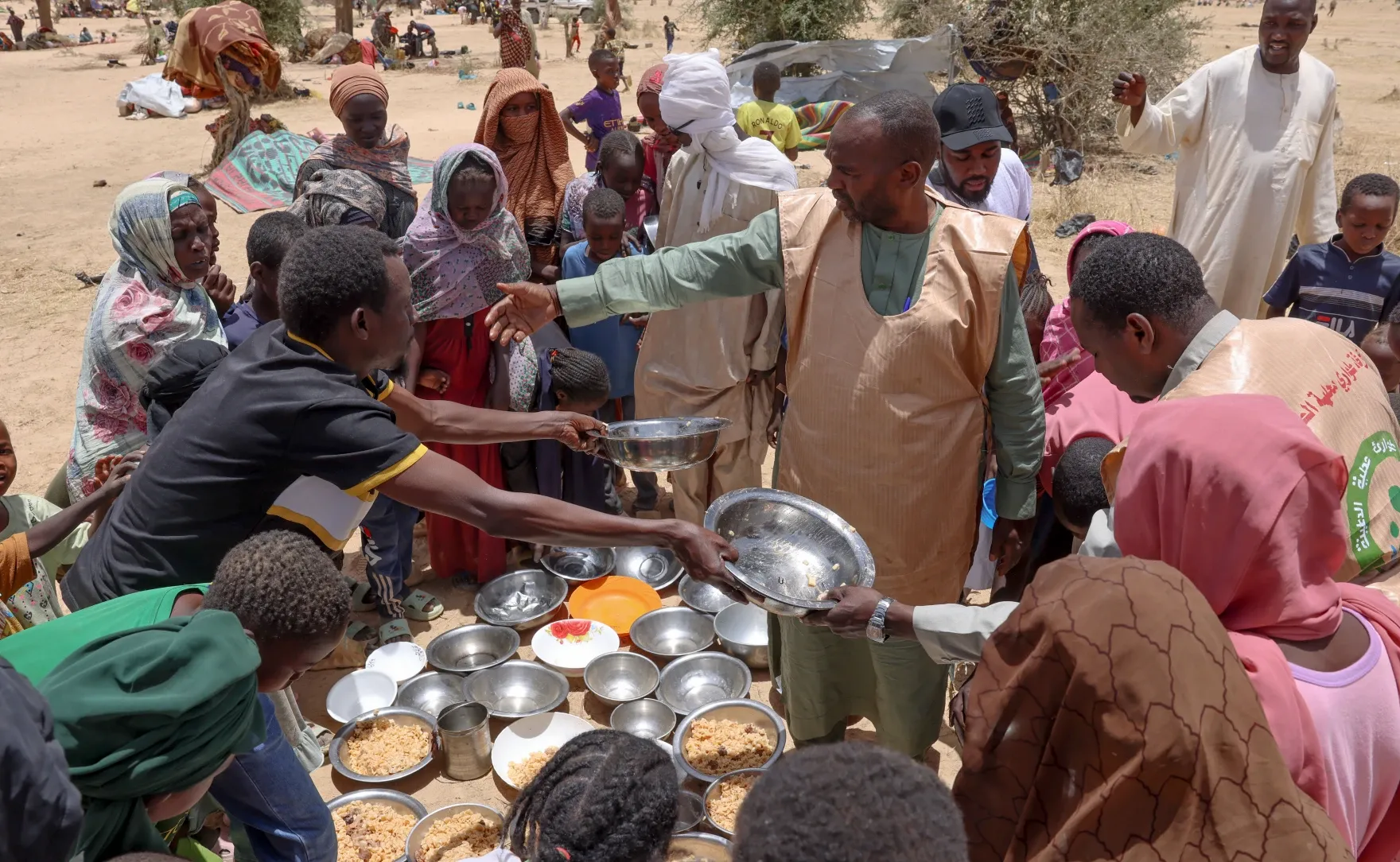
Volunteers from emergency response rooms in Sudan distribute food to families. Source: kpbs.org
The Meaning of Solidarity Within a War Economy
In practice, tekiyas and Emergency Response Rooms do not operate outside the economy that has produced the crisis. They need to purchase grains, cooking oil, legumes, and fuel, and transport supplies along routes that may be dangerous or disrupted. Many initiatives have also relied on donations and financial transfers, which are affected by declining household incomes, difficulties in transferring money, and fluctuating prices.
World Bank data illustrate the scale of the economic disruption caused by the war, including sharp increases in inflation, currency depreciation, market disruptions, and rising poverty. Under these conditions, the cost of a meal provided by a tekiya cannot be separated from the market conditions in which its ingredients are purchased.
According to three volunteers working with Emergency Response Rooms in South and East Darfur, who preferred to remain anonymous, initiatives have sometimes been forced to deal with suppliers and informal markets to secure food in areas where conventional supply channels have been disrupted. This does not automatically make these initiatives participants in the war economy. However, it reveals that humanitarian responses operate within an economic environment distorted by violence, scarcity, transportation risks, and control over roads and resources.
At the same time, society should not be viewed as divided simply between those who show solidarity and those who exploit others. One family network may provide shelter to a displaced household, while another may give certain individuals better access to resources. Trade may help secure food supplies, while scarcity and rising prices increase the cost of obtaining it.
The central question, therefore, remains how to ensure that resources reach those in need, protect initiatives from exploitation and interference that obstruct their work, and support local markets supplying essential goods, while avoiding the imposition of financial and administrative burdens on volunteers that exceed their capacities.
Ultimately, the sustainability of tekiyas does not depend on good intentions alone. An initiative that distributes food requires replenishable resources, accessible supply chains, and volunteers who are able to continue working effectively and fairly. When donations decline, prices rise, and available resources become depleted, the capacity of a tekiya or local initiative to continue operating diminishes, regardless of the level of solidarity within the community.