Photo Credits: Scenius Hub
On a cloudy afternoon in Juba, the air is thick with humidity and the smell of rain. A day that seemed to be like any other day. In a veranda inside Scenius Hub, rhythms of keyboards change the atmosphere. Seventeen young women aged 18 to 30 sit hunched over glowing screens. They were not scrolling through social media, they were building neural networks. Meaning these women were trying Artificial Intelligence (AI) algorithms modeled loosely on the human brain to recognize specific patterns of their distinct projects.
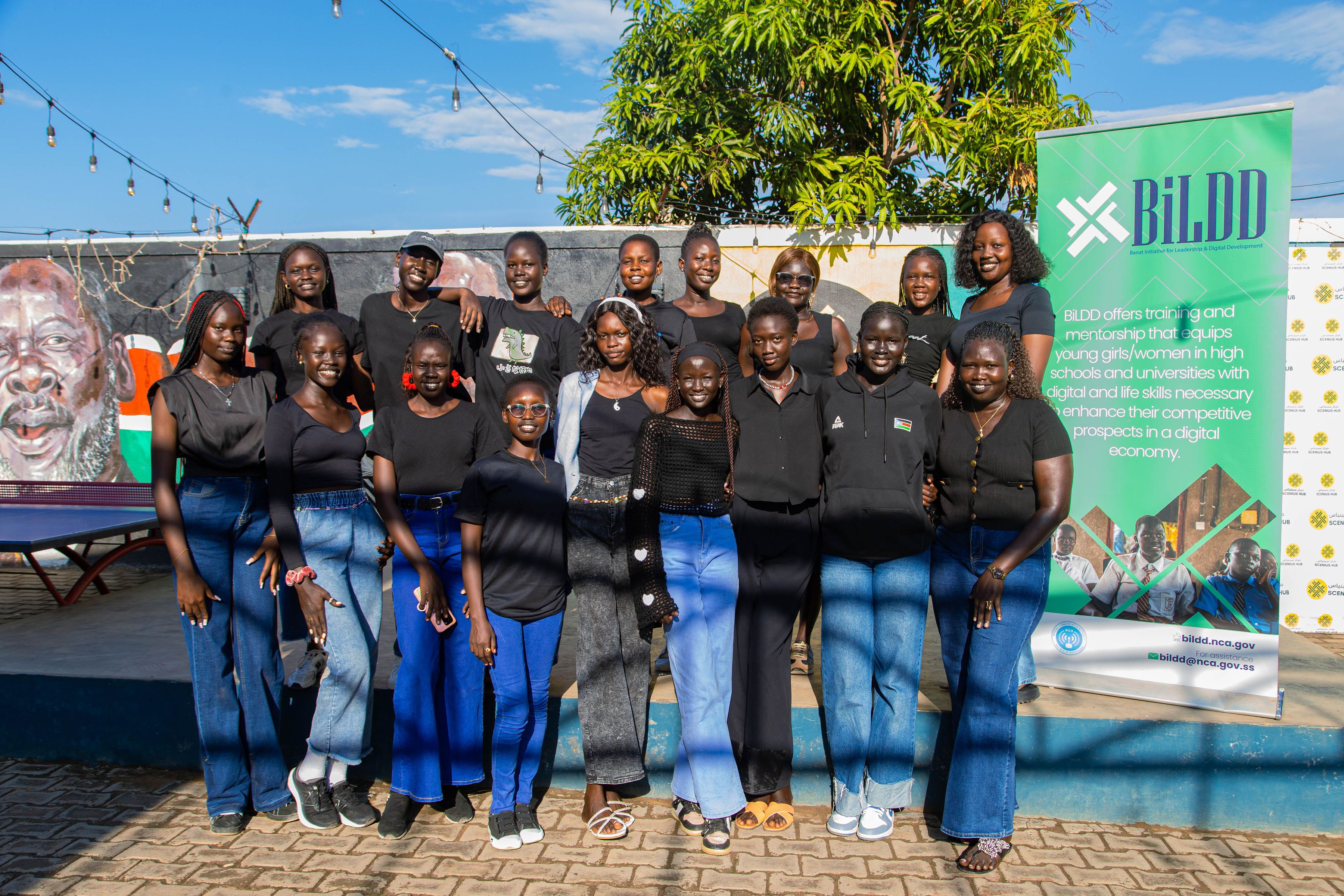
The 17 participants at Scenius Hub.
Building AI programmes envisioned in a country where only 12.1% of the population had internet access in 2024 and raised up to 15.7% in 2025 feels less like progress and more like an act of defiance. However, in this first cohort of the AI App Development Bootcamp for young women, organized by the National Communication Authority (NCA) through their Banat Initiative for Leadership & Digital Development (BiLLDD).
This project aimed to bridge the gap between high-tech innovation and local survival. The central question and core consideration here was simply; what could be the real implications for such projects in South Sudan, a country defined by its lack of infrastructure? Who are the frontliners who get to design the digital safety nets of the future? Moreover, if they fail, will the country remain a passive consumer of technology built in the west and not fitting in local contexts?
Life-Link: The Privacy of the Mirror
For many South Sudanese women, a breast cancer diagnosis is a death sentence. Usually, diagnosed in late stages because of the poor health infrastructure. According to the IARC CanScreen5 report of 2022, 28.0 per 100,000 females are recorded as cancer patients. In addition to this layer, cultural taboos around physical exams are compounded by a shortage of female doctors. The prospect of an examination by a male doctor often keeps women away from clinics until the disease is untreatable.
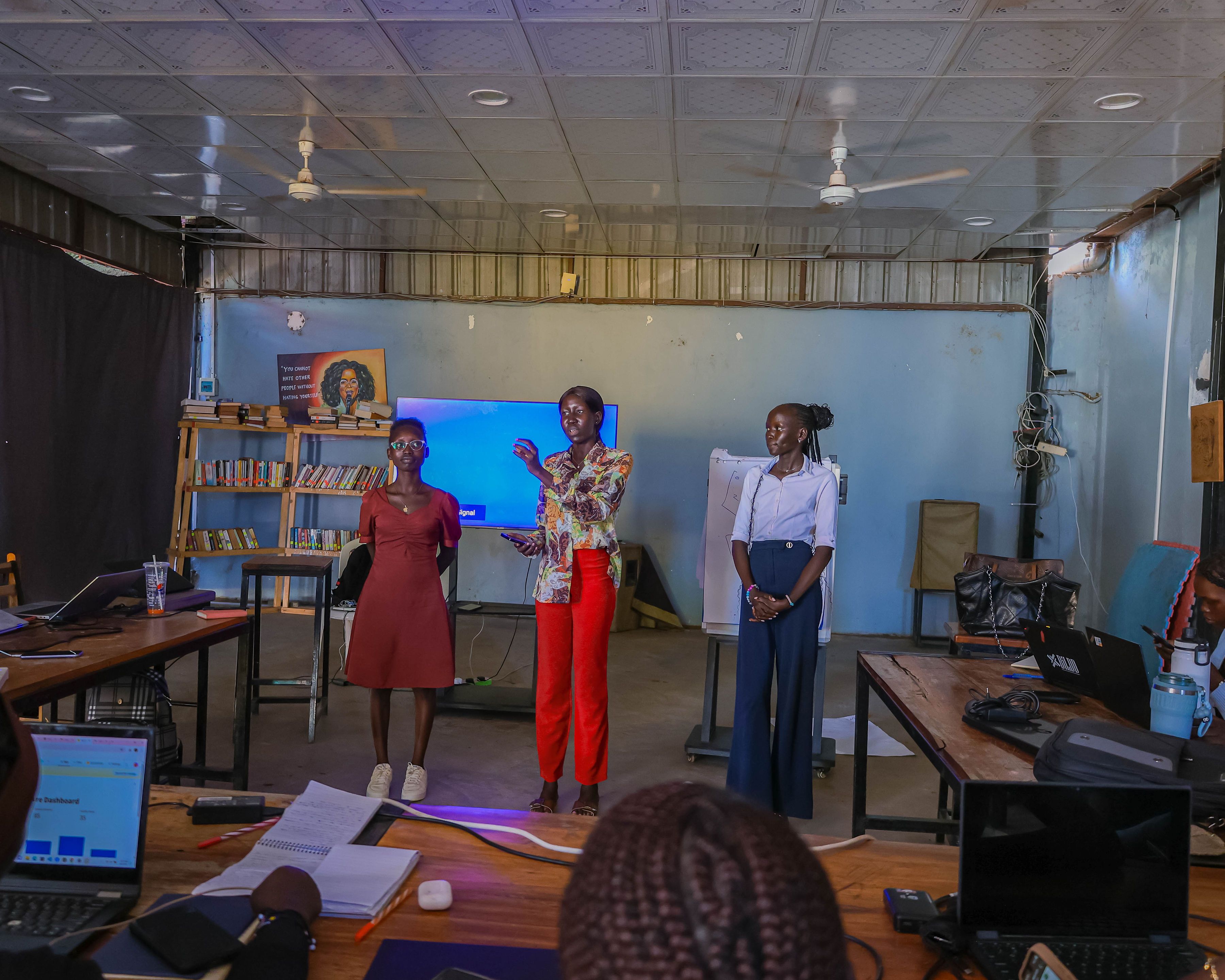
Life-link Team: Agot Alier Garang, Nyadieng Kuony war, Kajogo Nancy Wosuk
To tackle the gap of shame, Agot Alier Garang, Nyadieng Kuany War, and Kajogo Nancy Wosuk developed Life-link. The app is an AI-assisted screening linked with specialized referral, not a diagnostic one. Unlike simple digital communication, the AI here performs a specific task. According to Garang, a prospective Political Science and Data Analysis student, “If the AI identifies high-risk factors, she can prepare herself mentally." The preparation represents the gender sensitivity of the physical touch, as she continued explaining “By the time she reaches the hospital, she already knows her status. She isn't afraid of the male doctor anymore because she is seeking confirmation, not a surprise.”
Dut Majak, CEO of Junubia Host Co.Ltd, and a prominent stakeholder in Juba’s tech ecosystem as an official partner for OpenAI in South Sudan, also known for his ride-hailing app Shilu Ana, emphasized that this framing is vital and may represent a real transformation in the health sector. He strictly viewed it as a screening tool that encourages women to seek clinical confirmation. "Responsible AI guidance in health requires intense human oversight. It must be strictly viewed as a screening tool that encourages women to seek clinical confirmation," Majak noted.
Smart Farming in a Disconnected Field
While breast cancer is a private crisis, agriculture in South Sudan is a neglected giant. The country has 13.5 million hectares of fertile land, yet it remains dependent on food imports from neighboring countries such as Uganda.
Maize-Sense Team: Atet Malual Majok, Suzan Adut Marial, Zina Faustino.
Atet Malual and her team created Maize-Sense to classify maize diseases and predict weather patterns. Their technical hurdle was huge; how do you bring an AI tool that is capable of performing tasks on its own, such as reasoning and learning, which usually requires high-speed internet (5G) to think in the cloud, to a farmer with no connection and more often without a smartphone available at hand?
Suzan Adut, a computer science graduate from the University of Juba (UOJ), explained their solution "We are building an Offline AI Detector. By allowing the AI model to perform its decision-making locally on a phone, the farmer doesn't need constant internet flow."
While the logic is sound, Atem Dut, a multidisciplinary sustainable engineer from Unipod South Sudan, an innovation partner of UoJ, provided a grounded sector analysis: “The viability of the proposed projects is possible with few challenges. However, the internet and poor infrastructure remain major barriers to realizing AI solutions in agriculture." He pointed out the odds, while Majak, despite the positive bypass suggested by Suzan, visualized it as highly feasible and added a layer of technical rigor. Majak noted “offline detector requires a lightweight model trained on thousands of locally relevant images of crop diseases, tested under harsh Juba lighting conditions.”
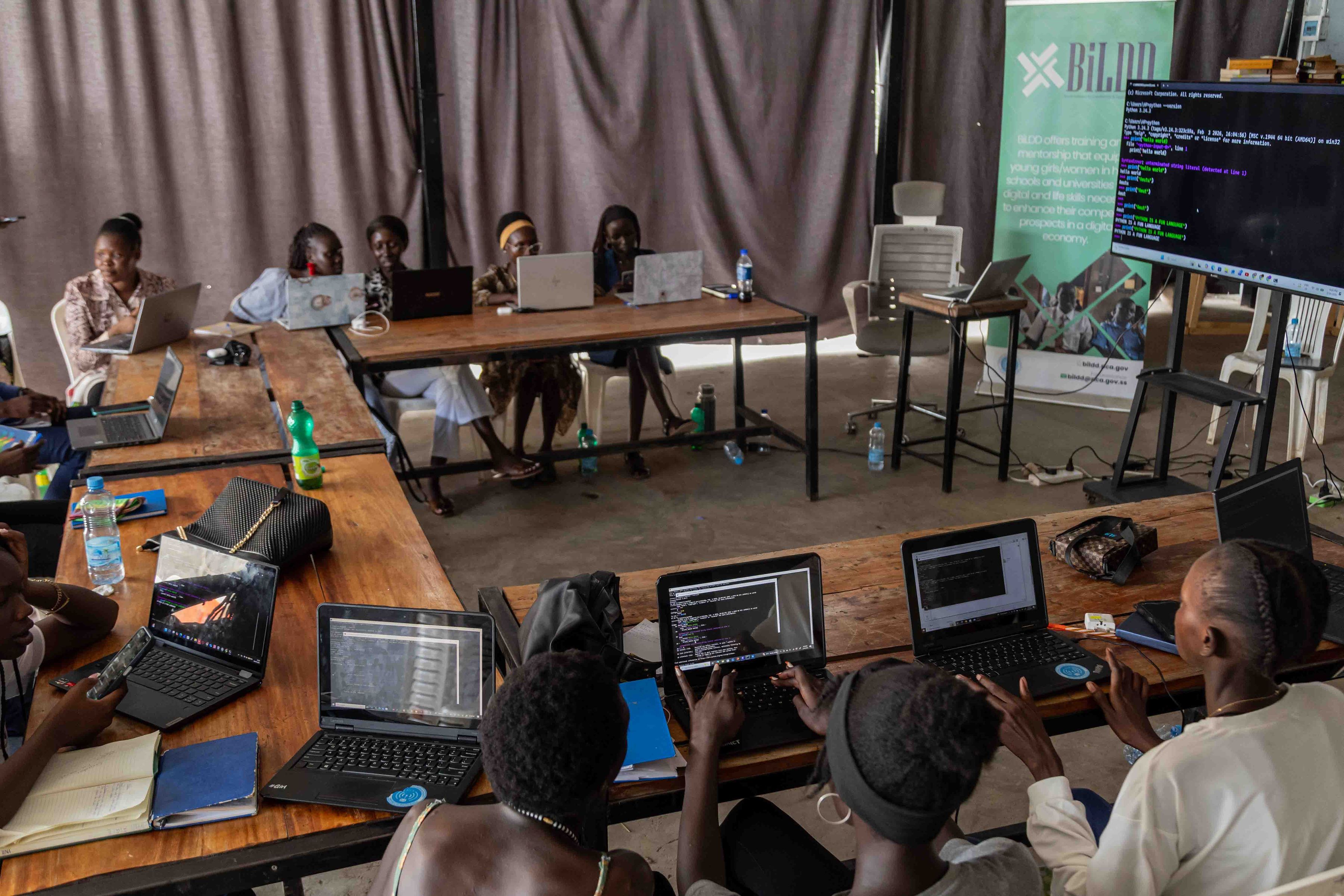
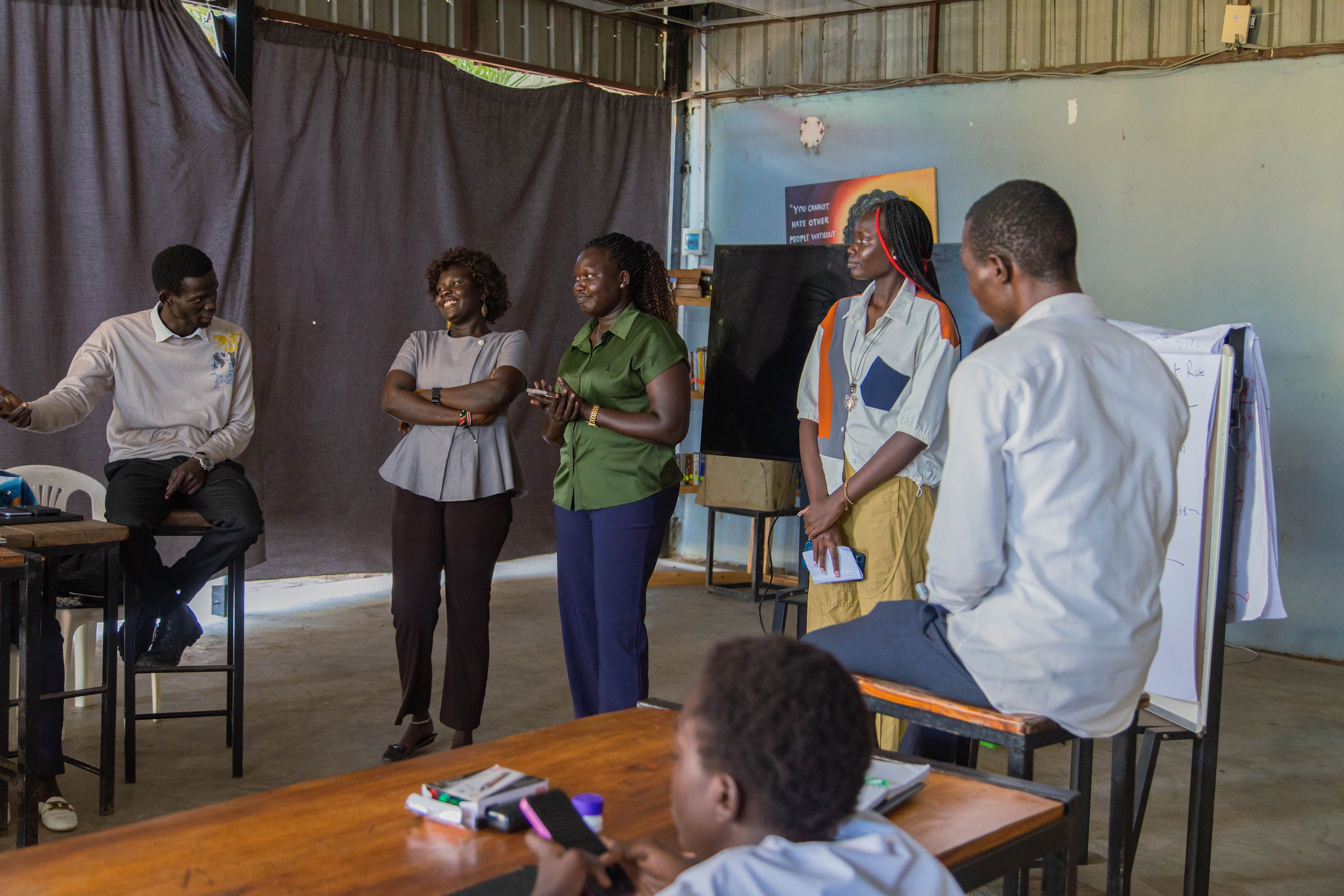
The young women during the ideation period of their projects
Predicting, Not Labeling
In the education sector, the statistics are grim, with more than 2.8 million children (over 70%) out of school. South Sudan has some of the highest dropout rates in the world. Traditionally, the Ministry of Education tracks these numbers by counting how many children didn't show up for final exams. To solve this dilemma. Nyakuar Bol, Abuk Mary, Lucia George developed Nexora. An app that uses predictive analytics to identify red flags, dips in attendance or indicators of family trauma before a child leaves.
This is where AI differs from a standard database; it isn't just storing names, it is learning from patterns to make decisions. Bol, a team member and a medical laboratories student at UoJ explained: "Our system works to give an early warning. The AI searches for socio-economic indicators, such as family trauma or indicators of sexual violence and early marriage, based on data provided in the student’s profile by the school." All this information required by the AI system to function contains details that are often not for disclosure out of family circles. However, Majak warned that because Nexora will involve sensitive data about trauma, safeguards are non-negotiable and must incorporate explicit consent with a trained human review layer. This led to a critical synthesis within the context of the program. Ramkel Gabriel, a technical instructor at BiLLD noted, “The goal isn't just to predict a dropout, but to use the AI to explain the 'why,' allowing the school to provide the right lifeline at the right moment.”
Pathway AI: Skills for a New Economy
To those who managed to navigate South Sudan's educational hurdles, the workforce and labor market is rarely a straight line. The problem begins with a profound cultural disconnect; families often pressure children into certain professions. Grace Anderson, an 18-year-old member of Pathway AI developing team and a university candidate explained: “Families want their children to become petrol-oil engineers, doctors, or other professionals that sound prestigious, even if it doesn't match their skills.” However, To fill this gap, Anderson and her team including Ayen Jok Awan and Akuol Joseph identified this mismatch as a primary driver of mass unemployment and brain drain.
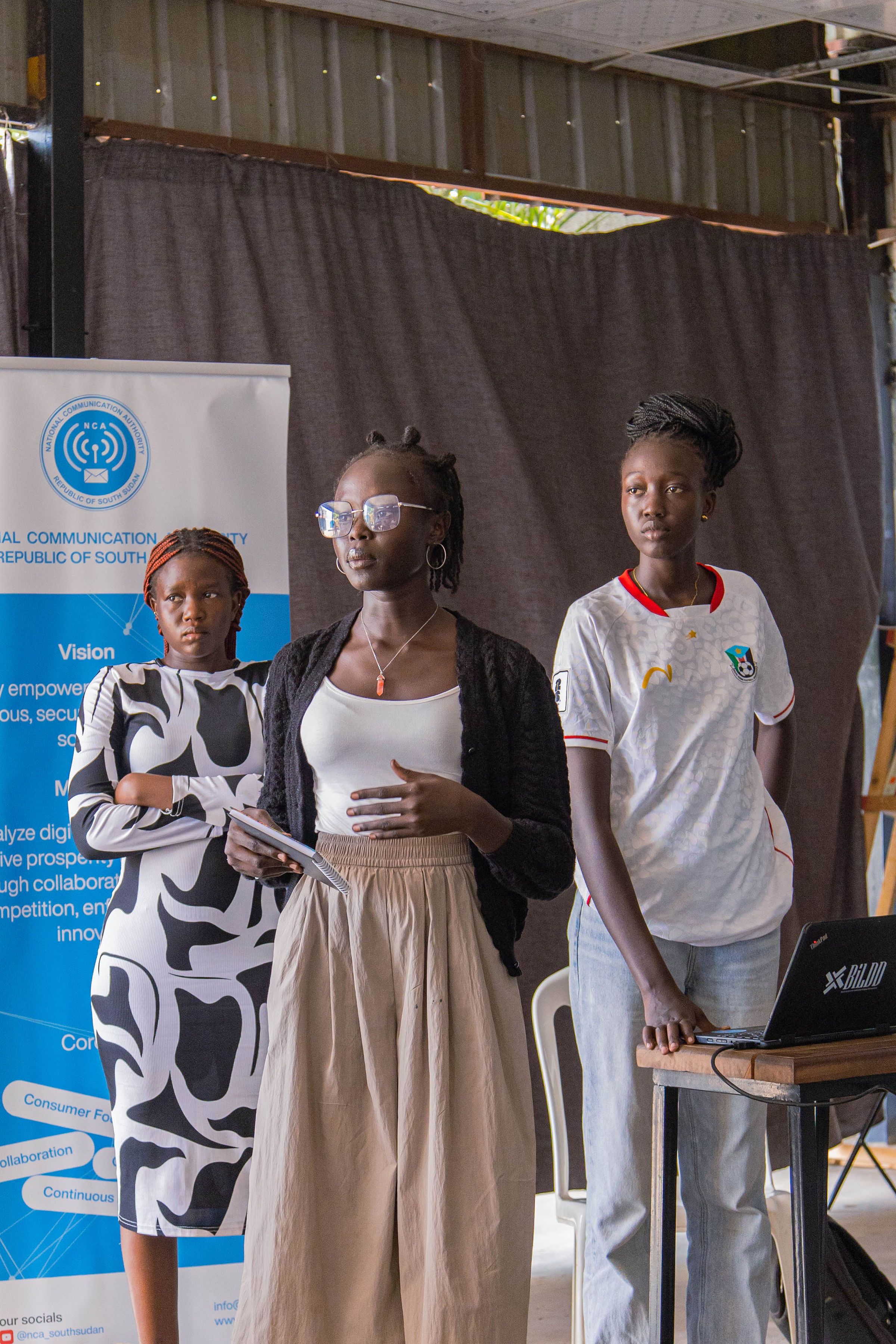
Pathway AI Team: Ayen Jok Awan, Grace Anderson, Akuol Joseph
While the team initially hoped to address brain drain, Dut suggested a more grounded alignment regarding the migration of talent. Dut noted “I have seen you talking of wrong career choices made by the students in South Sudan that lead to unemployment, but that can not be a good reason for unemployment and brain drain. There must be a good reason and reasonable cause that systematically leads to the other. Wrong career choices need to be separated from these two clauses, unemployment and brain drain.” Instead, the strength of Pathway AI could lie in its ability to reduce local unemployment by ensuring graduates are on the right track for jobs that actually exist in South Sudan. To bridge the digital literacy gap, the team is ambitious to design Voice Note features in Juba Arabic and Dinka as Anderson explained: “The user could just send a voice message, and the AI would interpret the reasoning and give them the output.”
The "Protected" Lab
To make all these prototypes see the light, organizers deliberately worked on creating a micro-zone for these young women away from the infrastructure hurdles. Poni Henry, the Project Coordinator, explained that they had to engineer a protected environment to make learning possible, adding “We tried to create an area where those limitations are not a reality by providing laptops and dedicated internet through partners. We did not want these women to look at themselves and say, 'Oh my goodness, we are so disadvantaged.’”

The classroom atmosphere with instructors Ramkel Gabriel and Cliff Levai
Furthermore, Instructor Gabriel noted that the women mastered Python and Streamlit concepts that usually take two years for a computer science student, but they made it in just six weeks. Gabriel added “Coding is not an easy journey. But when you remove the infrastructure barriers, these women prove the talent is there because it was backed up with a purpose.”
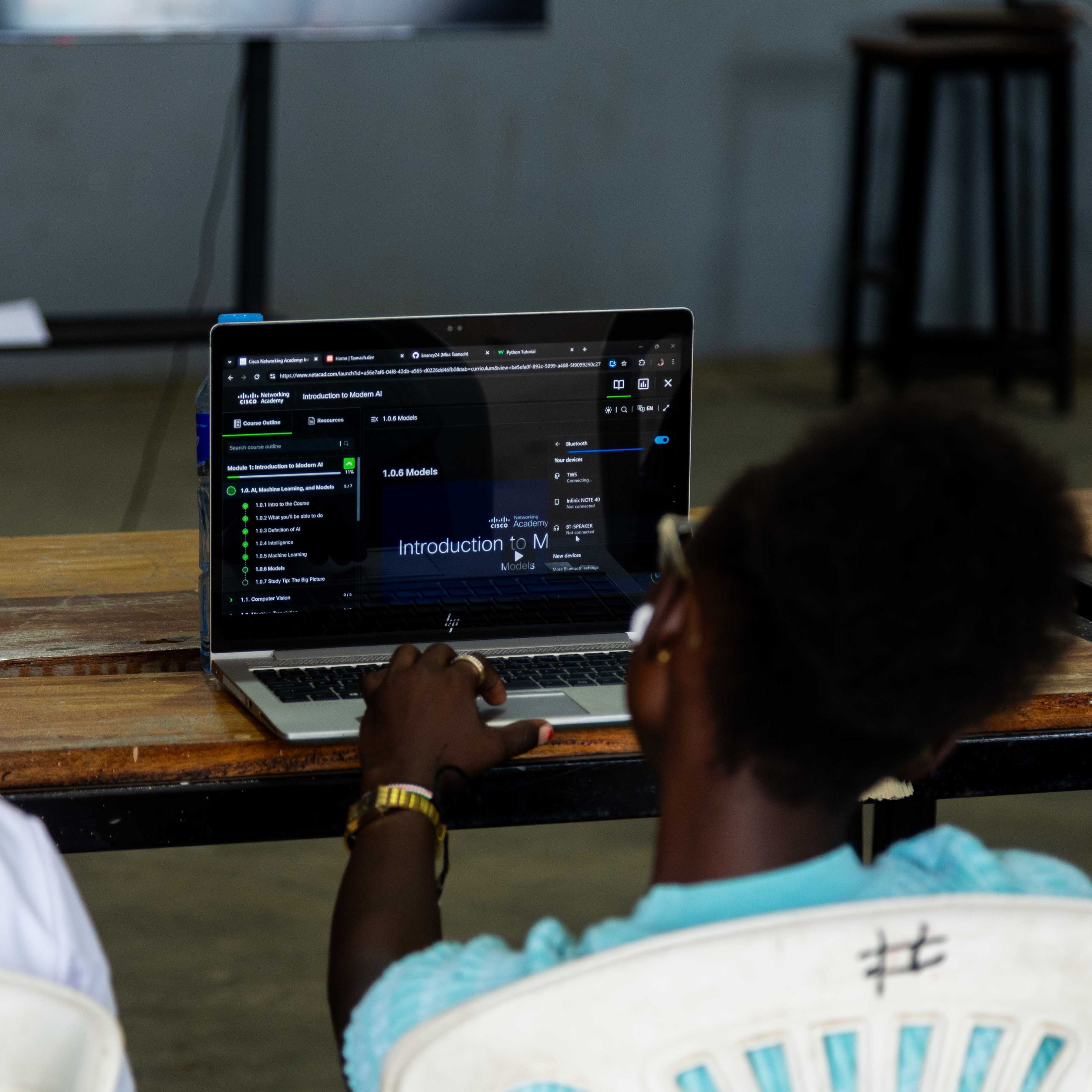
A participant working intently on her code
Beyond the Kitchen
As the bootcamp ended on 22 April 2026, the discussion shifted from code to culture. Now, the second phase of the challenge is to fight for a place among male innovators in South Sudan where the "Mara-Sakit" (just a woman) stereotype still lingers (the idea that a woman’s contribution is limited to the home). "In most cases, people think if a woman is doing tech, it’s not right," said Agot. This was supported by Akuol Joseph, a developer in the cohort, who added "The biggest problem is not the stereotypes rising against women, but women believing the stereotypes written against them."
This cohort is not the finish line; it is the start of a pilot phase. The NCA with its partners have indicated their willingness to continue supporting those teams as they move toward testing these apps in grassroots communities. Despite their expected engagement in a market starving for female talent, where NGOs and tech firms are actively seeking female IT professionals, the narrative is shifting. They are no longer just consumers of global technology but the architects of a context-aware, resilient digital future for South Sudan.