Historically, Khartoum has served as Sudan’s administrative, financial, and commercial center of gravity. It hosts sovereign institutions, ministries, and major universities, and functions as the hub of banking networks and supply chains connecting the country’s states. Therefore, its recovery does not only signify local improvement; it directly influences inter-state trade, eases pressure on cities hosting displaced populations, and restores the flow of central services and financial transfers.
At the peak of the war in mid-2023, most markets came to a halt, electricity and water were cut off across large areas, and transportation activity dropped to its lowest levels. The repercussions also spread to other states through displacement and disruptions in supply chains. Throughout 2024, returns remained limited to only hundreds of thousands of people, while services operated at minimal levels amid near-constant electricity outages.
By early 2026, the number of returnees had risen to more than three million people, according to the International Organization for Migration (IOM), alongside a gradual restoration of water and electricity services and the reopening of markets and transport routes. The city has moved from near paralysis to daily activity along its main corridors, although full stability remains under test.
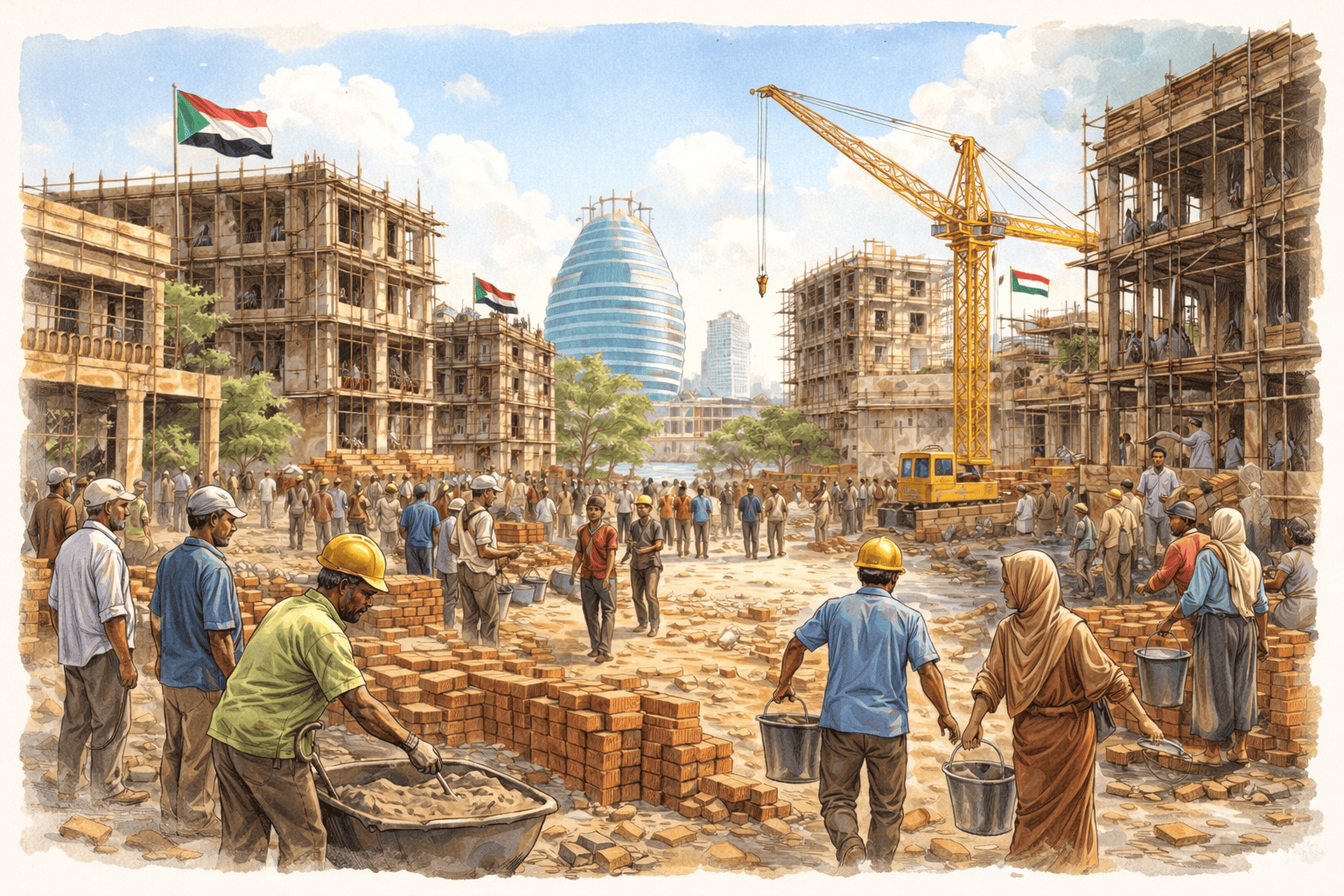
An AI-generated image illustrating residents returning to the capital, Khartoum, and the shared desire for recovery and reconstruction.
In the first part of this article, we focus on the services sector and its relationship to the return of residents through three key indicators to assess the situation more precisely:
- Return of residents: measuring the scale of returns, their geographic distribution within the capital, and the extent of their stability over time.
- Basic services: the status of electricity, water, health care, and education, and the regularity and sustainability of their provision.
- Commercial activity and transportation: the actual operating level of markets and the regularity of transport within the capital and between states, as an indicator of economic circulation.
The second part will feature a discussion with economic expert Dr. Mohamed Al-Nayir, examining the extent of Khartoum’s economic recovery and whether current developments mark the beginning of a genuine stabilization cycle or merely a transitional phase still vulnerable to setbacks given the existing structural challenges.
Return of Residents
The number of returnees rose from about 396,000 people in March 2025 to more than 3.5 million by early 2026, increasing roughly 8.8 times in less than a year, a remarkable numerical growth, alongside the gradual restoration of basic services in different areas and parts of Khartoum State.
Field indicators suggest a noticeable shift in the map of population distribution within Khartoum. The city’s outskirts are now recording higher population densities compared with central and eastern Khartoum. In contrast, Khartoum Bahri (North Khartoum) has witnessed a significant return of residents to its central districts, after population concentration during the previous period had been largely in the northern parts of the city. This points to a gradual internal redistribution of residents.
Omdurman, meanwhile, currently appears to have the highest population density compared with Khartoum and Bahri, reflecting a relatively higher level of stability and a faster pace of residents returning.
March 2025: 396,738 returnees
January 2026: 3,500,482 returnees
Health Sector
The health sector is among the sectors that have resumed operations at a relatively faster pace compared to other services affected in Khartoum State. According to data from the Khartoum State Ministry of Health, around 50 hospitals have returned to service, along with more than 240 health centers across various neighborhoods that have resumed receiving patients.
However, this quantitative improvement is not without structural challenges. The most significant obstacle facing the sector is the shortage of medical personnel, due to the large-scale migration of doctors and healthcare workers during the conflict. This means that the reopening of facilities does not necessarily translate into a full restoration of operational capacity or service quality at the required level.
Education
Estimates indicate that more than 280 schools in areas such as Khartoum, Bahri, and Omdurman suffered varying degrees of structural damage.
According to a UNICEF report issued in late 2025, only 1,830 schools have resumed classes and are receiving students, out of approximately 3,796 schools operating in basic and secondary education. This means that more than half of the total number of schools remain closed or are operating irregularly, either due to damage or the lack of adequate infrastructure.
The sector continues to face major challenges, most notably a shortage of teachers, the incomplete availability of school textbooks, and financial burdens on families, which have limited the return of many students to classrooms.
This situation comes amid a sudden decision to begin a new academic year on February 22, less than a month after the previous academic year ended. The move raised questions about whether schools and students were adequately prepared to start a new educational cycle at this time.
“Education has resumed, but we are still suffering from a shortage of teachers due to migration. This has affected the distribution of classes and increased classroom density, and sometimes a single teacher has to teach more than one subject. At the same time, this has created opportunities for new teachers to find work, especially given the lack of jobs in other sectors. The biggest problem is that salaries are low and do not keep pace with the rising cost of living, and income is not balanced with expenses. We need collective efforts, academically and in services, to help education return stronger than before.” A teacher at a school in Khartoum
Electricity and Water
With losses estimated at around 1,500 transformers in Khartoum State, the electricity sector is among the most severely affected by the conflict. Distribution networks suffered extensive damage, including transformers, wires, and cables, leading to prolonged power outages across large parts of the state.
Following the liberation of Khartoum, electricity teams began rehabilitation work, which included reinstalling damaged wires and cables, as well as receiving around 400 transformers during the past period, which were distributed and installed in different areas. These interventions have helped gradually restore electricity to several neighborhoods in Khartoum, Omdurman, and Khartoum Bahri after outages that lasted nearly two years.
In the water sector, several main water stations were restarted after having stopped during the conflict due to damage. Local data indicates that five stations have gradually resumed operations, some partially, out of 13 stations in Khartoum State, serving different areas across the state.
The return of these stations has allowed water supply to gradually resume in some neighborhoods, although distribution remains irregular.
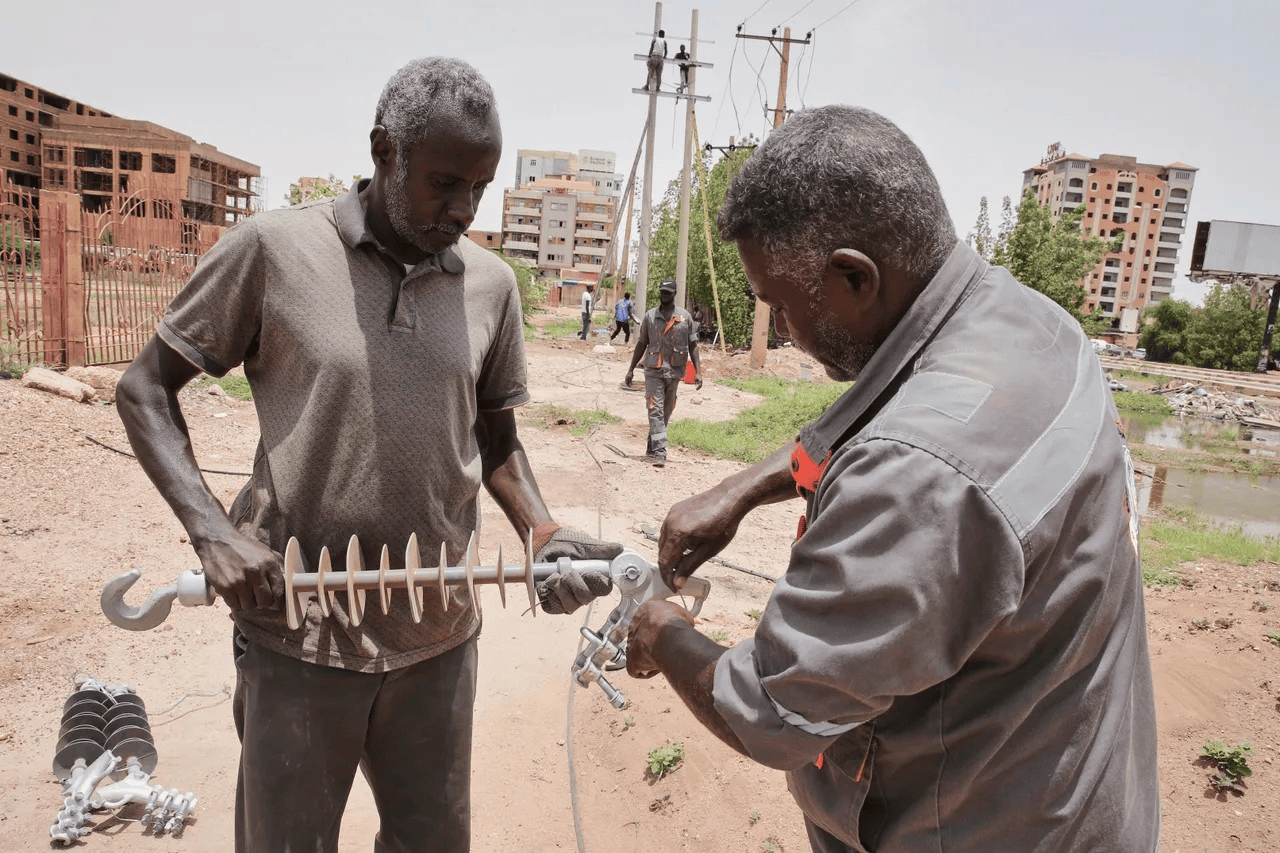
Technicians and engineers are working to repair electrical cables and wires that were previously destroyed during fighting in Khartoum. Source: Trtafrica
Commercial Activity
With the reopening of several major markets in Omdurman, including Souq Omdurman, Souq Al-Shuhada, Souq Al-Shajara, and Souq Al-Mourada, commercial life has gradually begun to return. Activity has also resumed in Bahri Market and parts of Souq Saad Gishra in Khartoum Bahri, in addition to the opening of Al-Karama discounted markets on the western side of Bahri Market.
In the capital Khartoum, several markets have also gradually resumed activity, most notably the Khartoum Central Market and Souq Al-Kalakla Al-Laffa, alongside the return of commercial activity in some smaller neighborhood markets.
Unofficial estimates suggest that commercial activity is still operating at around half of its pre-war level. Despite this partial recovery, purchasing power is gradually improving as more residents return and commercial activities expand compared with the previous year.
Although inflation fell to 60.26% in January 2026, compared with 118.9% in 2025, the Sudanese economy remains under the pressure of the ongoing war. The cost of the basic food basket exceeds the average salary several times over, according to a World Food Programme report on Sudan’s markets.
Daily labor wages have increased from 9,000 Sudanese pounds in February 2025 to 15,000 pounds in January 2026, representing a 67% rise. However, the situation as of February 2026 reflects only limited improvement, mainly a slowdown in economic deterioration rather than a genuine recovery.
At the same time, certain sectors have emerged as direct beneficiaries of the transformations caused by the war, most notably the solar energy market, which has experienced unprecedented growth compared to the pre-conflict period.
Solar systems have shifted from being a limited alternative option to becoming a core component of residential, agricultural, and service infrastructure, particularly as electricity has not yet returned to many neighborhoods and areas of Khartoum State. Their use has also expanded to hospitals and health centers that have been rehabilitated, as well as schools and government institutions. This trend suggests the emergence of a rapidly expanding decentralized energy sector that is reshaping demand patterns in the local market.
Similarly, cleaning and waste-management companies have seen a noticeable increase in demand, both for equipment and field cleaning teams, as the need has grown to remove debris, clear waste, and clean residential and service facilities that have resumed operations. As a result, rehabilitation and cleaning services have become part of the broader cycle of restarting urban life.
It can therefore be said that some sectors have not only recovered but have entered a phase of real growth, benefiting from the gap created by the disruption of traditional services and from the reshaping of consumption and investment patterns within the capital.
Transport and Mobility
In the transport sector, several transport terminals have resumed operations, alongside the return of interstate travel services. Major transport hubs such as Al-Mina Al-Barri (the main bus terminal), Jackson, the Central Market terminal, Al-Shuhada, and Bahri Central Station have been reopened. This reflects a relative improvement in the operational infrastructure of transportation both within the capital and between states.
However, this improvement has not yet been matched by a full recovery in demand. The average daily commuting cost within Khartoum is estimated at between 5,000 and 10,000 Sudanese pounds, which represents a noticeable burden relative to current income levels.
Interestingly, the situation has reversed compared with the pre-war period. Previously, the main problem was a shortage of transport vehicles during peak hours. Now, vehicles are relatively available, but the number of passengers is lower, and central areas of Khartoum have lost their usual congestion and have become noticeably quieter compared with previous years.
Regarding ride-hailing services, applications such as “Tirhal” and “Go” have not yet fully resumed operations. Although announcements have circulated about the return of the Tirhal app in Khartoum, in practice the application does not successfully complete ride requests. As a result, obtaining private taxis or limousine services is still largely done through traditional methods, such as going to major transport stations or waiting near hospitals and institutions that have resumed operations.
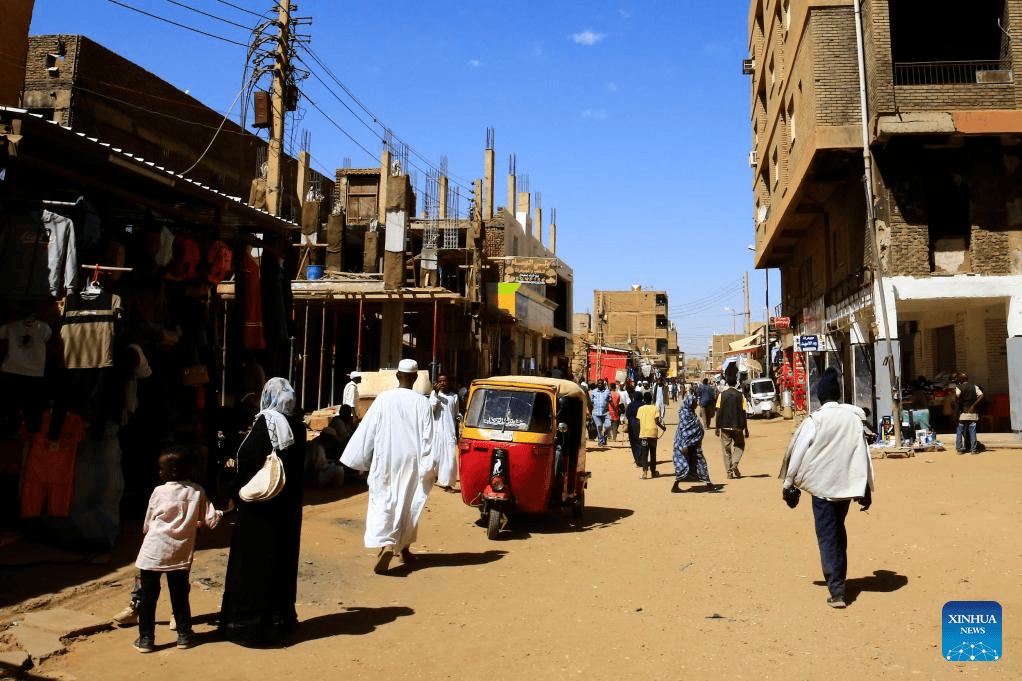
A photo showing people moving about and markets reopening in Khartoum – February 2026. Source: English.news.cn
Economic Perspective .. An Interview with Dr. Mohamed Al-Nayir, Economic Expert and Associate Professor of Accounting at Sudan University of Science and Technology
How does the current situation compare with the past two years?
Compared with 2023 and 2024, the situation in Khartoum has witnessed a noticeable shift since late 2025 and the beginning of this year. Conditions have started to improve with the return of the central government, the banking sector, and the Ministry of Finance to the capital, despite the challenges left by the conflict, including rising levels of poverty, inflation, and unemployment.
He explained that 2026 represents the biggest challenge in terms of rebuilding the affected states and revitalizing economic activity. This requires dividing public spending into two main tracks:
First, financing reconstruction in the affected states, and second, meeting the requirements of the ongoing war in states where fighting continues until the rebellion ends.
Does Sudan have a productive base capable of rapid recovery? What sector could be relied upon most?
Despite the challenges Sudan has faced during the conflict, the country still retains elements of resilience derived from its natural resources and internal capabilities.
The coming phase requires a comprehensive restructuring of the economy, based on a clear reform plan that prioritizes increasing productivity in the agricultural and livestock sectors, as they represent a genuine productive base for the Sudanese economy.
Regarding the most promising sectors, he pointed to the mining sector, particularly gold. He emphasized that if gold smuggling is reduced, clear regulatory policies are implemented, a gold exchange is established, and competitive domestic prices are offered, gold alone could provide a significant driving force for Sudan’s economy, alongside other productive sectors.
How does the return of citizens to Khartoum affect the economic recovery process?
The return of citizens to Khartoum represents a key factor in accelerating economic recovery, as it is closely linked to the stabilization of the security situation and the restoration of a sense of safety and stability, both essential conditions for sustainable economic activity.
Despite the challenges facing returnees, particularly in finding income sources and employment opportunities, the reconstruction process itself creates substantial demand for labor in sectors such as construction, services, and infrastructure. In addition, remittances from Sudanese abroad contribute to improving liquidity and stimulating local consumption.
He also noted that the economy cannot fully recover without the return of citizens, along with the return of the central government, the public and private sectors, and business leaders. This interconnected system, combined with the provision of basic services, creates a cycle that helps reactivate markets and stimulate production and economic growth.
Khartoum previously accounted for a large share of both national and state government revenues, making the restoration of its economic activity a strategic priority for restoring financial stability at the national level.
Conclusion
Khartoum has improved compared with last year, but the recovery is still incomplete. A large number of residents have returned to the city, and some services, such as hospitals, schools, electricity, and water, have resumed operations. However, these services have not yet returned fully or consistently across all neighborhoods.
Economically, the cost of the basic food basket remains high, despite a slight decline recorded in January 2026 and an increase in daily wages, according to World Food Programme reports. This indicates a limited improvement in purchasing power, but not enough to suggest full economic stability.
For families considering returning, it is advisable to monitor three practical indicators before making a decision: the stability of basic services in the intended neighborhood, such as electricity, water, healthcare, and education; the availability of job opportunities or income sources in local markets and economic activities; and the level of security and ease of movement within the city.
In other words, returning may be possible in some areas that have regained a reasonable level of services. However, it remains a decision that depends on a realistic assessment of stability and available services in each neighborhood, rather than on the city’s overall indicators alone.
Overall, Khartoum appears to be moving toward recovery, but it is still in a transitional phase between partial recovery and genuine reconstruction.