The East African Community (EAC) is a regional intergovernmental organization that is currently comprised of eight member states. These are The United Republic of Tanzania, the Republic of Kenya, the Republic of Uganda, Republic of Burundi, the Democratic Republic of the Congo, the Republic of Rwanda, the Federal Republic of Somalia, and the Republic of South Sudan with its headquarters in Arusha, Tanzania.
The EAC was first established in 1967 but dissolved a decade later in 1977. It was reinitiated two decades later in 1999 by its three founder member states, Tanzania, Uganda, and Kenya and came into full force the following year on 7th July. Burundi and Rwanda became members of the community after signing the treaty ascension in 1st July 2007. South Sudan managed to join the EAC on the 15th of August 2016.
The Democratic Republic of the Congo acceded to the EAC Treaty on 8 April 2022 and became a full member on 11 July 2022. Subsequently, the Federal Republic of Somalia signed the Treaty of Accession to the EAC Treaty on 15th December, 2023. The Federal Republic of Somalia became a full member upon depositing her instrument of ratification of the EAC Treaty with the EAC Secretary General on 4th March, 2024.
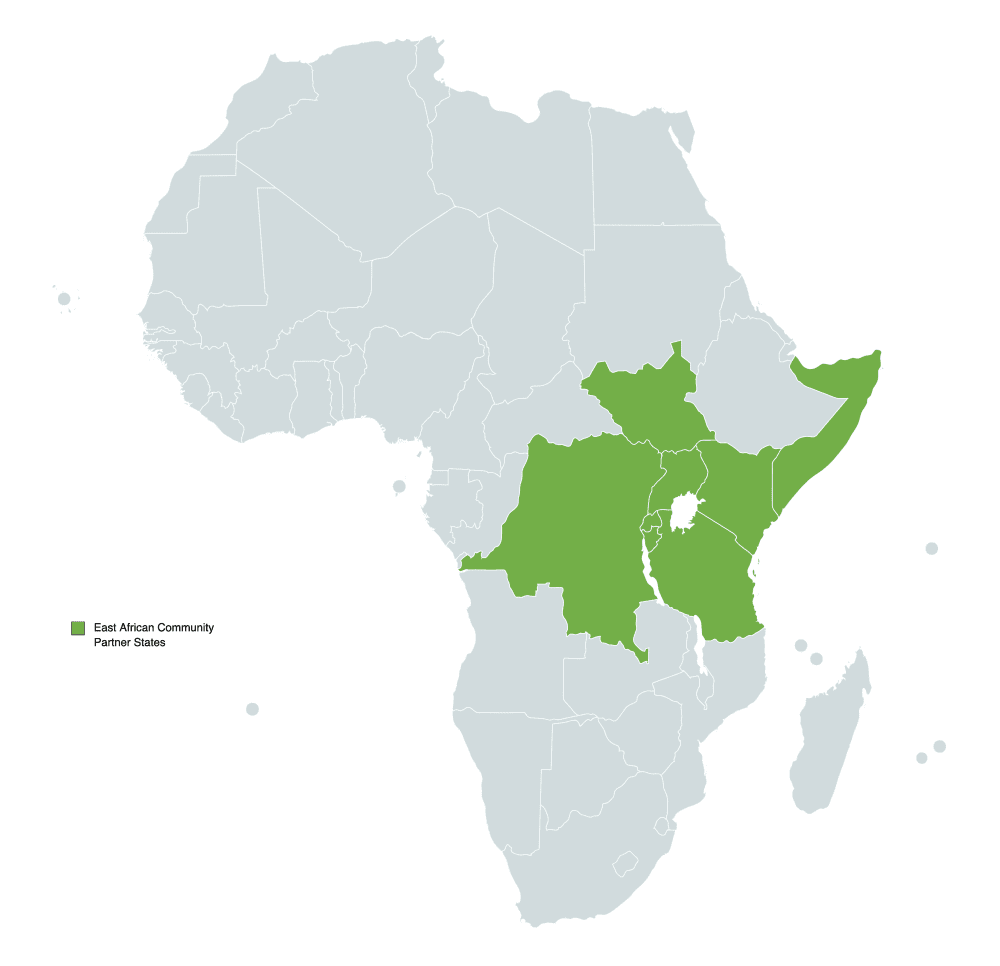
The East African Community (EAC) is a regional intergovernmental organization of eight (8) Partner States: The Republic of Burundi, the Democratic Republic of the Congo, the Republic of Kenya, the Republic of Rwanda, the Federal Republic of Somalia, the Republic of South Sudan, the Republic of Uganda, and the United Republic of Tanzania, with its headquarters in Arusha, Tanzania.(Photo source: Ministry of foreign affairs)
The EAC is one of the fastest growing regional economic blocs in the world. From the beginning, its main purpose had always been to widen and deepen co-operation among partner states in various key spheres in order to gain mutual benefits. These spheres include political, economic and social.
At the moment, the regional integration process is in full swing as reflected by the encouraging progress of the East African customs union, the establishment of the common market and the future vision to implement the East African monetary union protocol (unified currency).
Achievements and Failures of the EAC
Throughout the years the EAC has achieved major political and economic advancements that have paved way for East African progress in self sustenance and mutual development. For example in January 2005 there was the establishment of the Customs Union that kick-started the new era of the integration process.
The Customs Union Protocol became fully operational in 2010. Its main objective was to liberalize the intra regional trade on the basis of mutual trade agreement among the partner states, which would promote production and efficiency that will enhance domestic and cross border foreign investments as well as promote economic development in the community. The key aspects of the customs union included a Common External Tariffs (CET) on imports from other countries outside the EAC but duty-free trade between the Partner States and the adoption of common customs procedures.
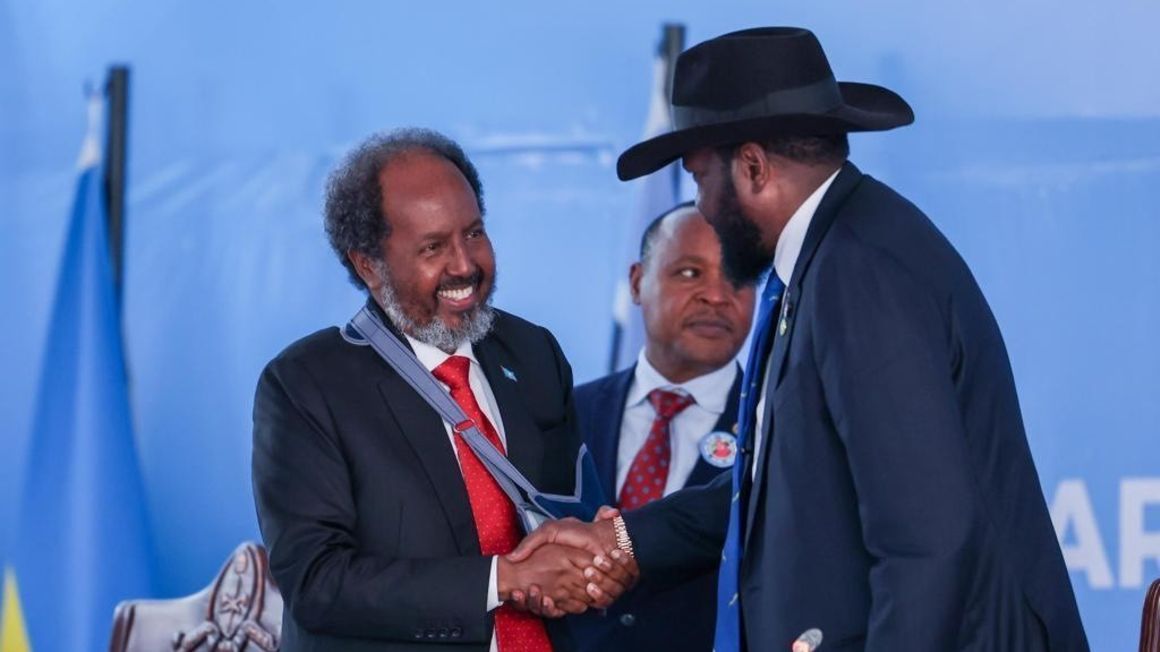
Somalia's President Hasan Sheikh Mohamud (L) shakes hands with his South Sudan counterpart Salva Kiir during the 23rd EAC Summit of heads of state in Arusha, Tanzania. (Photo source: Vincent Owino)
Other key achievements of the Customs Union include the reduction of non-tariff barriers and enriching the business environment in the region. For example, the introduction of the Electronic Single Window System (ESWS) which significantly reduced the clearing time of goods by an estimation of days.
Single Customs Territory helped transit goods to be cleared at the first point of entry in a member country. Weight-bridges were removed, police and customs checkpoints were reduced, computerized clearances were introduced and electronic cargo tracking systems were put in place. The transit time was also reduced from 21 to 5 days. Transport charges were greatly deducted as well. For example, the cost of hiring a truck to convey cargo from Mombasa to Kigali was reduced by about US $1000 from $5,200 in 2010 to $4,200 in 2014.
Other achievements that the EAC has managed to attain involve creating freedom under common market which safeguards the regions from international economic shocks. The common external tariff has helped to protect the community’s domestic industries, improved early warning and conflict resolution mechanisms among the member states, construction and operationalization of one stop border posts (OSBPs) where border agencies are housed under one roof for efficient clearance (Namanga, Isebania, Lungalunga, Busia, Malaba, Taveta).
The EAC is also at various levels of completion of regional infrastructural development (Athi River – Namanga road, Voi – Taveta), one network area harmonization of education Standards and mutual recognition of agreements (Engineers, Accountants, Architects, and Veterinarians) and a joint promotion of the EAC as a Single Tourist destination through the media.
Despite the achievements the EAC has not existed without conflicting perceptions and failures that left questions of its tangibility and purpose to many. For example there is an issue of power asymmetry of the countries in their national interests. This has led to some member countries advancing their strategic interests at the expense of others creating inequality in welfare gains. This delays the integration process and lack of implementation of protocols due to suspicion and resentment between countries fuels more delays.
In addition, there are issues of non-reciprocity whereby one country perceives that the other is getting more welfare gains economically. This derails any effort towards full integration and general development. As a result each country only adheres to the rules of engagement based on how its interests are met. Similar challenges leave questions as to whether the EAC is a camouflage organization for national self interests. Some discourse also points this to be a major factor for the delay of the general development and progress within the member states.
Unified Currency

Recent post by an unknown source after the EAC X page (recently known as twitter) was hacked showcased a new EAC currency. This was later debunked by the official EAC to be fake. (Photo source: X)
After the viral post about an EAC currency on X and Facebook got debunked as fake by several state leaders and representatives, it had many people questioning why this hasn’t been implemented yet despite the many predetermined benefits to come from it. The task for a unified currency is said to be delayed to 2031.
The East African Monetary Union (EAMU) is the third pillar of the EAC integration and the only one that hasn’t even been partially implemented yet. Dr. Pantaleo Kessy the principal economist of the EAC secretariat says that they had a road map that was supposed to be implemented between 2013 and 2024, but it hasn't been. In the 28th Ordinary Meeting of the EAC Monetary Affairs Committee (MAC) held on 9 May 2025, commitment to a single currency by 2031 was re-affirmed, and the progress on harmonizing monetary and exchange rate policies, and integrated financial regulation was discussed.
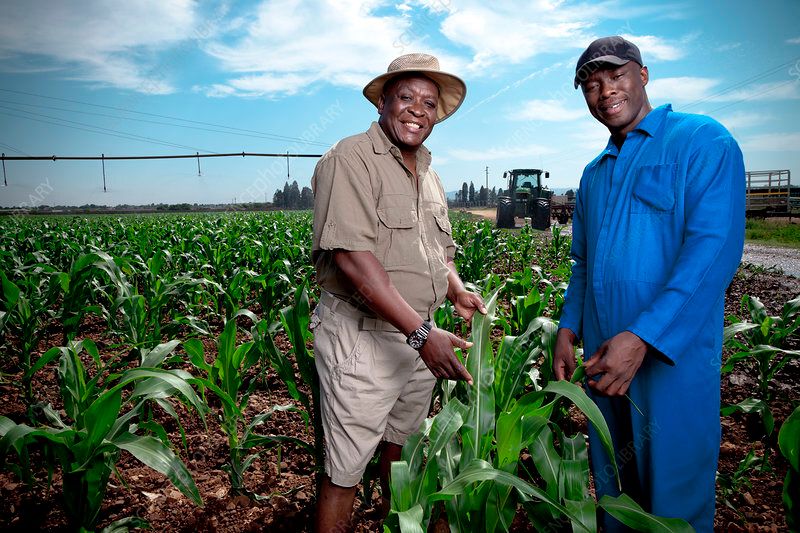
EAC has managed to accomplish a lot since its re-establishment in 2001. It has brought states together as a source of refilled development among each other, but hesitation from different sides have limited the further progress that it would have otherwise achieved by now. (Photo source: New food magazine).
Despite its foundational commitment to economic integration, the EAC realizes that long-term prosperity depends on political stability, peace, and security. The Community has invested in conflict prevention and resolution, arms control, and the promotion of good governance through its Peace & Security Protocol and mechanisms. However, this vision is significantly undermined by structural weaknesses within the EAC Secretariat, most notably, the absence of a dedicated Directorate for Peace & Security, as called out by EALA, and underfunding of peace initiatives.
Furthermore, divergent national interests and weak ideological cohesion among Member States, particularly as the bloc expands, continue to strain its integration agenda. As some analysts argue, the EAC’s ambition for enlargement and economic union often comes at the expense of deeper institutional reform and regional security.
Without urgent institutional reform and political realignment, the EAC risks becoming its own obstacle: the very bloc meant to drive East African prosperity could instead perpetuate fragmentation and instability.
