A quiet revolution is happening in the sprawling Korogocho slums of Nairobi, which lies adjacent to Africa’s largest open dumpsite, the Dandora dumpsite. It is led by a visionary woman, Joan Otieno, whose journey from witnessing slum girls’ raw zeal at a fashion show in 2017, to founding Warembo Wasanii in 2018, epitomizes the transformative power of community-led feminist action.
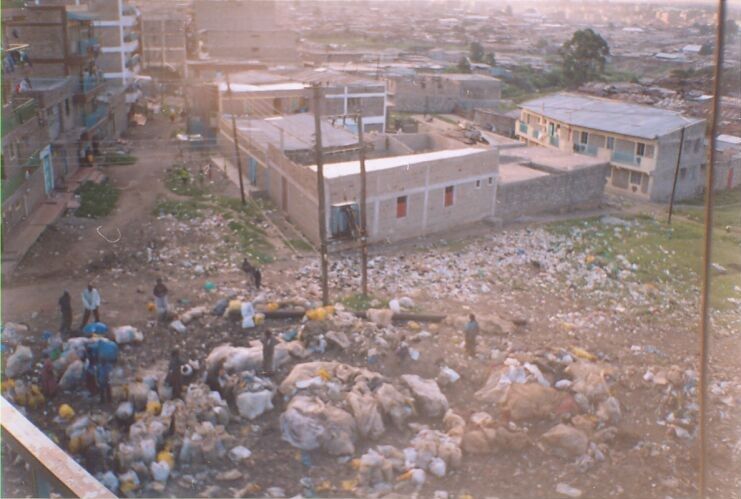
Africa’s largest open dumpsite, Dandora dumpsite. Source: Arnika
This collective is not merely a fashion studio; it is in fact an alchemical space where discarded waste is transformed into beauty, and where young women reclaim their power, income, and futures.
Joan’s Journey: From Inspiration to Feminist Futures
Joan first encountered the spark that ignited Warembo Wasanii during her debut fashion show in 2017 at Nairobi’s Michael Joseph Centre. It was there that she saw young girls from the slums passionately crafting fashion, their creativity defiant against their environment. “I remember I was paid 10,000 Kenya shillings for my first show,” Joan recalls with a laugh. More impactful than the pay was the connection she forged with these girls, that is their stories, struggles, and dreams.
Warembo Wasanii started modestly, moving from Baba Dogo to Karionangi, before settling in Korogocho, right next to the dumpsite. This proximity to waste is deliberate, a daily reminder of the raw material at their fingertips and the injection of hope amidst hardship. Joan notes, “It’s really about using what is readily available. Turning the problem into the solution. Women coming together and working together. There’s great power in women.”
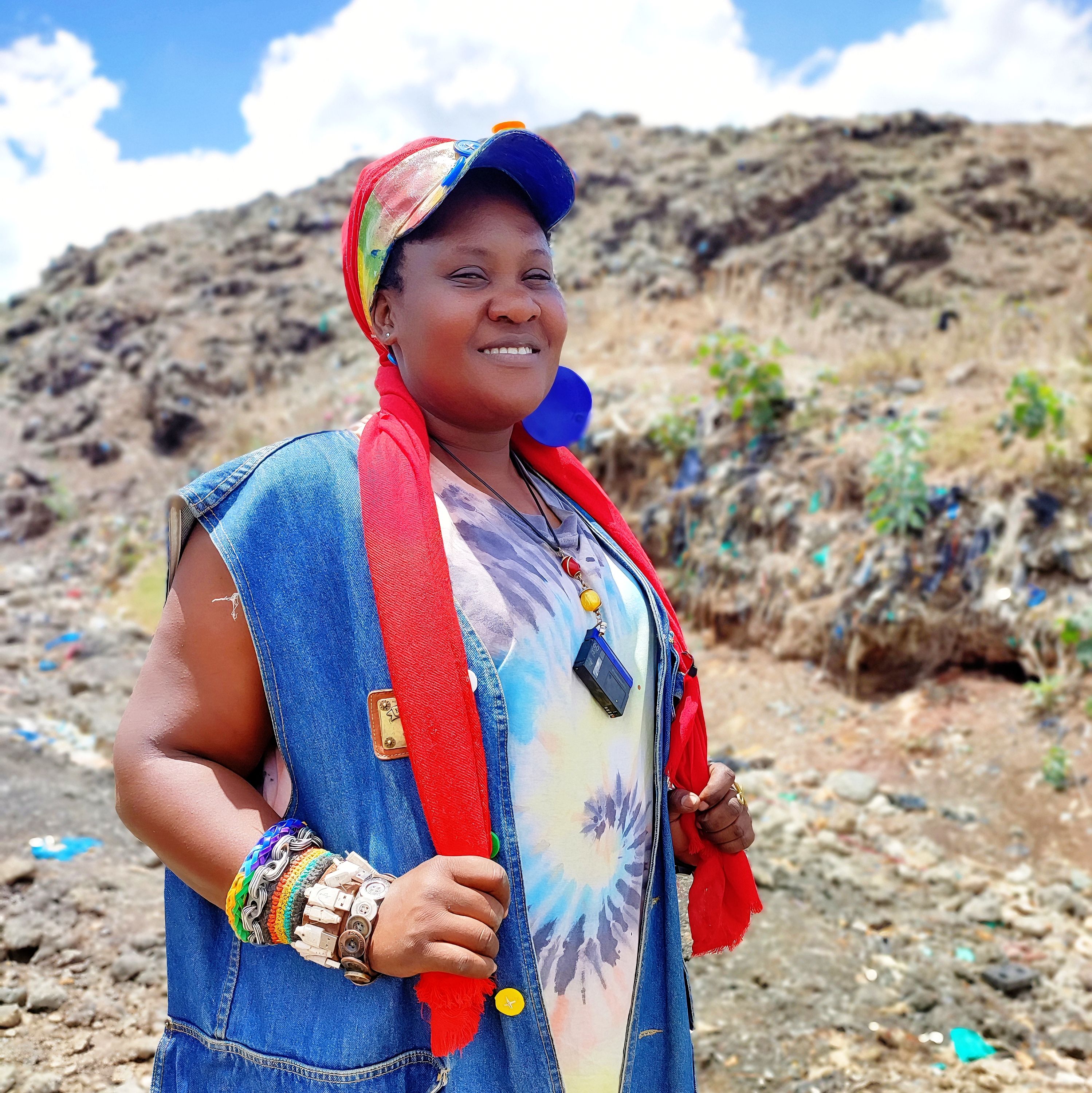
Joan Otieno, founder of Warembo Wasanii. Source: Edwin Austin
The Alchemy of Transformation: Turning Trash into Treasure
The enchantment of Warembo Wasanii is both striking and profound. The artisans visit the Dandora dump site three times a week during school vacations to gather discarded plastics, metal scraps, and textiles. These materials undergo a careful cleaning process before being transformed into intricate beaded accessories, custom-made clothing, and fashion items that convey narratives far more complex than their outward appearance.
Visualize the vast wasteland juxtaposed with the delicate beads sewn onto vibrant fabrics. The hands sorting through layers of trash are the same that stitch life into fashion pieces celebrated on local and international stages. This contrast, the harshness of the dumpsite and the elegance of the crafts, is the alchemy of Warembo Wasanii, a vivid metaphor for resilience and creativity.
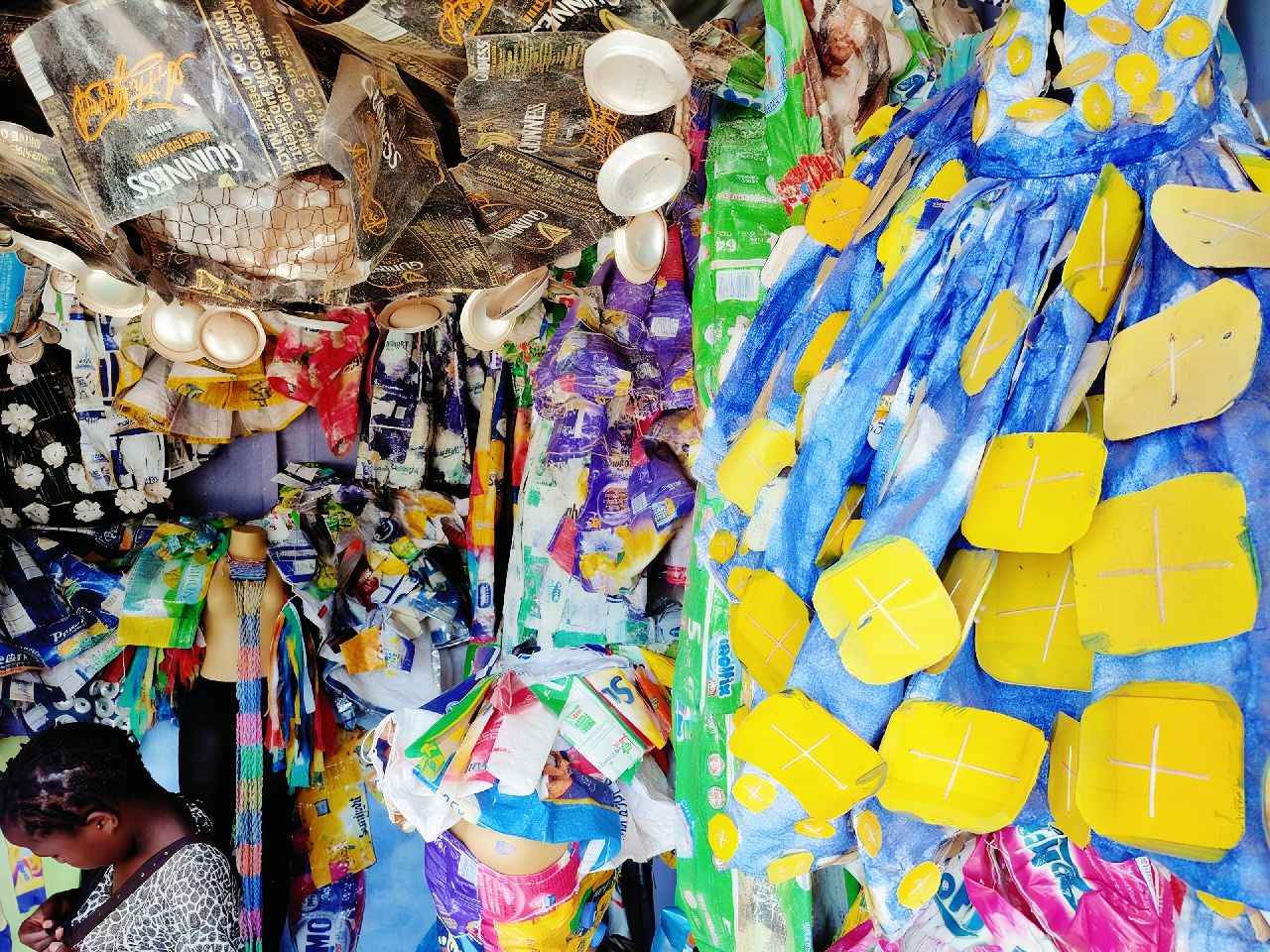
Recycled waste materials at the Warembo Wasanii studio. Source: Edwin Austin
Feminist Futures: Empowerment Beyond Income
For many girls under 18, Warembo Wasanii is a sanctuary, an art space and safe community free from the vulnerabilities of slum life. As Joan elaborates, “We work together, play together, and talk about a lot of girls’ stuff.” But this initiative transcends camaraderie. It is about quiet rebellion and reclaiming agency.
“The payment we get,” shares Maureen Atieno, a mother of two working at the Warembo Wasanii Studio, “helps with household costs. When our children are here, I’m assured they’re safe.” Such economic control empowers these young women to shift their roles within their families and communities. According to Joan, several mentees have gone on to establish their own fashion shops.
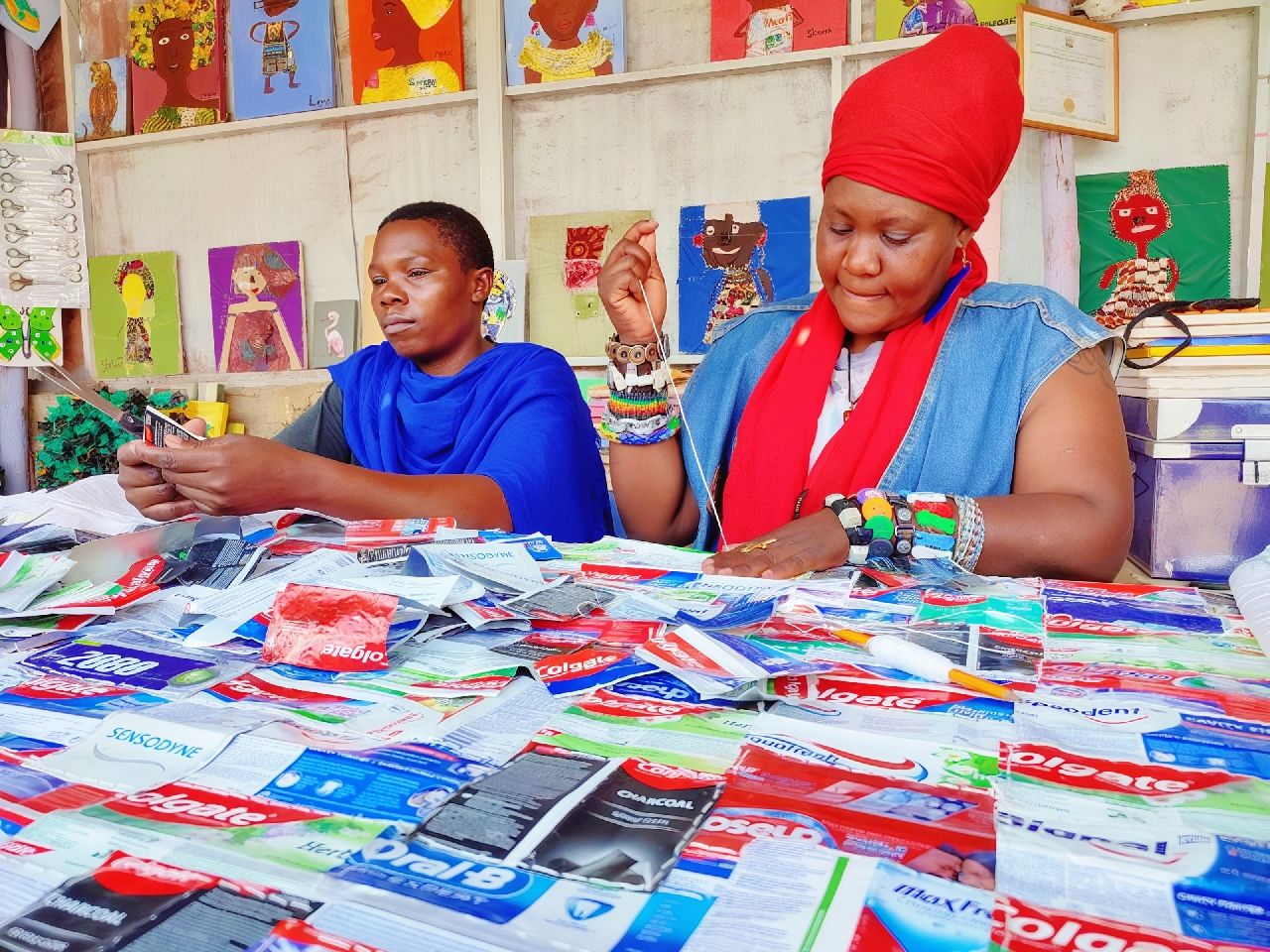
Joan Otieno, right, together with Maureen Atieno. Source: Edwin Austin
This empowerment also ripples outward. Evans Okumu, an artisan collaborating with Joan, observes how empowered women inspire young men in the community to seek jobs, relieving social pressures. “It's tough for a jobless man to court an empowered woman who is working,” he comments, highlighting subtle shifts in gender dynamics in the slum.
Challenges and Triumphs
Operating within a slum fraught with insecurity poses persistent challenges. Some parents are skeptical, fearing exploitation or misunderstanding the art-space ethos. Joan also contends with artisans’ expectations of regular pay, which differ from the collective’s community-driven model. However, involving community members in the workshop has mitigated some security concerns, fostering trust and shared ownership.
Despite these hurdles, the collective’s reach extends far beyond Korogocho. Joan’s work has taken her to global fashion exhibitions and workshops, from Stockholm to Paris, Australia to Nairobi, showcasing the artistry born from discarded remnants. “Seeing internationals appreciate work done by these young girls is a proud moment,” she beams.
Joan’s long-term vision is clear and ambitious: “To see women working together, girls living in safe spaces, having a cleaner environment for the next generation and to collaborate with organizations towards sustainable environmental goals.” By her account, Warembo Wasanii is not just a fashion studio, but a narrative of transformation, of waste into wonder, silence into voice, oppression into opportunity.