Trigger Warning and Disclaimer: The following content includes personal and sensitive
experiences. We encourage you to engage with the piece in whatever way feels right for you. You can read our full editorial notice here.
Circumcision or Female genital mutilation (FGM) is not merely a passing physical practice; it is a profound violation that settles in the soul before leaving its mark on the body. I am one of those whose inner lives bear wounds that have never fully healed, despite the seventeen years that have passed since that defining moment.
The psychological impact was more painful and profound than the physical consequences. I have carried with me an overwhelming sense of inadequacy and marginalization, along with the painful feeling that I was forcibly stripped of my natural self and distanced from the other girls around me. What makes this pain even more bitter is that, to this day, my mother remains completely convinced of the value of the practice, viewing it as a symbol of purity and chastity while overlooking the profound psychological damage it can cause.
This spiritual wound and physical marking that continue to follow me have instilled in me an unwavering conviction: I will be my daughter’s shield and protector. I will never allow her to go through the same traumatic experience or endure the bitterness that I lived through.
It is from this personal pain that the need to break the silence emerges. What happened to me is not an isolated incident, but an echo of the voices of millions of girls and women who continue to face this violation in silence. This calls for transforming individual narratives into a broader social reckoning that exposes the harm and examines the reasons behind its persistence.
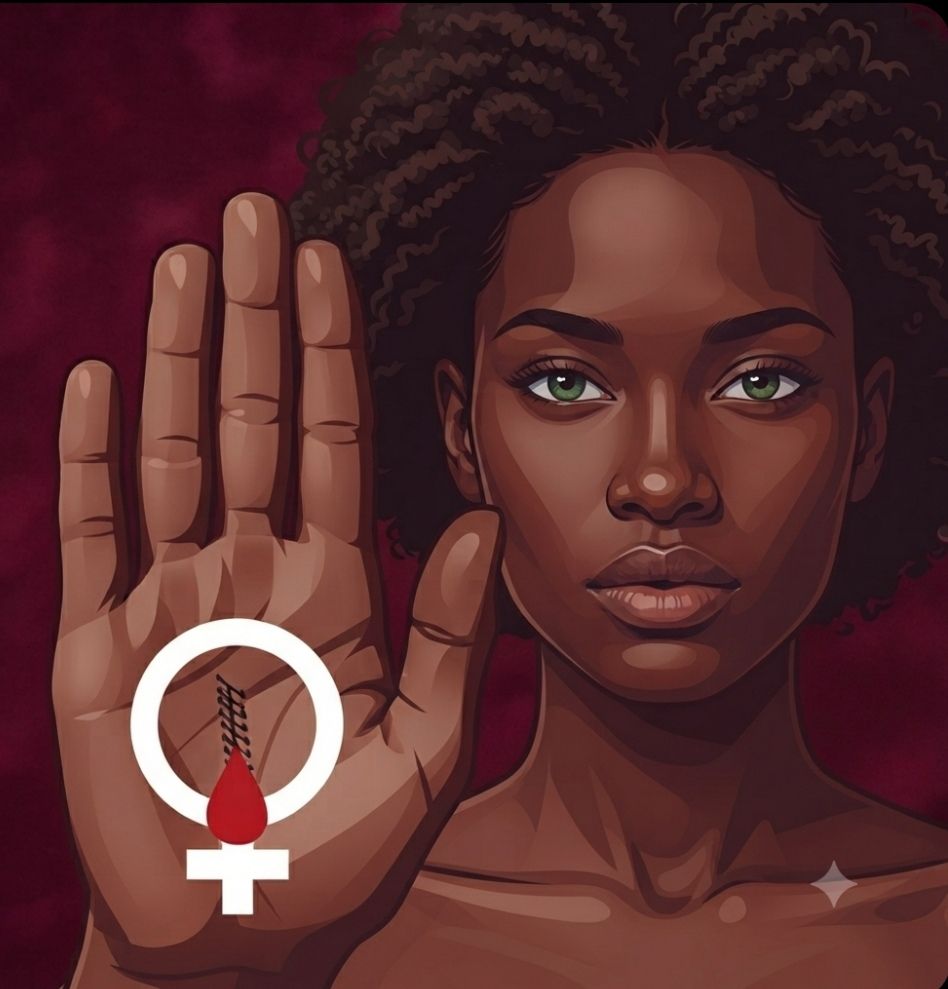
(FGM) is not merely a passing physical practice; it is a profound violation that settles in the soul before leaving its mark on the body. Source: AI generated photo
Understanding FGM: Definitions, forms, historical figures, and regional comparisons
The World Health Organization and international organizations define female genital mutilation (FGM) as any procedure involving the partial or total removal of the external female genitalia, or other injury to the female genital organs, for non-medical reasons. According to the international classification, the practice is divided into four main types:
- Type I (partial or total removal): Partial or total removal of the clitoris and/or the prepuce (clitoral hood).
- Type II (excision): Partial or total removal of the clitoris and the labia minora, with or without removal of the labia majora.
- Type III (Pharaonic/Infibulation): Cutting and narrowing the vaginal opening and stitching it closed, leaving only a very small opening for the passage of menstrual blood. Historically, this has been the most severe and prevalent form of FGM in Sudan.
- Type IV (other harmful procedures): All other harmful procedures performed on the female genitalia for non-medical purposes, including pricking, piercing, scraping, and cauterization.
Figures, history, and context in Sudan
FGM is a deeply rooted social practice in Sudan. Historical survey data indicate that the prevalence among women and girls aged 15–49 was 86.6%, according to the Multiple Indicator Cluster Survey (MICS). The figures also show that approximately 80% of women who underwent FGM experienced infibulation, highlighting the severity of the form passed down through generations.
According to data from the FGM/C Research Initiative, the prevalence of FGM among women aged 45–49 stands at 91.8%, compared with 81.7% among the youngest age group. Although a small proportion of women may undergo FGM after the age of 15, the data suggest a downward trend in prevalence among younger women.
Historically, Sudan witnessed early attempts to curb the practice. In the 1940s, the first law prohibiting infibulation was introduced in 1946 during British colonial rule. However, it faced strong social resistance, which transformed into a defense of the practice as a traditional custom.
FGM in Sudan has evolved across long historical periods. Studies suggest that its roots can be traced to ancient civilizations of the Nile Valley, which helps explain the commonly used term “Pharaonic circumcision” for its most severe form. Over time, the practice became intertwined with cultural and social traditions that helped sustain it as a deeply entrenched social norm.
Among the most significant factors contributing to its persistence are widespread beliefs linking it to purity, personal hygiene, the suppression of sexual desire, and the expectation that it is necessary to ensure chastity and social acceptance, particularly in relation to marriage.
In many local communities, the belief has taken root that an uncircumcised girl is somehow incomplete or carries a serious social stigma. Continued social pressure from older members of the family, particularly grandmothers, has also played a significant role in perpetuating the practice and passing it from one generation to the next, as it is regarded as a prerequisite for acceptance and belonging within the community.
Following independence, legal battles over FGM continued for more than seven decades, reflecting the long struggle between customary practices and legislation. This eventually culminated in the criminalization of FGM through the amendment of Article 141 on 22 April 2020, which criminalized the practice in all its forms.
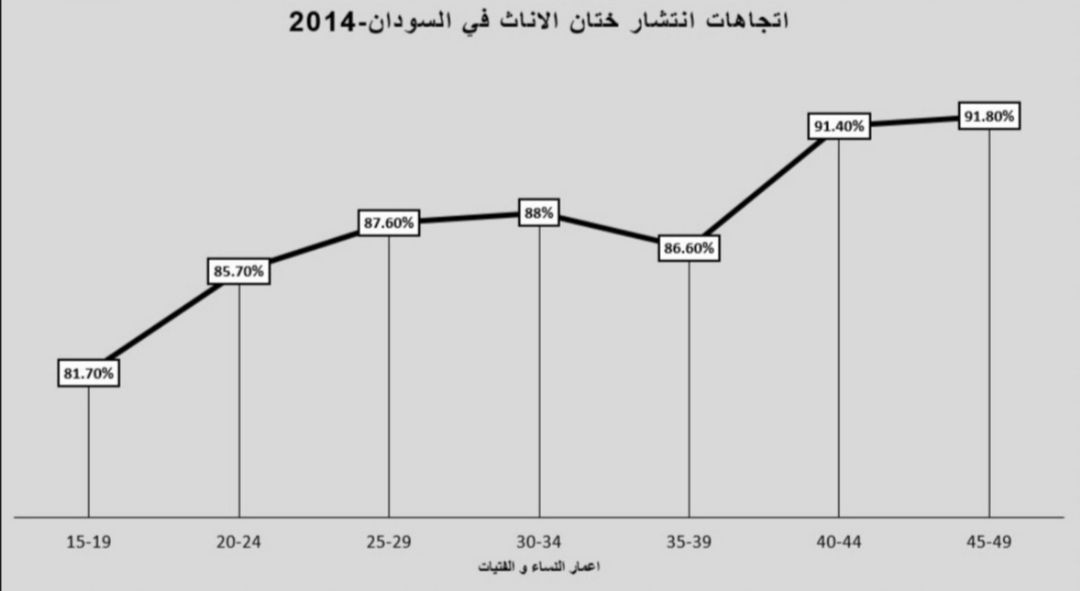
A graph showing trends in the prevalence of female genital mutilation in Sudan in 2014. Source: Data from the Institute of FGM Studies.
A Comparative look at the numbers: Sudan and Egypt
Sudan and Egypt are among the countries in the region with historically high rates of FGM prevalence, according to field and statistical documentation.
Sudan: The overall prevalence among women aged 15–49 is approximately 86.6%, with Type III (infibulation) historically being the predominant form, accounting for more than 80% of cases. Although FGM was officially criminalized in 2020, security challenges and war have hindered the enforcement of the law.
Egypt: Egypt records a prevalence of approximately 87.2% among women aged 15–49, according to the Demographic and Health Survey, as the predominant forms are Types I and II. Data also indicate progress in reducing prevalence among younger girls aged 15–19, where the rate has fallen to around 70%. Egypt has also strengthened the legal criminalization of FGM through legislative amendments in 2016 and 2021. At the same time, the medicalization of FGM, where the procedure is performed by medical professionals, remains a significant challenge.
Documentation on the displacement of Sudanese people to Egypt following the outbreak of war in 2023 points to an intersection between these dynamics. Displacement has, in some cases, created a temporary protective space for girls from undergoing FGM, while extended family pressure continues to follow some girls even after they cross into neighboring countries.
Health and generational impacts
FGM can cause severe and immediate health complications, including heavy bleeding, extreme pain and trauma, and urinary and reproductive-system infections. In the long term, women may experience serious consequences affecting their sexual and reproductive health.
Reports by the United Nations Population Fund (UNFPA), alongside medical research on the complications of FGM, show that women who have undergone the practice may experience significant difficulties, including persistent pain during sexual intercourse, complications during childbirth, and scar tissue that can increase the risk of vaginal tears and postpartum hemorrhage.
The harm is not limited to physical injury. It also directly affects a woman’s fundamental right to bodily autonomy, control over her reproductive health, and ability to make independent decisions about her own body.
A Data-Driven Investigation into the Experiences of 194 Sudanese Women
To add a documented field perspective and understand how the practice varies across different parts of the country, this article draws on a field survey conducted specifically for this purpose. Data were collected through digital questionnaires (Google Forms), which were carefully distributed through women-focused groups on Facebook and WhatsApp to reach a diverse range of Sudanese women from different social and geographic backgrounds.
The analytical sample included 194 Sudanese women aged 18 to 65 and above. The data were carefully categorized according to geographic region, Central Sudan, Northern Sudan, Eastern Sudan, Western Sudan, and the southern region, to examine the prevalence of FGM, as well as levels of acceptance and continued practice. The findings and percentages were as follows:
Regional prevalence and rates of FGM
1. Central Sudan (including Al-Gezira and White Nile states):
Among respondents from this region, 92.3% reported having undergone FGM during childhood. Type III (infibulation, commonly referred to as “Pharaonic circumcision”) was overwhelmingly predominant. The region is also considered one of those with relatively high rates of medicalized FGM, in which the procedure is performed by medical personnel.
2. Northern Sudan (Northern State and River Nile State):
The prevalence among respondents reached 94.1%. The data indicate deeply entrenched traditions, with FGM regarded as an essential rite that cannot be skipped. It is often accompanied by intense pressure from extended family members.
3. Eastern Sudan (Kassala, Al-Gedaref, and Red Sea states):
In this region, 85.6% of respondents reported having undergone FGM. Historically, the region has also been associated with practices involving re-infibulation (“adl”) after childbirth.
4. Western Sudan (Darfur and Kordofan states):
The data showed a relatively lower prevalence compared with the northern and central regions, with 68.4% of respondents reporting that they had undergone FGM. There were notable differences between urban and rural communities, with greater reliance on traditional birth attendants.
5. Southern Sudan and the southern areas (Blue Nile and South Kordofan):
The rate among respondents in these geographic areas stood at 54.2%, the lowest figure in the sample. This reflects cultural and social variations that make the practice less prevalent than in other regions.
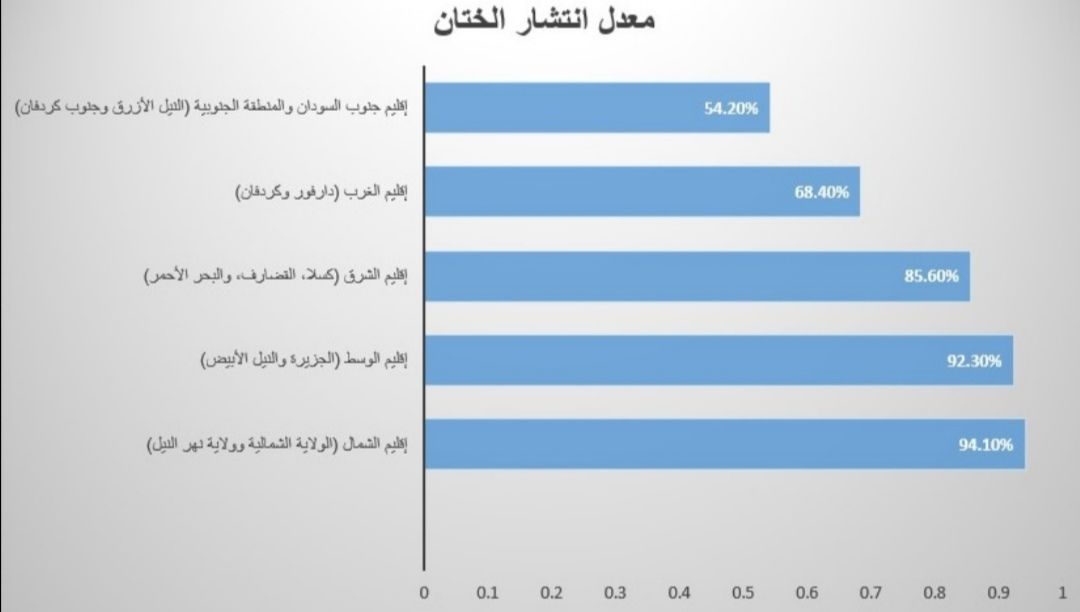
FGM prevalence rates by region: Suha Abdulrahman
Personal and Spousal Attitudes Toward FGM
1. Personal dissatisfaction: A total of 86.2% of respondents (167 women) expressed outright rejection and deep dissatisfaction with having undergone FGM, describing it as a serious violation of their bodily integrity and fundamental rights.
2. Husbands’ views and intimate relationships: Among the married respondents, numbering 142 women, 71.1% reported that their husbands did not express a preference for or approval of the practice. Approximately 58% of husbands considered FGM a major factor complicating intimate relationships and contributing to chronic pain that interferes with normal intimacy. Only 19.7% of respondents said their husbands preferred the practice based on longstanding cultural beliefs, while the remainder expressed no particular position.
Protecting future generations: mothers’ attitudes
1. A generational shift: The survey revealed a significant generational shift. 81.4% of respondents, including mothers and younger women, said they categorically opposed subjecting their daughters to any form of FGM in the future, seeking to protect them from the same historical suffering they had experienced.
2. Continued uncertainty: By contrast, 12.4% of mothers remained undecided and continued to face direct pressure from grandmothers and extended family members, while only 6.2% said they intended to continue passing the practice on to their daughters.
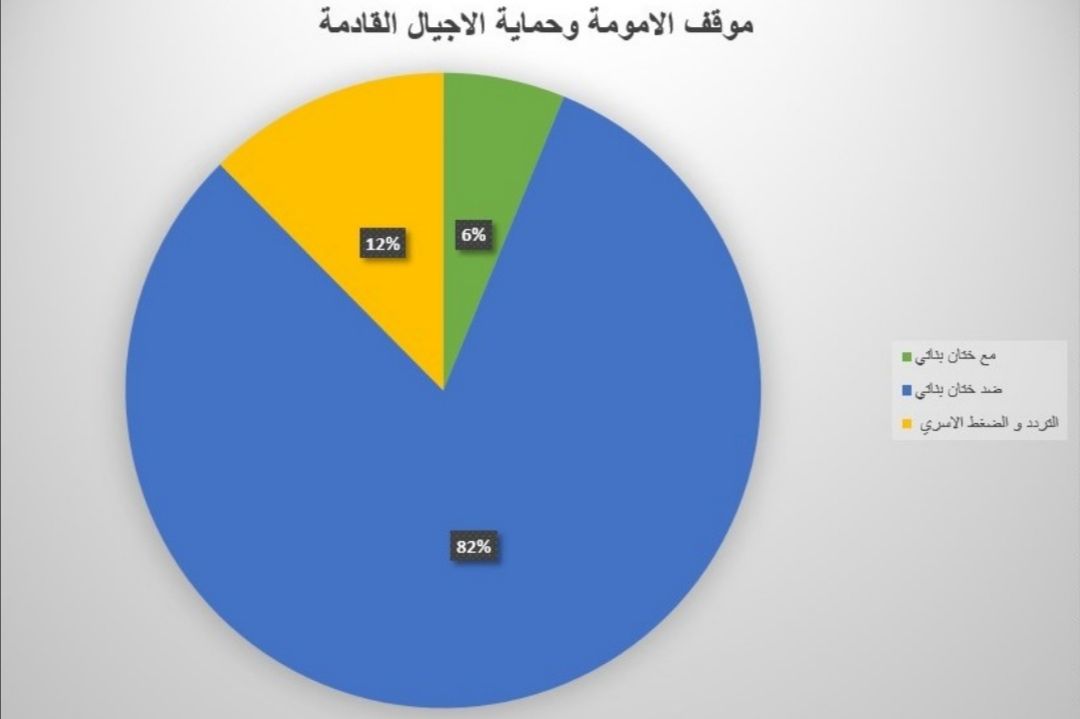
Chart showing mothers’ attitudes toward FGM, with the majority opposing the practice. Source: Suha Abdelrahman.
Social stigma and support
1. Negative discrimination and trauma: A total of 92.8% of women who had undergone FGM reported experiencing direct physical or psychological complications, ranging from chronic pain to difficulties during childbirth. In addition, 43.8% said they had experienced severe verbal harassment, family discrimination, or community stigma, either because of visible physical effects or because they attempted to break with tradition by refusing to have their daughters undergo FGM.
2. Positive support and community solidarity: The data showed that 28.5% of respondents, particularly those living in major cities, had found supportive and sympathetic circles within their communities. Support from individuals and activists provided them with a degree of emotional protection and helped ease the pressure imposed by traditional norms surrounding FGM.
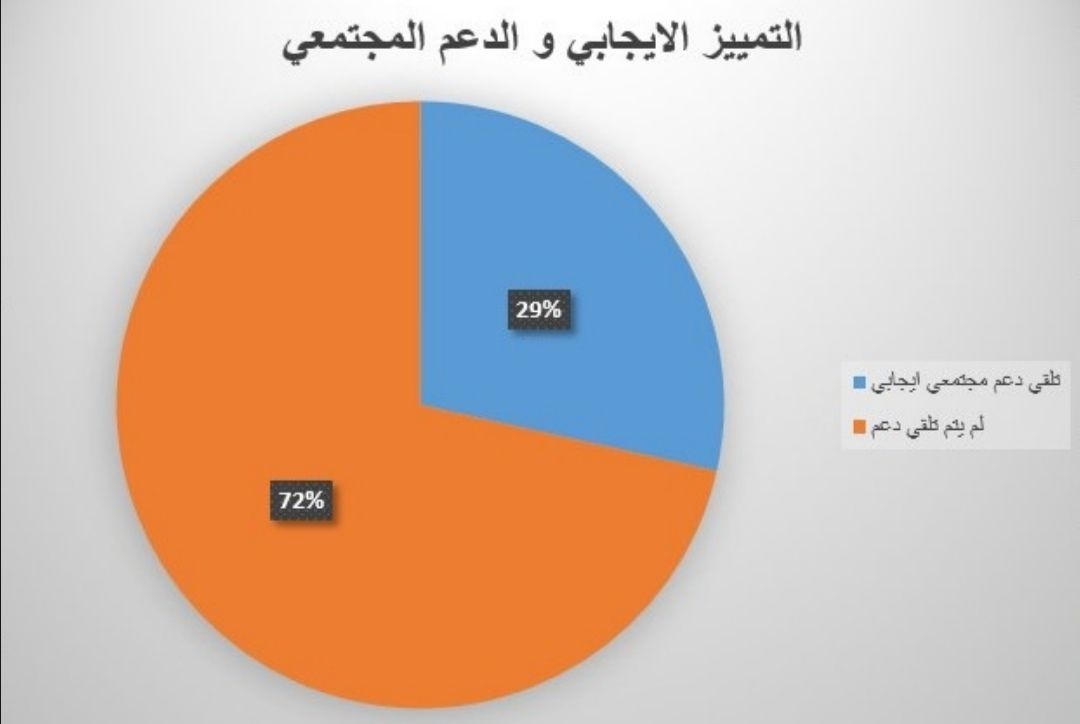
Chart showing whether women receive community support, with the majority reporting no support. Source: Suha Abdelrahman.
Real stories behind the numbers and statistics
Behind the figures and dry statistics are the stories of women who have found themselves confronting unforgettable physical and psychological pain, wounds that continue to be reopened by war and social pressure. These firsthand accounts reflect the breadth of violence experienced by women, from delivery rooms to marital homes and the practices of traditional birth attendants and deeply rooted social beliefs.
T. M.: Verbal Abuse and Discrimination in the Marital Home
T. M. entered marriage believing that a new life would bring her safety and stability, but she soon found herself confronting her husband’s family. Shortly after the marriage, news spread within the close family circle that she had undergone FGM as a child. The family’s treatment of her changed completely. Daily mockery was followed by direct insults, discrimination, and bullying directed at her body. She was treated as though she had brought a defect into the marriage with her. Her home became a space of psychological pressure that stripped her of her basic right to dignity and acceptance.
A. H.: The Hardships of Eastern Gezira and a Painful Early Divorce
From eastern Al-Gezira, A. H. emerged from a marriage that lasted only two and a half months. Her feelings and attempts to build a family could not save the relationship. Her husband abruptly decided to end the marriage in the most hurtful manner. He not only ended the relationship but justified the divorce with harsh and humiliating remarks, claiming that she was “disfigured” and unfit to be a wife because of the effects of FGM.
A. H. was left to face the stigma of early divorce in a community where blame is often placed on women, bearing alone the consequences of a practice that had been forcibly imposed on her as a child when she had no say in the matter.
B. M.: A Battle Between Episiotomy and Cesarean Section
When B. M. reached motherhood, what should have been a joyful moment of anticipation became a painful struggle in the delivery room. As a result of extensive scar tissue caused by the severe FGM she had undergone as a child, medical staff encountered significant obstruction and complications during delivery.
Her body did not respond even to an episiotomy, which was attempted as a last resort to facilitate vaginal delivery; the scar tissue could not stretch sufficiently. After hours of additional pain and physical and emotional exhaustion, doctors were forced to take her to the operating room for an emergency cesarean section to save both her and her baby.
E. H.: A Midwife from Halfaya on Fear, Money, and the Hidden Side of FGM
In Halfaya, Bahri, E. H., a former midwife, recounts decades of involvement in the practice. She says she performed FGM on more than 40 girls from different backgrounds and ethnic groups in the area, viewing it both as a source of income and as an accepted tradition.
A turning point came when one girl’s father strongly objected to his daughter undergoing FGM. He went to the police and filed a criminal complaint against E. H. and the girl’s mother. She was tried and sentenced to prison, but managed to avoid serving the sentence by paying a fine.
E. H. says the case was eventually closed and settled following the intervention of a security official, who was later discovered to have shared the fine and compensation money with the girl’s father. The incident, and the fear, pursuit, and financial exploitation surrounding it, ultimately led her to abandon the practice of FGM.
M. M.: Anxiety at 25 as Her Wedding Approaches
M. M. is 25 years old and preparing for her wedding, scheduled to take place in just two months. Instead of experiencing the excitement and anticipation of a new chapter in her life, she is overwhelmed by fear and anxiety.
She fears the moment her future husband discovers the effects of FGM. She is constantly afraid that he will reject her or treat her with disgust, as she has heard in the stories of other women. This quiet fear has become a nightmare that overshadows the joy of preparing for her wedding.
A. M.: The Voice of Entrenched Tradition in River Nile State
In a village in River Nile State, A. M., a mother of three girls, the eldest of whom is 17, represents the opposite position. She speaks openly and proudly about having subjected all three of her daughters to FGM, emphasizing that this is the prevailing and accepted practice among the families in the village.
From the perspective of the prevailing local norms, A. M. believes that an uncircumcised girl is considered unmarriageable and faces social shame. She further insists that even if a girl escapes FGM during childhood, her in-laws will have her undergo the procedure immediately after her first childbirth, in agreement with the traditional birth attendant, to ensure the continuation of the inherited custom.
The impact of war and displacement: Between pressure in new environments and the risks of going unnoticed
The war that erupted in Sudan in April 2023 led to the total or partial collapse of healthcare infrastructure and community support networks, creating a fragile environment that heightened risks for women and girls. Amid the absence of oversight and the loss of economic and social security among families living in displacement camps and areas, some harmful practices have resurfaced, either as mechanisms for reinforcing traditional norms or as a consequence of the absence of protection and response institutions.
To understand the precise field-level dimensions of this impact, I conducted a survey involving 79 displaced and migrant women, 47 internally displaced women and 32 women who had migrated to Egypt. Their experiences reveal sharp shifts shaped by population movements, the pressures of host communities, and the stricter laws encountered in countries of refuge.
1. Internally Displaced Women (The Impact of Local Environments and Pressure from Host Communities): Of the 47 internally displaced women included in the sample, 27 of whom had moved from Khartoum to Al-Gezira State, 13 to River Nile State, six to Al-Gedaref, and one to Port Sudan, field experiences revealed a significant impact from their new environments.
Twelve women, including nine in Al-Gezira and three in River Nile State, said they had subjected their daughters to FGM despite previously holding personal beliefs against the practice. This reversal was driven by direct pressure from women in host villages and communities where the practice is considered a sacred tradition. Mothers were made to fear that leaving their daughters uncircumcised would bring social shame and exclude them from their communities. This demonstrates how traditional environments can exploit the vulnerability created by displacement to reproduce coercive practices.
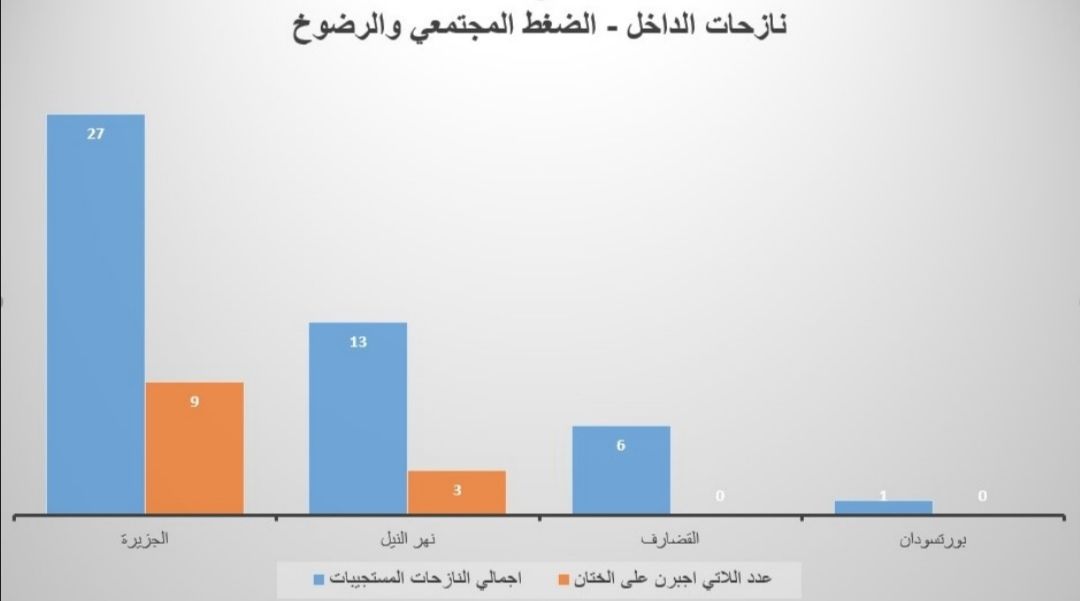
Chart showing how internally displaced women respond to community pressure and compliance. Source: Suha Abdelrahman.
2. Women Who Migrated to Egypt (The Impact of Law and the Positive Effect of Awareness): In contrast, the sample of 32 women who migrated to Egypt presented a markedly different picture, reflecting the influence of a more protective legal environment.
Seventeen of these women said that they had initially carried cultural traditions and beliefs that encouraged them to have their daughters undergo FGM. However, they completely abandoned the idea after learning about the strictness of Egyptian law and the severe criminal penalties imposed on those who perform FGM, including medical practitioners.
The remaining 15 women said that they had already opposed FGM before leaving Sudan. For them, seeking refuge provided a safe space that strengthened their ability to protect their daughters’ bodies, away from the pressure of extended families in Sudan.
Media and human rights reports, including coverage published by Al Taghyeer, Sudanile, and Mashaweer News, have documented how insecurity and forced displacement have contributed to an increase in forms of family-based violence, including FGM, as awareness efforts and gender-based violence response centers have become less accessible.
Platforms such as Social Science in Humanitarian Action and Al Manassa have also examined the longer-term effects of displacement on Sudanese girls, including those who have sought refuge in neighboring countries such as Egypt, where pressures from refugee communities intersect with pre-existing health and psychological challenges.
The legal and institutional reality
In 2020, Sudan amended Article 141 of the Criminal Act to criminalize FGM and impose penalties of up to three years’ imprisonment, in addition to fines. The amendment was widely welcomed by UNICEF and the United Nations. Regarding this legal dimension, Wafaa Al-Muez, a lawyer and human rights advocate who runs her legal practice in the Al-Thawra area of Omdurman, offers a field-based reading of Sudanese legislation:
“From a purely legislative perspective, the amendment of Article 141 of the Sudanese Criminal Act of 1991, as amended in 2020, represents an explicit human rights gain. The act of cutting or mutilating female genitalia was criminalized as an offense punishable by up to three years’ imprisonment and a fine. Under paragraph (2) of the same article, a hospital or health center may also be closed, and the license of a practicing midwife or doctor may be revoked. But the law on paper is one thing, while its practical application during armed conflict is something entirely different. From our office here in Al-Thawra, Omdurman, we have seen how the disruption of the judicial system, the closure of police stations, and the suspension of complaint-reporting mechanisms during the war have created a deep gap that perpetrators have been able to exploit. FGM is legally classified as a hidden crime that takes place behind the closed doors of the family, often with the consent of guardians, making evidence difficult to obtain in the first place. With official complaint mechanisms disrupted and emergency protection systems weakened, Article 141 has effectively become an unenforced provision, while the practice has returned to being carried out in secret under a climate of near-total impunity.”
Community initiatives and solutions
Despite the harsh conditions created by the war and the deterioration of institutional structures, women’s groups, community activists, and healthcare workers continue to work to combat FGM in shelters and displacement areas. These networks provide individual and family-level awareness, as well as psychological support for girls.
Training workshops and community-based initiatives, including the Sudan Free from Female Genital Mutilation program documented by rights-focused platforms such as Khatwa Press, highlight the importance of strengthening community-led protection mechanisms. These efforts rely on local communities and displaced people themselves to prevent the practice and protect girls during periods of crisis.
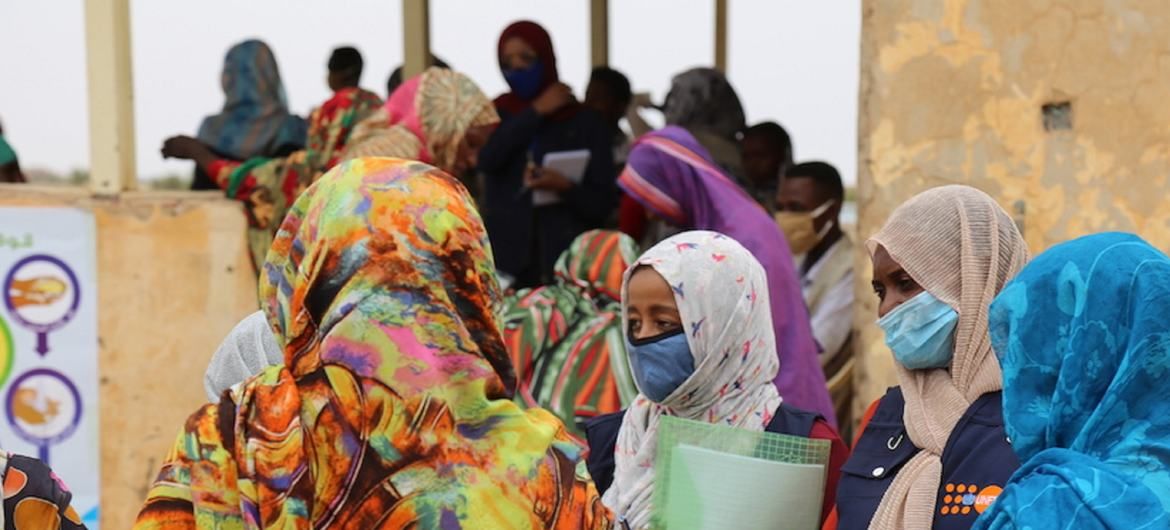
Women’s groups, grassroots activists, and healthcare workers continue their efforts to combat FGM in shelters and displacement areas. Source: UNFPA Sudan.
Conclusion
I return to where I began- to the girl I was seventeen years ago. I am not merely a number on a list of victims. I am a voice that has moved beyond the scars to create change and confront the practice. True healing from the mutilation of the body and spirit can only begin by breaking the absolute silence and transforming individual pain into an impenetrable shield that protects future generations from the harms of this inherited cultural practice.
The bodies of Sudanese women, already burdened by the weight of tradition and the trauma of war and displacement, need more than written laws and legislation. They deserve a firm social and political commitment that places life and dignity above entrenched traditions, and puts the safety and rights of girls at the forefront of national and humanitarian priorities. Perhaps then, we can finally close the doors to the past and open for Sudanese women a future free from wounds.