A Mouth Full of Salt is Reem Gaafar's debut novel. Reem received the Island Prize 2023 as the first Sudanese to win the prize for an African novel. The novel is well received and highly acclaimed by international and local audiences alike. This review will come in the following structure. First, I will provide a summary and overview of the novel; rest assured, I will not spoil the plot for you! Second, I will delve into the literary analysis of the novel through examining the development of the characters and the plot. And finally, I will provide a critical reading of Sudanese diasporic literature in light of Sudan’s current sociopolitical reality.
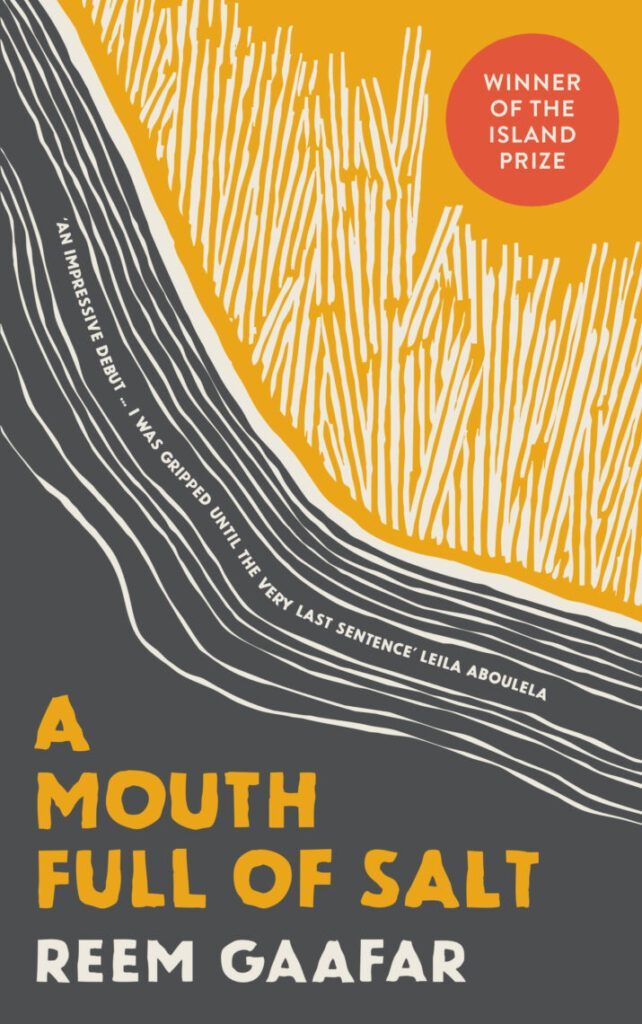
The Book cover og " A Mouth Full of Salt". Source: Qantara.de
About the author
While "A Mouth Full of Salt" is Reem’s first novel, it is not her first writing experience. She has two published short stories: Light of the Desert, published in the I Know Two Sudans Anthology, and Finding Descart, published in Relations: An Anthology of African and Diaspora Voices. Gaafar’s writings also appeared on Andariya Platform and 500 Words Magazine (now The Sudanist), African Arguments, among other platforms. She also runs a personal blog titled Life From Reem’s Perspective. Moreover, Gaafar is a public health physician by profession and also a filmmaker and a painter. She produced and directed a film through the Sudanese Architecture Forum in 2017, titled The City of Coral on the historical city and UNESCO Heritage Site of Suakin, as well as Light of the Sahara, a memoir and documentary of her late grandfather, Alhaj Mahgoub Gaafar. Both of which are in a storytelling documentary format.
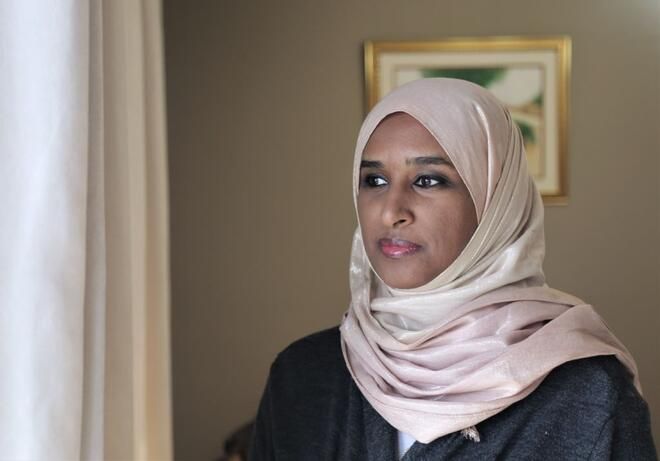
The writer, Reem Jaafar. Source: Al-Tagheer Newspaper
Overview of A Mouth Full of Salt
Located in a small Northern village close to Dongola, the novel follows the dramatic escalation of events in what is usually a very boring and quiet village, through the personal lives of the protagonists. The events reveal personal premonition, familial conflict, historical violence, and fragile structures of oppression, all unraveled through the narration of an omniscient narrator who follows these events through the public collective experience of the villagers and the personal private ones of the three main protagonists.
The three protagonists highlight three female characters: Fatma, the young girl that the story begins with, who, in a typical historical account about rural Sudan, is inclined towards modernity and cannot wait until she can leave the small village and follow her dreams in Khartoum. The way Fatma’s character is written reminds me very much of the character of Soraya in Lyrics Alley by Leila Aboulela, which is not surprising because the author, Reem, mentioned on multiple occasions, including the acknowledgment of the novel, that she is very influenced by Aboulela’s writing and stories.
The conflict in Fatma’s story is a psychological one; she is mechanically integrated into the social life and events of the village, but this inclusion only repulses her further from this life and makes her yearn for the day she would depart from it. Also, Fatma enjoys a great deal of agency, which is unconventional; however, this agency is facilitated through family traumas that also unravel bit by bit in the story. Fatma’s desire to leave is how Gaafar explores the contradictions of modernity in rural areas in Sudan, which is deeply intertwined with the social structures of the urban vis-à-vis the rural. Khartoum represents liberation from the social structure of village life, including race prejudice and gender hierarchy, or at least this is how it is imagined by Fatma’s character.
The second character that the novel centers on is Sulafa, who is portrayed as a woman with a childhood complex who sought salvation in marriage, only to be further disappointed and betrayed by her spouse’s family. Sulafa is the manifestation of gender oppression and hierarchy. Furthermore, she represents the complexity and fragility of motherhood, and the social pressures and expectations of married women whose entire personality and value are reduced to their reproductive abilities. Gaafar also explores an interesting matter that is rarely approached with this seriousness, which is the politics and relations with in-laws, which could not only be toxic but could reach unprecedented levels of violence as experienced by Sualafa, Nyamakeem, and even Sara.
The third and final character in the story is Nyamakeem, the South Sudanese character, through whom the conflict of race superiority, cultural differences, and identity politics is played. Nyamakeem represents that race isn’t just an individual prejudice, as Nyamakeem was not only rejected by the Kheir Elsieeds family, her exclusion and estrangement represent a structural prejudice because the entire village weaved together myths and fabrications that further estranged her. Moreover, it is represented in how Nyamakeem and James, her South Sudanese friend, despite being academically qualified, the work that they are eligible for never exceeds manual daily labor.
Sulafa and Nyamakeem both represent the elements of gender and racial prejudice in Northern Sudanese societies. They are two faces to one coin. Although coming from completely different contexts and circumstances, they both experience prejudice that is directed against their identities as females in a patriarchal society, one has it worse than the other due to race. Womanhood, in such a community, is measured against skin tone, domestic labor, and motherhood.
Spatiotemporal Structure and Nonhuman Elements
One of the great things about this novel is its structure, as it is not structured in a linear manner, but rather as temporal and spatial bursts. Part I, which consists of twelve chapters, is located in the spatiotemporal now. The village in real time as the events are unfolding, this is also tied to a particular historical period in Sudan, which is right before the Inqaz (Salvation) Revolution/ Coup d'etat. The second part is spatiotemporally located in the past, in Khartoum.
The life of Nyamakeem unfolds against the backdrop of Sudan’s Independence in 1956. It also mentions the historical events of the Torit insurgency in 1955, which historians discuss as the nuclear moment of the Sudan/South Sudan armed conflict. Part III brings us back to the historical now, where all the conflicts are resolved in two short chapters. This structure of the story is smart and enjoyable, because it builds suspense and makes the plot unpredictable.
The conflict among the three characters represents three layers of consciousness. The first layer, starting from bottom to top, is race, which is represented in the character of Nyamakeem, whose race results in her marginalization, persecution, discrimination, and oppression. While gender discrimination and inequality are played out through the character of Sulafa, whose womanhood is associated with her motherhood, her ability to reproduce and raise children. While Fatma represents the dynamics of modernity, urbanization, and personality conflict, which is torn between tradition, heritage, authenticity, and the glamorous secular, urban, and modern life.
Gaafar also, in addition to the superstitions and supernatural powers that are woven in throughout the book, very eloquently weaves in other non-human elements, such as the palm trees and saqia. However, the most important non-human element in this story is the Nile. The Nile is portrayed not only as a background and a setting, but it is also an active element that is negotiated and negotiates accessibility, rights to live, heroism, and belonging. By writing the Nile as an active element in the story, Gaafar portrays how social life is influenced by and structured around natural elements. This is a very smart way of representing the multilayered relation and connection between the Sudanese psyche and the Nile as their integral source of life, yet it also maintains the power to take away this life.
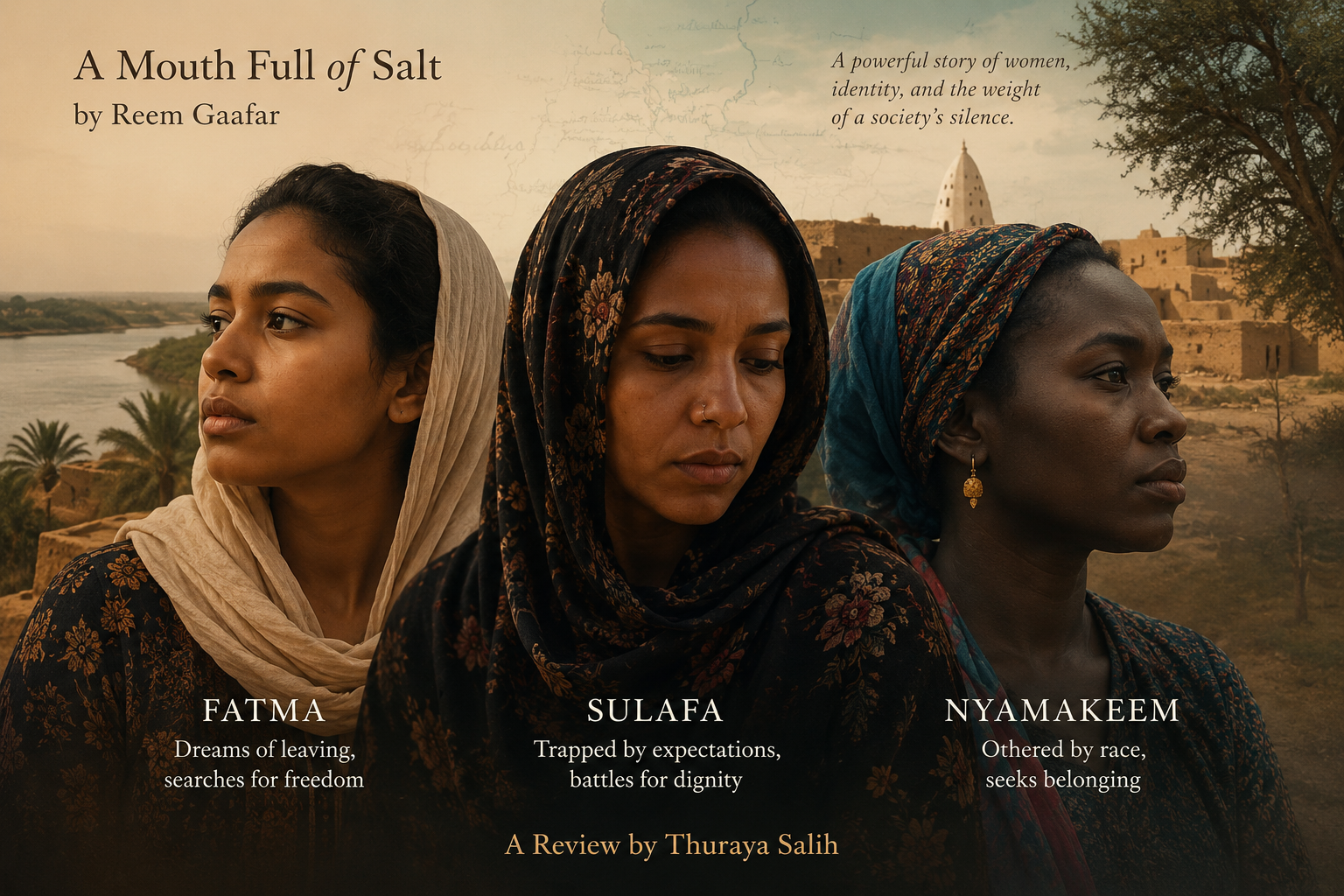
An AI-generated image of the book characters.
Conflict Resolution and Pacing
Overall, I think the pace of the novel was very pleasant, it wasn’t too fast that it collapses the story, nor too slow that it feels sluggish. The progression of Fatma and Sulafa’s characters was also very well structured, naturally and realistically developed. Nyamakeem’s character, on the other hand, feels a bit rough on the edges. The character develops very well in the second part, but then collapses into a one-dimensional persona in the final chapters.
As the story is coming to an end, we understand the history of Nyamakeem and how she came to be imagined and portrayed in that way in the village, but we stop seeing things from Nyamakeem’s perspective. Moreover, the resolution of both Sulafa and Nyamakeem’s characters feels a bit too fantastical for the level of realism of the rest of the story, in my opinion.
Another area I felt was somewhat inconsistent was the scene in chapter eleven; Sara’s childbirth. While beautifully written, I believe it’s an unnecessary addition to the plot. It feels forced and doesn’t contribute meaningfully to the story. As this story centers around themes of gender hierarchy, womanhood, and oppression, I understand the author’s political choice of discussing the physical violence that women experience in childbirth and healthcare in general, especially given her public health background. However, the scene was too graphic for my liking, and perhaps that’s only a personal preference.
Traditionalism and Race Prejudice
The novel also provides a critique of traditionalism through the interactions between the different characters. Traditionalism here is painted as racism, against the South Sudanese, mysticism, and belief in supernatural powers. The way Gaafar is set to discuss the question of race went beyond just presenting it as simple negative traditions into a structural racial prejudice that is present in access to education, employment opportunities, the type of labor that is performed by the “racially other” bodies, as well as the visibility and mobility of these bodies and acceptance.
This is very much apparent in the second part, where Nyamakeem struggles to raise her child alone in Khartoum, her invisibilization and alienation by the city, its people, and her own husband and his family. It also portrays this through the internal familial conflict and dynamics of Kheir Elsieeds and Fatma’s family, where questions of gender hierarchy, visibility, labor, and power are all negotiated according to gender, socio-economic status, and race. This provides a deep psychological reading of the structure of the Sudanese society and its deficits.
Sudanese Diasporic Literature: Who are we Writing for
One of my main problems with diasporic literature, which made me avoid it for so long, is its inclination towards nostalgia as a central theme. Nostalgia can be a great literary option because it is poetic. However, it also runs the risk of over romanticizing reality, a reality that could be very harsh and unbearable for those who are experiencing it firsthand, which leads to the alienation of these people from their realities through the literature. The second problem with nostalgia is that it deprives the writer of critically examining the topic, as it collapses the space of critical analysis and reflection.
The second reticence that I have towards diaspora literature is language. This literature, because it is written in Western languages, has double the responsibility, in my opinion, to represent the country and the culture. And not only represent it through the narratives that align with the Western imagination of the local culture.
On the contrary, it should be represented through the authenticity of the local culture itself. Language is never neutral. Fanon (2008) argues that it is a performance lens, “He [the person who learns and uses the colonizer’s language] adopts a posture, a way of being seen and of seeing others, that the language carries with it.” (Lingistically Yours, 2026). Meaning language becomes a filter that sifts through reality, posing a lens through which people who speak and use colonial language see themselves and others and their relations and dynamics. This poses a moral responsibility and accountability on us, those who use colonial language, to constantly recheck and hold ourselves accountable for the narratives and rhetoric that we build and promote.
What makes Gaafar's novel compelling is that it largely avoids the sentimental nostalgia that characterizes much of the diasporic writing. She discusses Khartoum, contrary to mainstream diasporic narrative, as a place of oppression and alienation of the other; this is particularly evidential in the scenes where Nyamakeem would go to the market to sell her food in the aftermath of the Torit mutiny. It also doesn’t collapse the rural life to a romantic imagined utopia of nature, harmony, and a minimalist life that is unploughed. She discussed, with moral commitment, the structural problems of race, gender, and class.
This is important if we want to read this novel, as well as Lyrics Alley, which I have mentioned multiple times throughout this review, as works that belong to the decolonial genre or discuss themes of anti-colonialism. Leila’s novel primarily discusses the liberation movement leading up to independence. Gaafar, on the other hand, provides a reading of history against the grain through analysing and identifying the internal contradictions, biases, and prejudices within this history of liberation and struggle. I think both authors have provided critical readings of history in a solid fictional format.
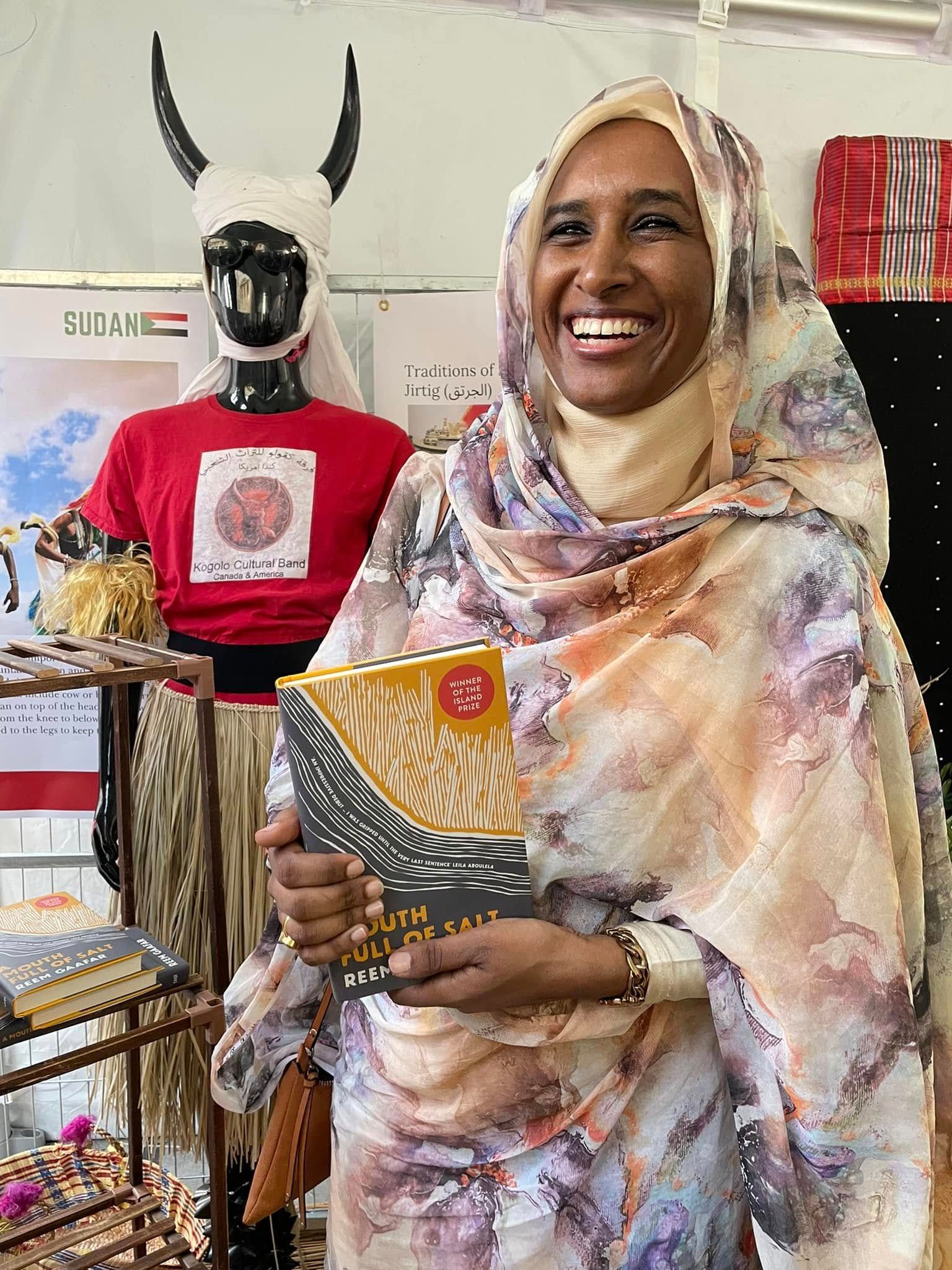
Reem Jaafar presented her book at the Sudanese Cultural Tent during the Muslim Fest festival in Mississauga. Source: Reem Jaafar's Facebook page
Final words
My overall assessment is that "A Mouth Full of Salt" is a very good book; it is catchy, has a very well developed and coherent plot, and provides a great orientation into understanding Sudanese complexity for non-Sudanese audiences. This is particularly important today in light of the horrible atrocities and ravaging war that Sudan is living through. It is stories like this that can provide a window for non-Sudanese audiences to peek through into the multilayered reality of being Sudanese, which could, hopefully, facilitate empathy.