Introduction
Coffee, or “jabana” as it is known in Sudan, has become an established ritual of social life and hospitality traditions across much of the country, with a particularly strong presence in eastern Sudan, where it is closely associated with longstanding social and cultural traditions, especially among Beja communities. Historical studies indicate that coffee originated in southwestern Ethiopia, the home of the Arabica coffee plant, before crossing the Red Sea to Yemen, where its cultivation, trade, and culture of consumption developed and later spread through the trade networks of the Red Sea region. There is insufficient historical evidence to determine exactly when coffee first arrived in Sudan. However, Sudan’s position along the Red Sea’s trade and cultural networks, as well as its proximity to Ethiopia and Yemen, places Sudanese coffee culture within a broader history of commercial and cultural exchange across the region. Over time, jabana developed its own distinctive rituals in eastern Sudan, becoming part of social gatherings, hospitality, celebrations, discussions, and reconciliation meetings.
There is little evidence to suggest that coffee was historically limited to a particular age group; contemporary sources document its presence across generations, including among young people. In eastern Sudan, jabana gatherings continue to provide spaces for socializing and community interaction, reflected in their enduring presence in everyday life, cafés, and social gatherings attended by both younger and older generations. Tea was traditionally the dominant beverage, but in recent decades coffee has gained greater prominence and, in some communities, has increasingly competed with tea, particularly among young people, who have embraced it as a source of tranquility, self-expression, and connection to cultural traditions.
The Sudanese jabana is far more than a beverage; it is a living cultural tradition and an element of intangible heritage. The fragrant smoke of roasted coffee mingles with incense, while the rhythmic sound of the mortar accompanies the serving of successive cups, creating a shared social experience. This tradition extends from family kitchens to urban gathering spaces, from Sufi assemblies to wedding celebrations, and from the first cup (Bekri), enjoyed as a morning blessing, to the final cup (Khadr), which concludes evening gatherings late into the night.
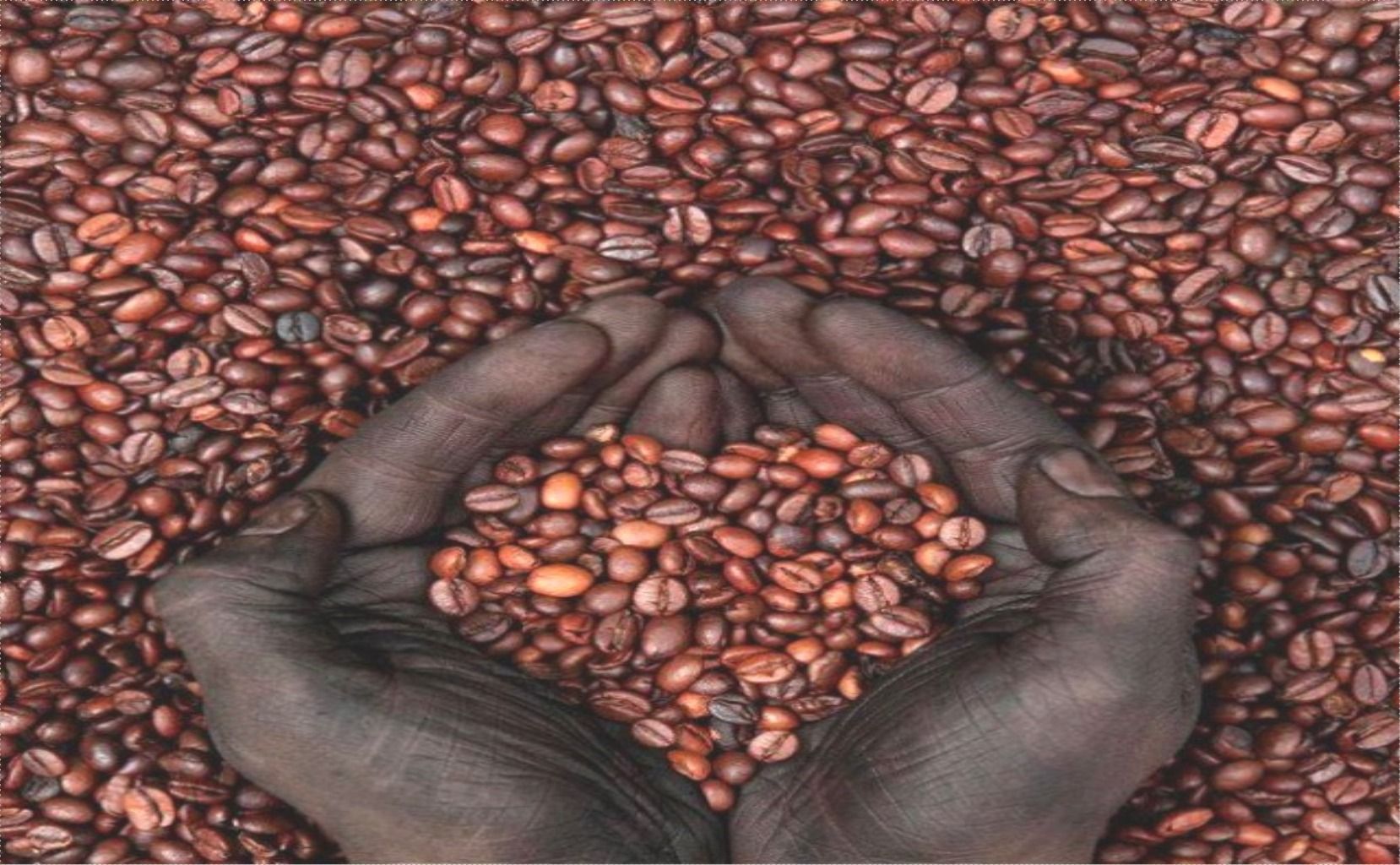
A picture illustrating Africans' love for coffee – Source: Wikipedia
Yet this vibrant cultural tradition has been severely challenged by the realities of war. Since the outbreak of armed conflict in April 2023, Sudan's imports of coffee beans, particularly from Uganda and Ethiopia, have declined dramatically. Before the conflict, Uganda alone exported more than one million 60-kilogram bags of coffee to Sudan annually, accounting for roughly 20% of Uganda's coffee exports. By April 2024, however, exports had fallen to just 7,700 bags, representing an 80.5% decline compared with the previous year.
According to Trading Economics, Sudan imported approximately 64,000 metric tons of coffee in 2023, including around 51,000 metric tons from Uganda. Today, however, these trade flows are under serious threat as the conflict has driven up transportation and insurance costs, disrupted port operations, and accelerated the depreciation of the Sudanese currency.
In response to these challenges, many Sudanese have turned to creative alternatives, roasting date pits or wheat to preserve the cherished ritual of jabana even in the absence of coffee beans. Although coffee has become increasingly scarce in the markets, it has not disappeared from the Sudanese spirit. Jabana continues to be prepared in displacement camps, where it is shared alongside stories of loss and resilience, serving as a daily act of endurance and a powerful reminder of home amid the hardships of war.
Sudanese Coffee as Part of Everyday Life
In Sudan, coffee is not consumed merely to satisfy a biological need or as a morning stimulant. Rather, it is savored slowly, almost like a song for the soul. Jabana, the traditional Sudanese coffee, is more than a beverage. It is at the heart of the social gathering, the mood, the warm conversations and social interaction that accompany it. Prepared with inherited skill and served in gatherings surrounded by incense and layered with tradition, the coffee ceremony embodies the essence of Sudanese social life.
Women, particularly mothers and young women in the family, are traditionally the primary caretakers of the coffee ritual at home. They oversee each meticulous stage of its preparation:
- The beans are roasted slowly over a low flame in an aluminum or iron pan specially made for roasting coffee.
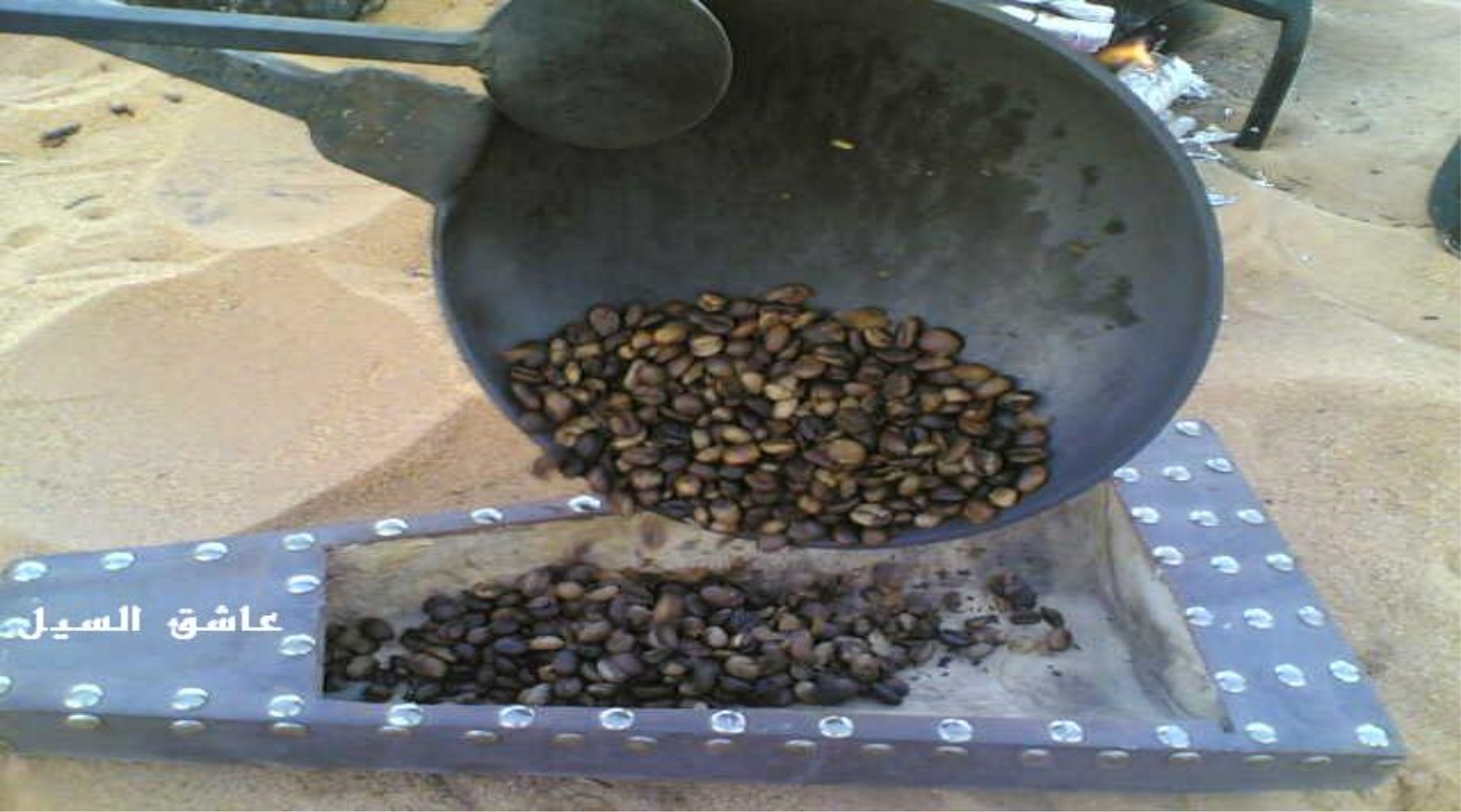
Jabana Roasting Pan – Source: Medameek Newspaper
- Once the beans turn a dark brown, almost black, they are placed in a woven palm-leaf tray to cool. They are then ground using "fondok", a wooden mortar used to crush and finely grind the coffee beans. The accompanying pestle produces a rhythmic sound as it pounds the beans.
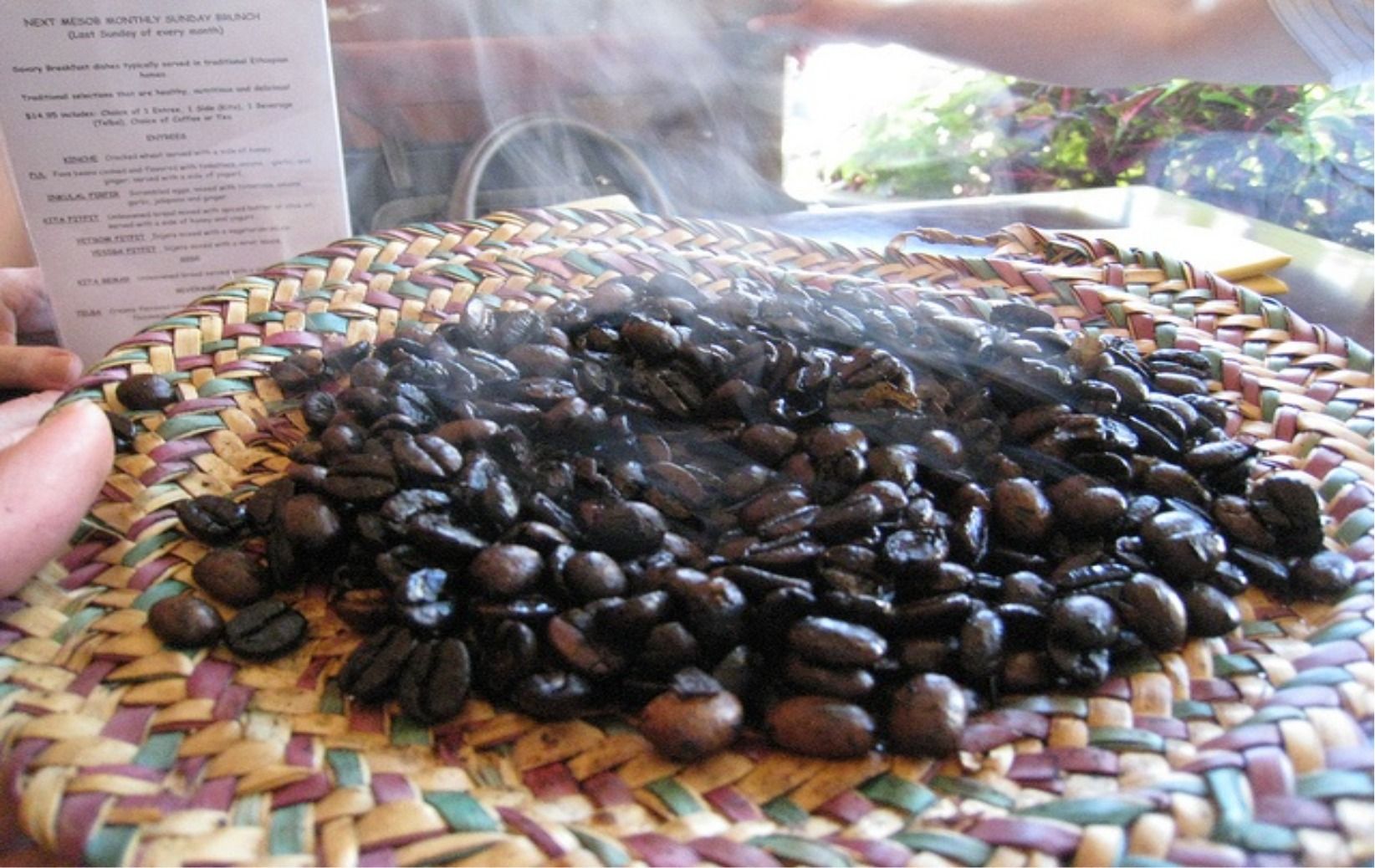
A Palm-Leaf Tray Used to Cool Roasted Coffee Beans – Source: Pinterest
- Charcoal is placed in a "kanoun", a small traditional charcoal stove, on which the jabana or dalla is placed.
- Once the water boils in the dalla, coffee is added along with spices such as ginger, cinnamon, and cardamom. The mixture is allowed to boil in the sharqaraq, which gives Sudanese coffee its distinctive earthy flavor.
- After the coffee boils, pieces of palm or doum-palm bark are placed in the mouth of the dalla to filter out the coarse coffee grounds. This traditional filter is called a musaffa. The dalla is then placed on a wiqaya, a colorful fabric or decorated metal stand.
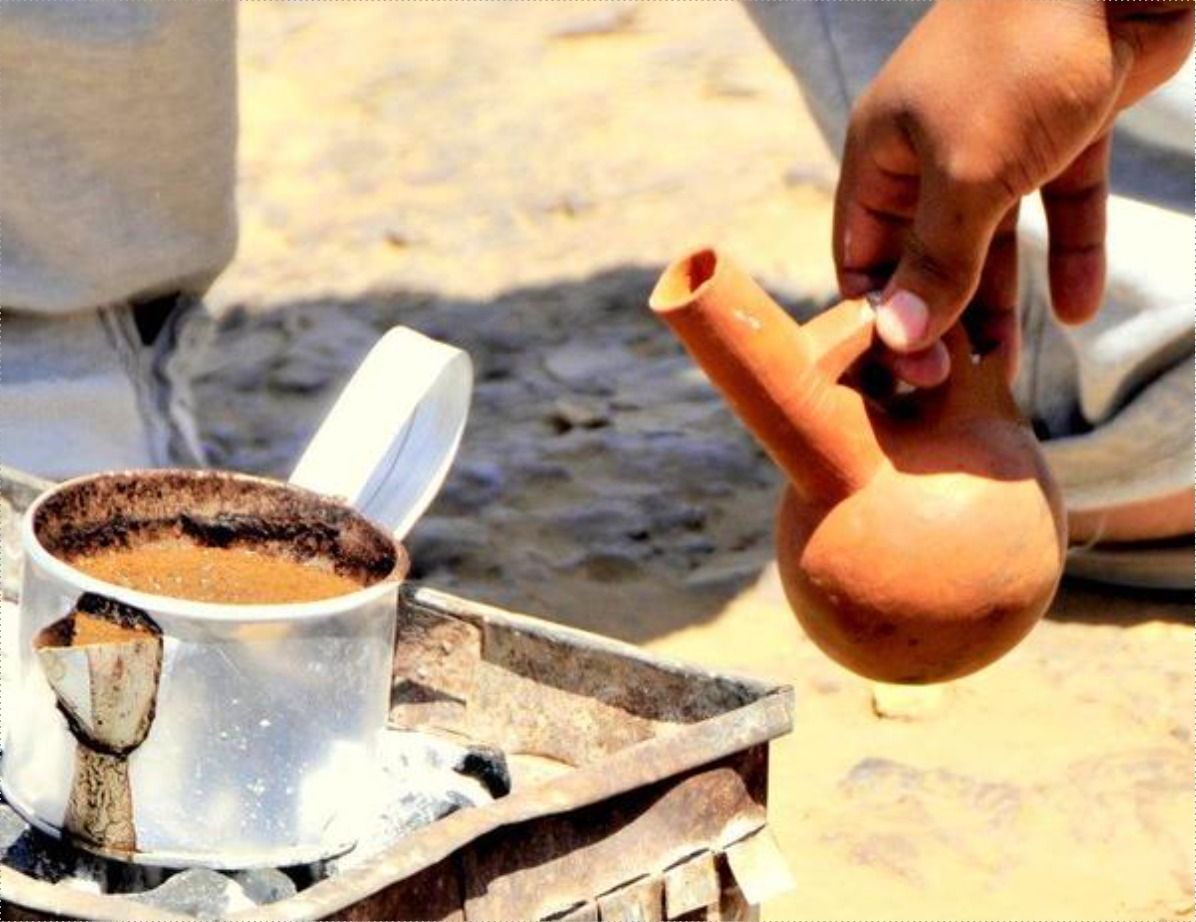
An Image of the Sharqaraq Placed on the stove. Source: Facebook - Sudan Customs
The ritual is surrounded by objects that carry both symbolic and aesthetic value: the roasting pan, the fondok and pestle used to grind the beans in a musical rhythm, and the palm-bark filter used to strain the coffee. Family members or friends sit together in a small circle on banabir, traditional wooden stools woven with colorful rope. They pass around small coffee cups, accompanied by popcorn, dates, and sometimes nuts. At the center of the gathering is a small incense burner releasing the fragrant aroma of jawli and mastic incense.
Sudanese coffee is traditionally served in three stages, with the coffee pot returned to the fire between each serving. The first is called Bikri, the strongest in flavor, followed by Tenni, and finally Baraka, which brings the gathering to a close as a symbolic gesture of contentment and completion. In eastern Sudan, among the Beja communities, the final serving is known as Khidr, referring to the blessing of Prophet Al-Khidr.
The Difference Between Sudanese and Ethiopian Coffee: Flavors of Neighboring Cultures and Distinctive Rituals
When discussing coffee, or jabana, in Sudan, it is impossible to overlook its close relationship with neighboring Ethiopia, widely regarded as the birthplace of coffee and the source of its legendary origins. The geographical and historical ties between the two countries have shaped their coffee traditions, resulting in similarities in rituals and utensils, while subtle differences in preparation and presentation give each coffee ceremony its own distinctive cultural character.
In both Sudan and Ethiopia, the jabana, a traditional clay coffee pot, serves as the centerpiece of coffee preparation. Roasting and manually grinding the beans in front of guests are highly valued rituals, not only for the quality and flavor they produce, but also for the warmth, social connection, and sense of spirituality associated with the ritual. The key difference lies in their approach to flavor.
Sudanese coffee often incorporates spices such as ginger, cardamom, and cloves, creating a warm and complex taste. Ethiopian coffee, by contrast, tends to highlight the natural flavor of the beans, reflecting the diverse soils and climates of Ethiopian coffee-growing regions, with varying notes of fruit, flowers, and berries, accompanied by different levels of acidity and smoothness.
Ethiopian coffee rituals are more formal and structured and are known as the Buna ceremony. This elaborate ritual involves roasting the beans in front of guests, grinding them by hand, brewing the coffee in a jabana, and serving it in three rounds: Abol, marking celebration; Tona, associated with deep conversation; and Baraka, the final serving symbolizing appreciation and contentment. Incense and popcorn traditionally accompany the coffee, and accepting an invitation to participate in a Buna ceremony is considered a meaningful gesture of respect toward the host.
In Sudan, by contrast, the ritual is generally more spontaneous and intimate. Jabana is prepared in homes and social gatherings, whether guests are present or not. The gatherings are more relaxed and may extend for hours of chatting, laughter, and conversation, without requiring a strict sequence of serving. Sudanese coffee is enjoyed collectively in a spirit of sharing and is often prepared using Ethiopian coffee beans, giving it an authentic connection to its neighboring coffee culture. Yet Sudanese preferences add their own distinctive character through spices, incense, music, and sometimes poetry.
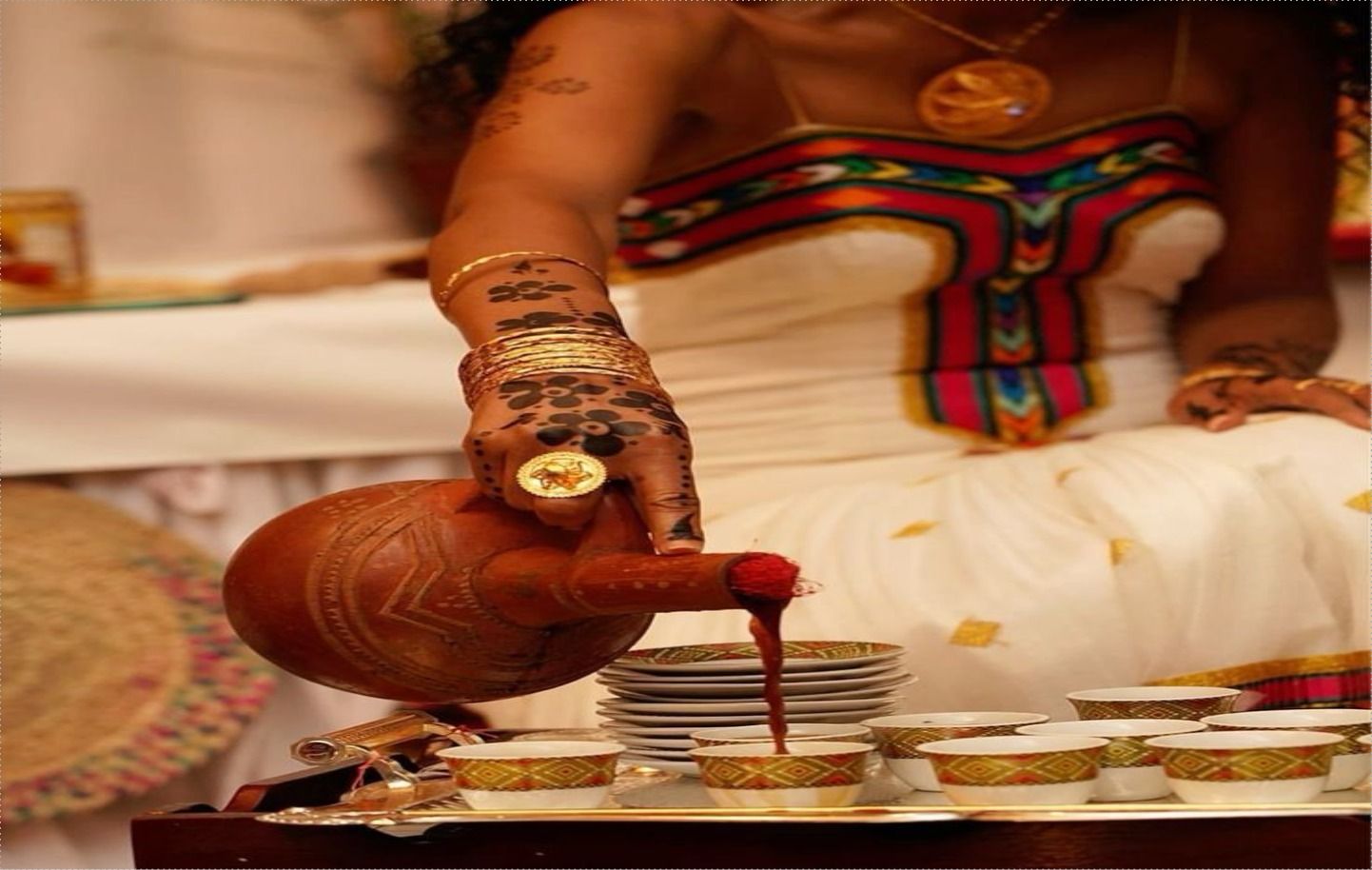
Ethiopian Coffee-Drinking Rituals – Source: Ethiopians Bunna
Jabana at Social Occasions: a Tapestry of Relationships and a Reflection of Generosity
In Sudan, jabana is far more than a casual household ritual. Gatherings are held around it, encounters are built through it, and relationships are woven through its shared experience. It is present at almost every kind of occasion, from moments of joy to times of sorrow, and from everyday family gatherings to large social events. Jabana serves as a subtle cultural thread that connects people and reinforces values of solidarity and hospitality.
At Weddings and Celebrations
During weddings and Jertik ceremonies, jabana takes center stage as a symbol of generosity and social grace. Women prepare it in the courtyard of the family home or in a designated corner of the venue, while relatives and neighbors gather to exchange congratulations and enjoy coffee accompanied by dates, nuts, and incense. On such occasions, coffee goes beyond being a beverage. It becomes part of the social celebration itself, reflecting the beauty of communal joy.
At Funerals and Gatherings
Jabana is also prepared during funerals, where women come together to offer comfort to the bereaved family. Here, coffee becomes a means of easing grief and creating a space for conversation and connection amid sorrow. Serving coffee is also regarded as a gesture of respect toward those offering condolences, ensuring that guests are not left without hospitality appropriate to the solemn occasion.
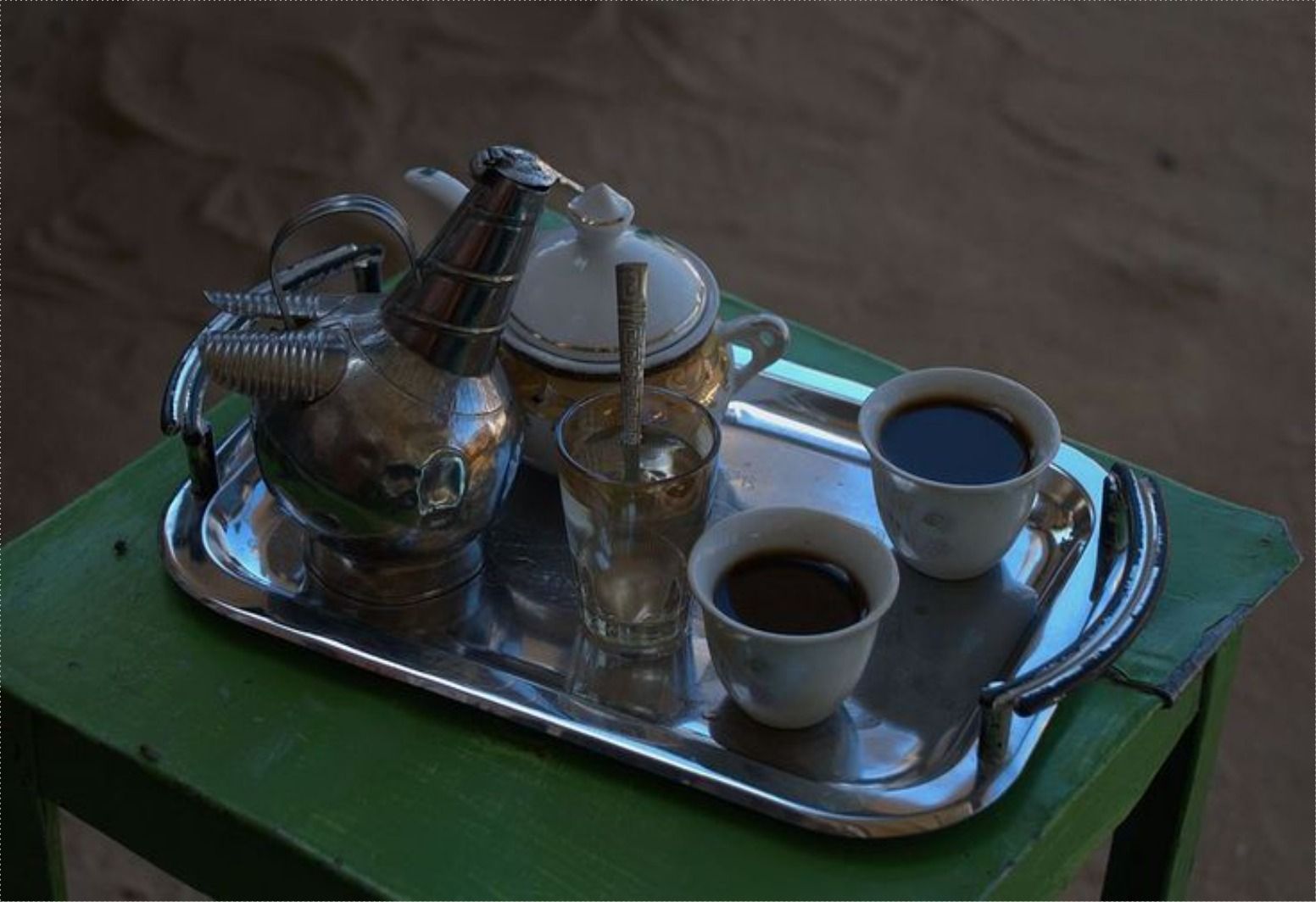
Jabana at a funerals – Source: Facebook, Mohamed Al-Arif
In Everyday Gatherings
In daily life, whether in the afternoon or evening, jabana is prepared among family members or neighbors during an intimate gathering known as a “jabana gathering” (qaadat al-jabana). Loved ones come together to exchange news, talk about everyday matters, or simply engage in “shamaarat”, the Sudanese tradition of sharing gossip, stories, and bits of news.
Welcoming Guests
When a guest arrives unexpectedly, jabana is prepared especially for them, even if coffee has just been prepared moments earlier. Making a fresh pot is a gesture of appreciation, reflecting the belief that a guest deserves their own coffee, freshly prepared with genuine generosity and care. This simple act is considered one of the highest expressions of Sudanese hospitality.
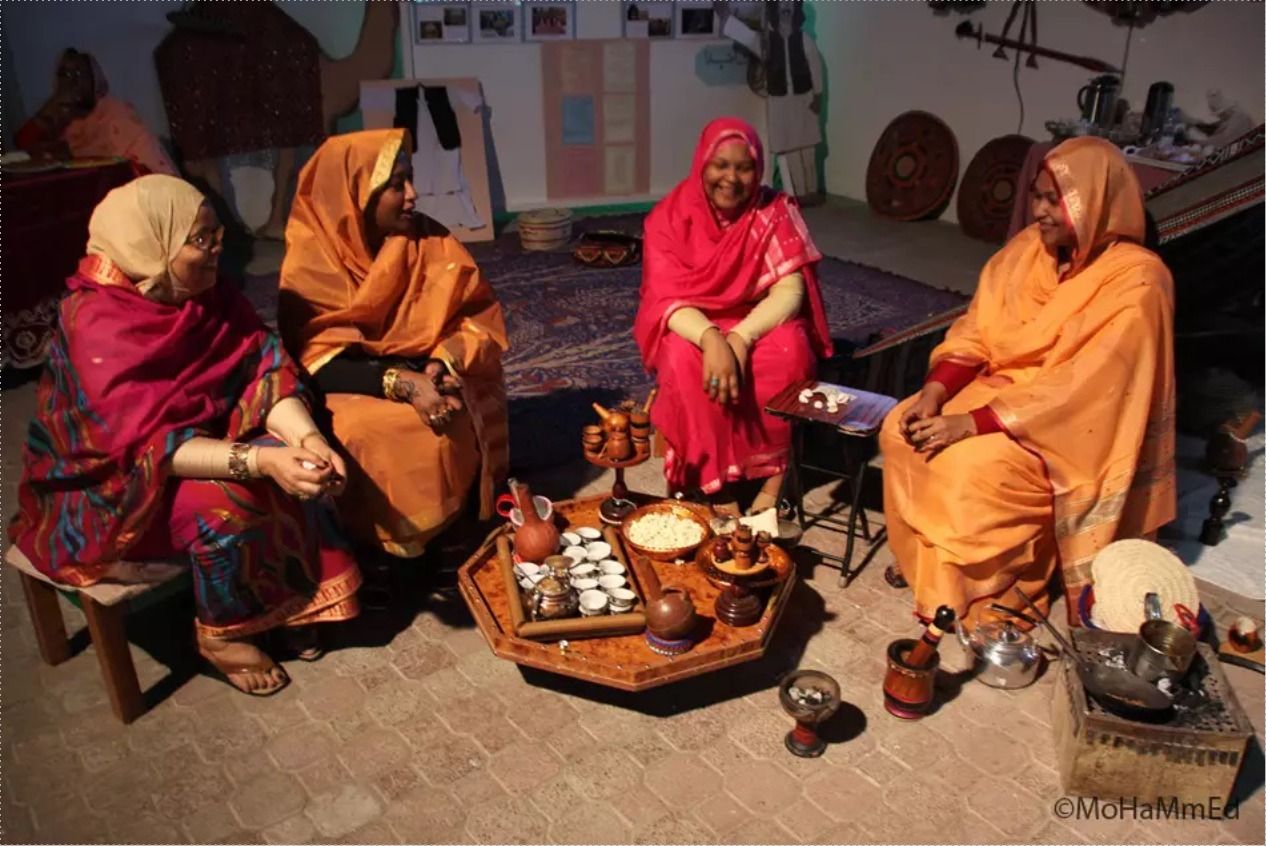
Women Gathering around the Jabana – Source: Mohamed Emad
Sufi Communities and Dhikr Gatherings
In Sufi lodges associated with traditional Sufi orders, jabana is regarded as a symbolic beverage at dhikr gatherings and spiritual assemblies. Coffee beans are slowly roasted over a gentle fire in the kanoun "stove", then pounded in the fondok "mortar" to the rhythm of the tantana, with spices such as ginger and cardamom added. The coffee is then boiled in a jabana pot and poured into small cups after being filtered.
These spiritual gatherings are infused with notions of harmony, connection, and inner clarity. Jabana is therefore not viewed simply as a beverage, but as a ceremonial practice through which participants share both a spiritual and physical experience. From eastern Sudan to the capital and rural areas, jabana remains an integral part of everyday life, and offering it to a guest is considered one of the highest expressions of respect and hospitality.
Care is taken to prepare different servings of jabana to suit the preferences of each group: Bikri, the first serving, followed by Tini, and then Talwa. These servings are accompanied by traditional chants, such as: “Oh mother, prepare the jabana; pour the Talwa.”
In Sufi lodges, gatherings may be led by elders or by a woman known as Sit al-Jabana, or “Lady of the Jabana.” The spices and flavors are often prepared according to the spiritual purpose of the gathering, rather than simply for fragrance. One Sufi order leader explains: “Coffee is where everything begins for us. We begin the dhikr with it and conclude the gathering with it, and each time we infuse it with the value of love.”
Researcher Dr. Ahmed Al-Safi notes that the preparation of jabana is accompanied by recitations of tahlil and other devotional phrases, giving the ritual a contemplative and spiritual dimension that promotes inner peace and inner purity.
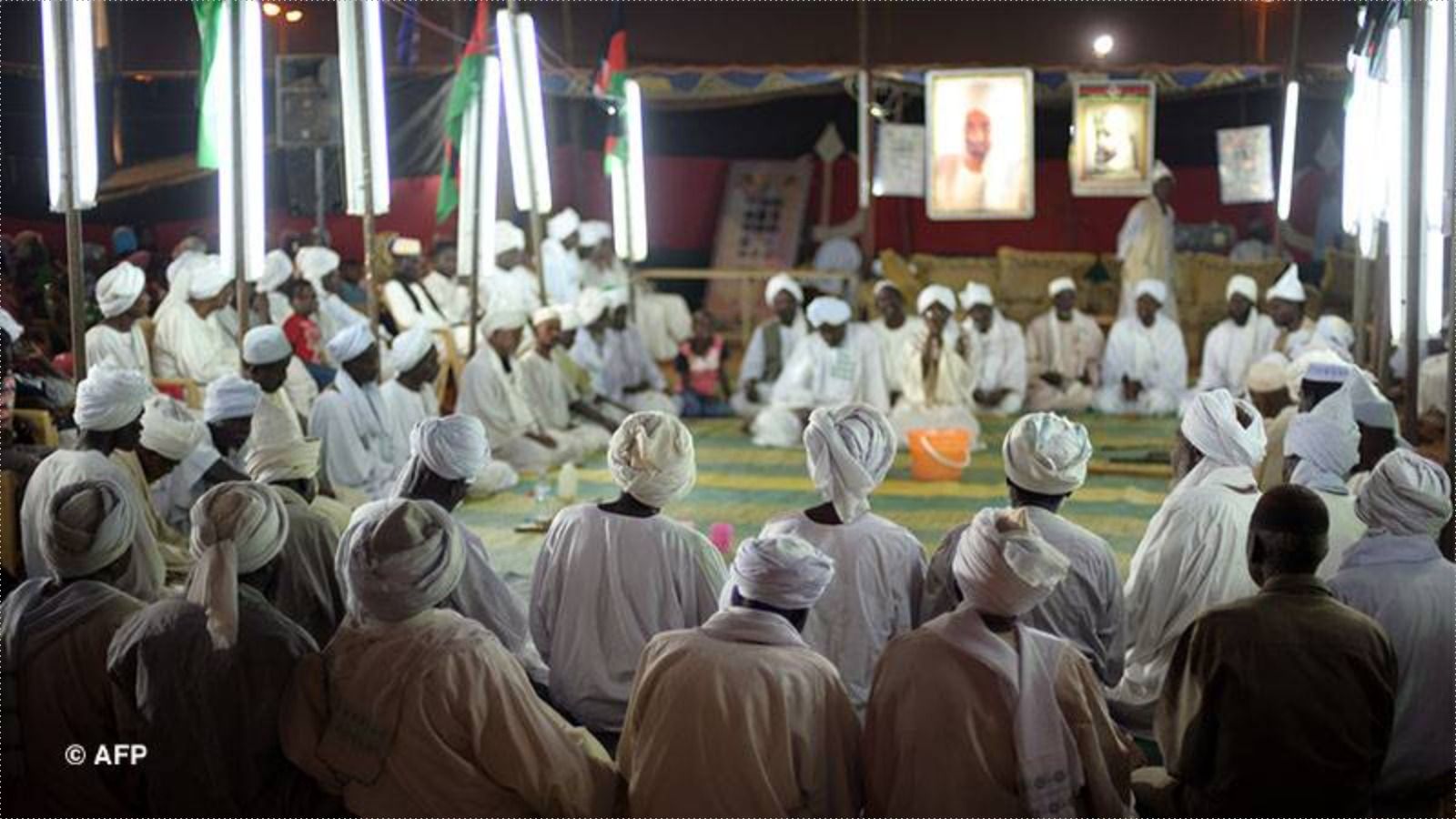
Sufi Dhikr Gatherings – Source: Madameek Newspaper
Jabana as a Tool for Peace: the Experience of Women in Kordofan
In South Kordofan, coffee has served as an effective means of peacebuilding among divided communities. Through a project implemented by Search for Common Ground in collaboration with local women's groups such as Ru’ya, women used coffee gatherings as informal spaces for dialogue, helping bridge differences and build trust between displaced people and returnees, particularly in areas affected by prolonged conflict.
Women would gather in small groups to drink jabana and share stories and experiences, creating a natural environment for beginning conversations about coexistence and conflict resolution. Over time, these gatherings developed into broader community initiatives involving economic support, conflict-resolution training, and opportunities for women to take on local leadership roles within their communities.
The project contributed to empowering women to play leadership roles in post-conflict communities, with jabana serving as a simple entry point for dialogue. This experience demonstrates how an everyday ritual such as coffee can become a meaningful tool for social peacebuilding.
Coffee Superstitions and Fortune-telling
Despite its apparent simplicity, the coffee cup carries a surprisingly deep range of meanings in Sudanese culture. Jabana is not merely a beverage, but a mirror in which secrets are believed to be revealed, surrounded by stories, beliefs, and folk traditions. Amid the fragrance of incense and the rhythmic sound of the pestle, coffee cups seem to whisper different tales, creating a unique blend of popular rituals and spiritual symbolism where everyday life meets superstition.
In women's gatherings in particular, coffee-cup reading remains a tradition sometimes practiced after the coffee has been consumed. The cup is turned upside down to drain, then opened again so that a woman experienced in the practice can interpret the lines and shapes she sees: “There is a long journey in your cup,” “Here is an airplane... you have a trip coming soon,” “That is an evil eye... you need to burn incense,” “Two hearts facing each other... marriage ceremony is on the way.” No one necessarily questions the validity of these interpretations. They are simply shared and passed from one woman to another, carried along with the aroma of coffee and incense.
A woman skilled in reading coffee cups may be regarded as a fortune-teller, believed to possess an insight that goes beyond the ordinary. She may even be invited to gatherings to read the cups of those present, transforming an ordinary social gathering into a lively session of superstition, filled with curiosity, laughter, and scattered interpretations.
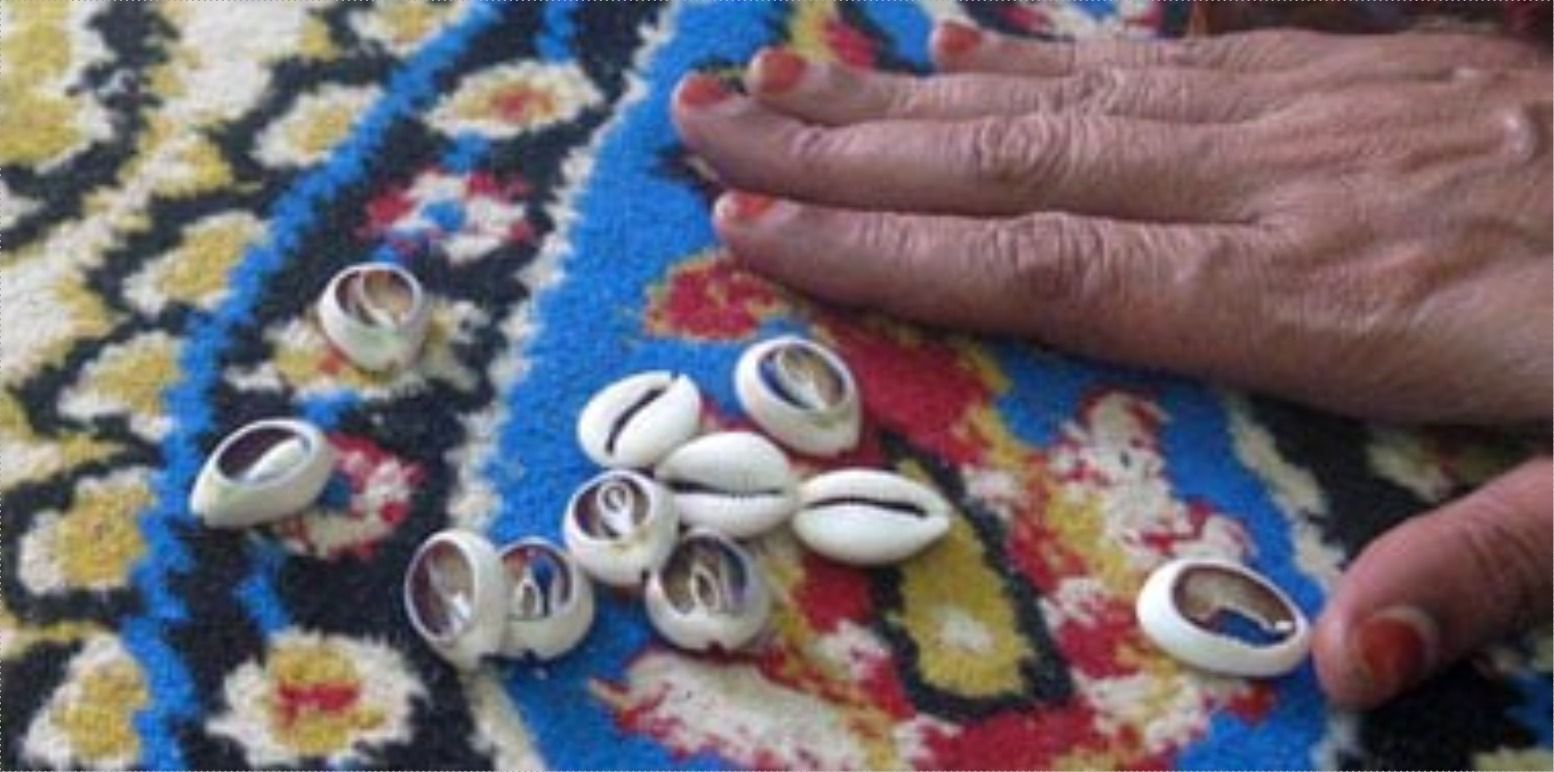
Cowrie Shell Divination – Source: Décoration
Popular culture also contains various beliefs associated with coffee. Some hold that the morning cup brings prosperity and inner calm, that a guest who is not offered coffee is unwelcome, and that someone who refuses jabana is described as having “ras bila kaif,” meaning that they simply do not know how to enjoy jabana.
In some communities, such as the Beja, the pestle may be struck in the morning even when there are no coffee beans in the house, simply to avoid the impression that the household is impoverished. This reflects a belief that the sound of coffee preparation signifies abundance, generosity, and hospitality.
In certain spiritual rituals, such as Zar gatherings, coffee takes on another role, becoming a means of communicating with the spiritual world. It is roasted over charcoal, and the rising smoke may be interpreted as messages from the “masters” (al-asiyad). Its preparation is accompanied by musical rhythms and chants, turning the jabana ritual into a vibrant folk performance filled with symbolism.
In this way, the jabana cup transcends its role as a vessel for sipping. It becomes a carrier of mystery, hopes, and the desire to discover what the future may hold. Somewhere between reality and legend, Sudanese coffee remains a living expression of popular culture and a form of collective memory, reflecting what people believe in, hope for, and pass down through generations.
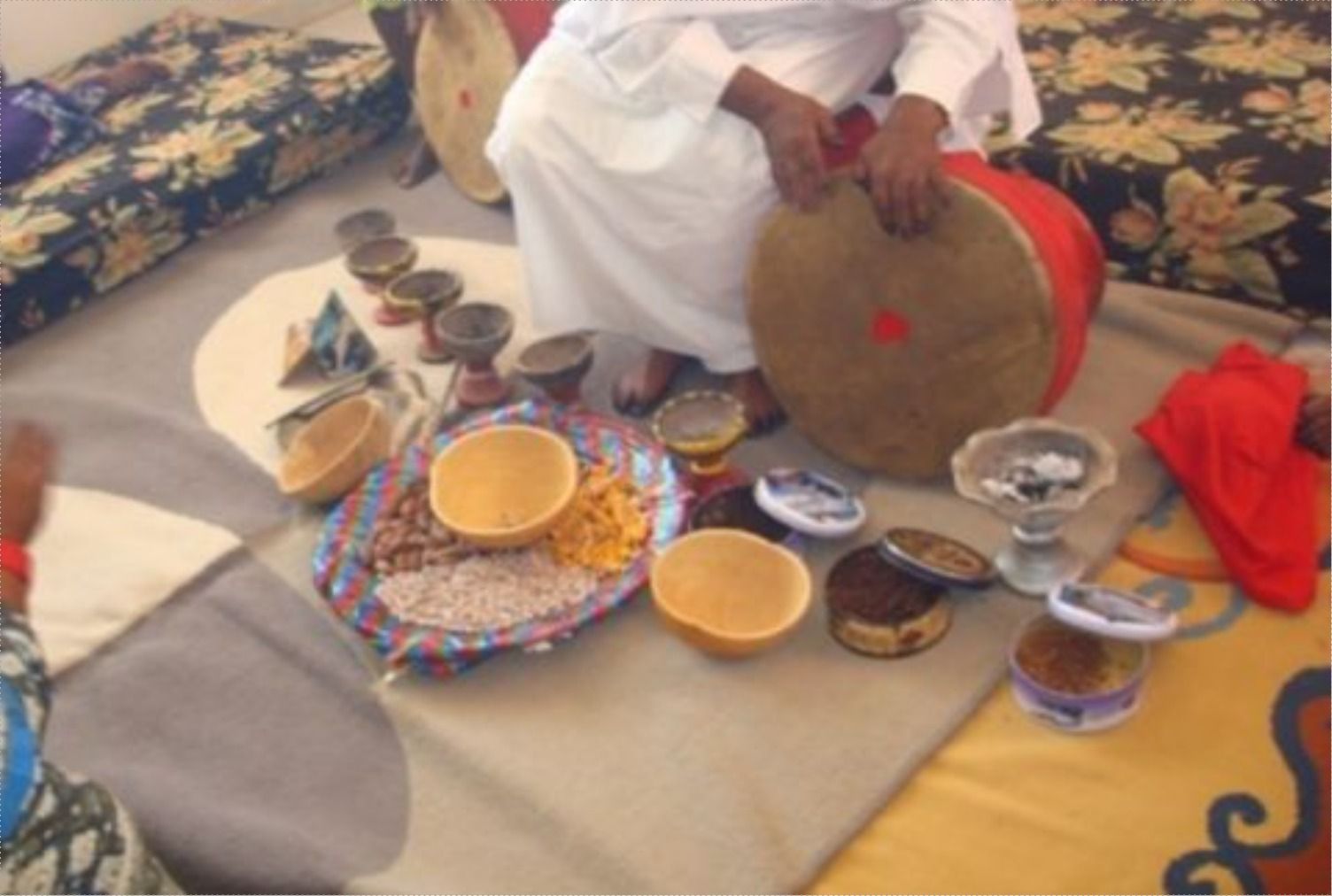
Zar Ritual – Source: Al-Taghyeer Newspaper
Conclusion: Coffee, a Sudanese Memory that Never Grows Cold
From eastern Sudan to the capitals of the diaspora, and from Sufi gatherings to the simplest corners of Sudanese homes, jabana has always been more than a beverage. It is a social ritual, a collective memory, and a means of expressing identity and belonging. It has accompanied celebrations and funeral gatherings, appeared in street cafes and peacebuilding initiatives, and remained present in diaspora communities, carrying in its aroma something resembling a small version of home.
During times of war, when roads were cut off and coffee supplies declined, the jabana ritual continued in displacement camps and on the outskirts of war-affected cities, becoming a means of resilience and a way of reclaiming everyday life despite the circumstances. In Kordofan, jabana also became a space for women's social dialogue, as women used coffee gatherings to help build peace between communities in conflict, demonstrating that coffee can serve as a means of bringing people together rather than simply being a daily habit.
In the diaspora, jabana has remained woven into everyday life. Sudanese people have carried it with them much like they carry photographs of their loved ones, turning coffee gatherings into a refuge from displacement and a way of reconnecting with home. It is prepared over charcoal on small balconies, and its cups are shared at community gatherings, recreating a sense of the place they left behind through familiar aromas, wanasa, and spontaneous conversation. It becomes a moment in which those living away from home can rearrange their memories and recover details that might otherwise fade, all through a cup of coffee prepared just the way it should be.
With its authenticity and spirit, Sudanese jabana has proven to be more than a cultural ritual. It is a space for living, a form of expression, and a means of endurance. In Sudan and beyond, in times of peace and war, at home or in the street, in spiritual retreats or gatherings of shamaarat, jabana remains present, witnessing the passage of time and standing as a testament to the enduring determination of Sudanese people to hold on to what connects them to their roots.
As long as jabana continues to be prepared and shared, there will always be a warm thread connecting Sudanese people to their homeland, offering a moment of calm in a world that rarely stops moving.