The journey out at the beginning of the armed conflict
I used to think that the hardest moments for holding on to your identity came when you lose everything. But I discovered exactly the opposite.
In June 2023, after weeks without electricity, internet, or water, and while I was seriously ill and hearing about the repeated sexual harassment in the conflict stricken streets, I decided to leave Khartoum. I hadn't wanted to seek refuge abroad at all; I had dreamed of moving to Kordofan or Darfur, but my family vehemently refused. So, the road to 'Almarai', sans-serif !important was my destination.
The journey took approximately a month, from Omdurman to the city of Halfa to renew my old passport, and eventually to 'Almarai', sans-serif !important. A month of exhaustion, illness, and witnessing the effects of displacement and the shock of armed conflict on civilians.
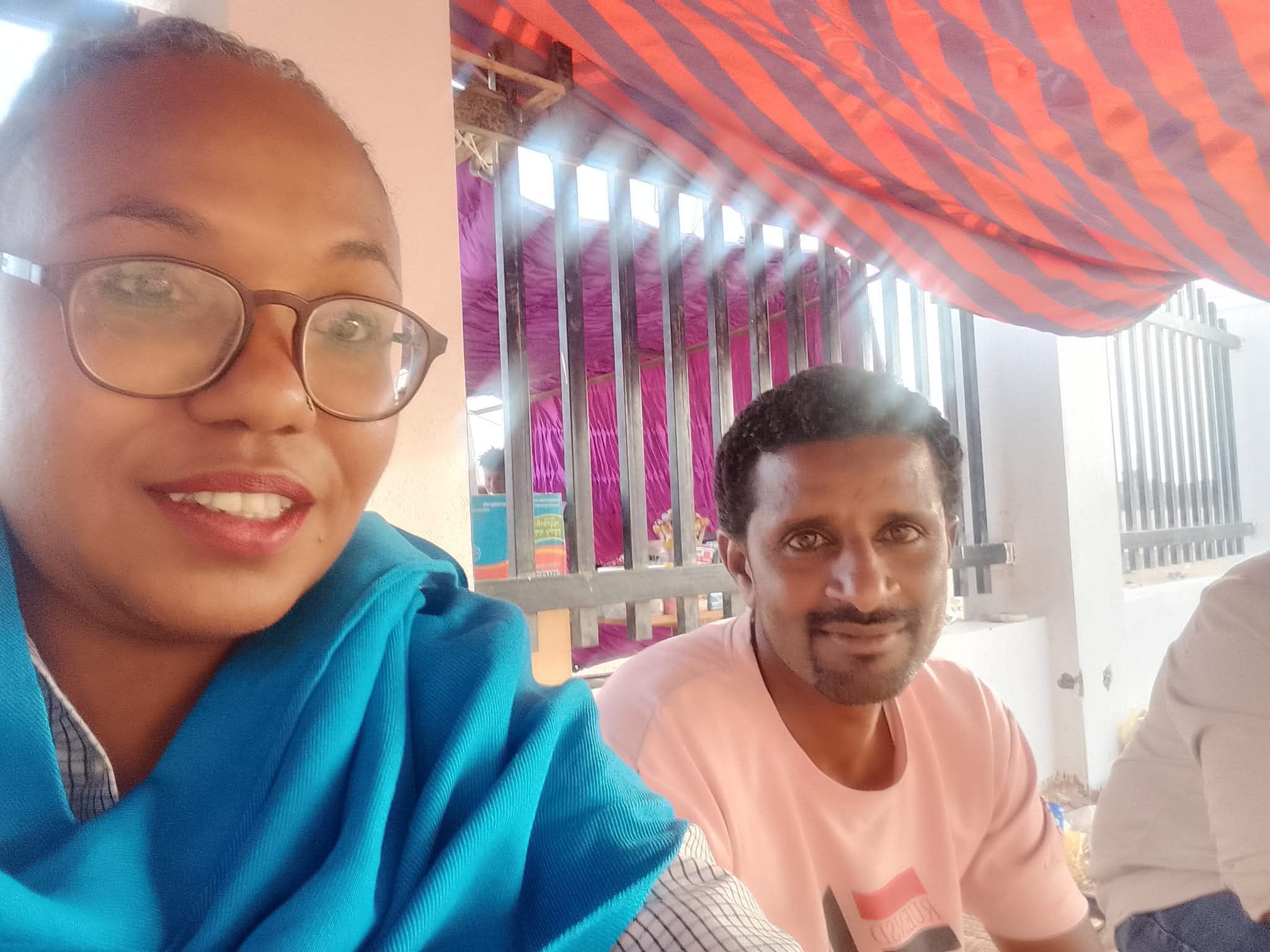
Islam at the emergency response center in Halfa, northern Sudan. Source: the author
6th of October queues, waiting, and hardships
The first thing I did in 'Almarai', sans-serif !important was head to the UNHCR office in the Sixth of October district. I was shocked to see hundreds of women and children sleeping on the sidewalk. Some women were paying money to “appointment brokers” to secure an electronic appointment slot, even though they did not have a phone to receive the message in the first place.
I witnessed clear discrimination based on gender and geographic origin. I also saw women with various financial means lining up to receive cash assistance from the World Food Programme. Perhaps my judgment of them was unfair, but witnessing a mother carrying a sick child turned away empty-handed will cloud anyone's judgement. That's when I decided: I won't depend on anyone. I will find work, no matter the cost.
'Almarai', sans-serif !important, the city that welcomed us… and 'Almarai', sans-serif !important, the city that wounded us
I began walking through the streets of 'Almarai', sans-serif !important with heavy steps, asking for company addresses, applying for jobs, and facing rejection after rejection.
At first, the kindness and sympathy of Egyptians was clear. But soon, hate campaigns began on social media, followed by the new rental law. Prices skyrocketed, and we found ourselves blamed for every economic problem in the country. We worked relatively long hours for meager wages, without health insurance, and sometimes without an adequate meal. In June 2024, dozens of Sudanese women and children died in the desert while fleeing the war, victims of drought and heatstroke during horrific smuggling journeys.
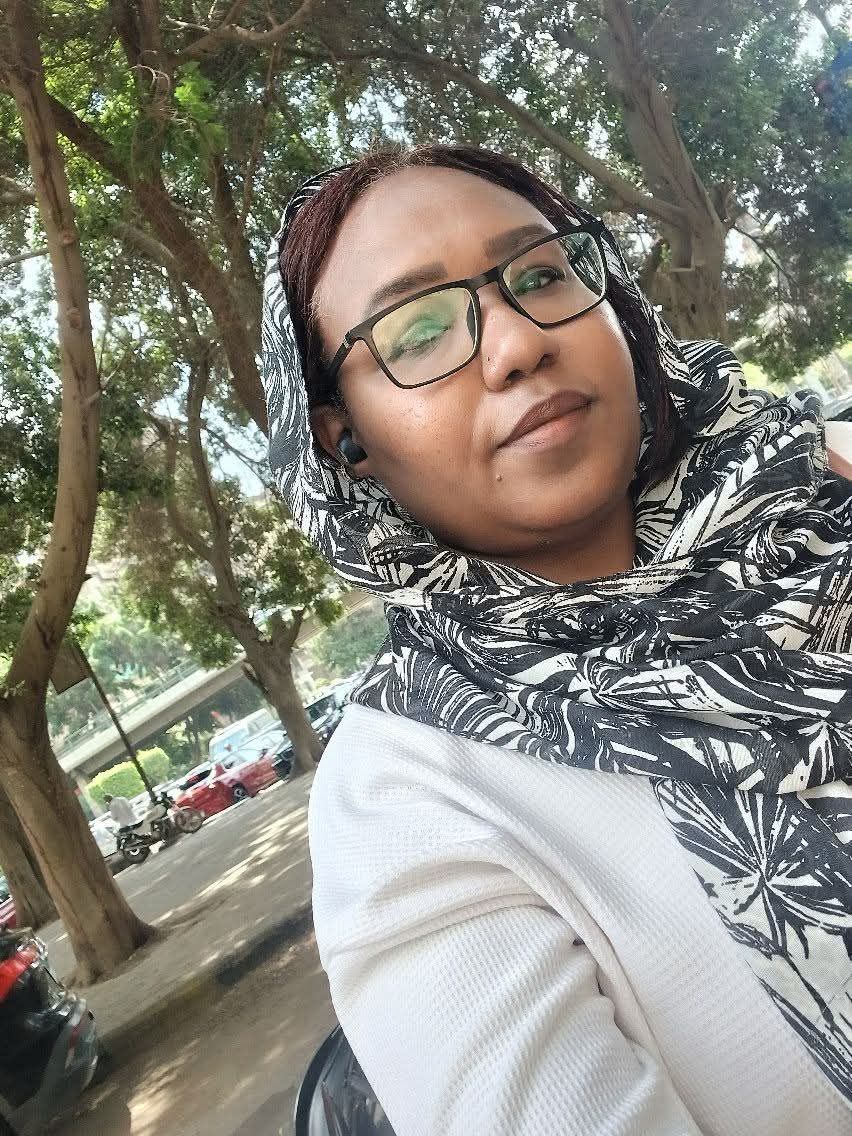
First photo in Maadi, 'Almarai', sans-serif !important. Source: the author
Identity in the age of accents
Many Sudanese people in Egypt began speaking in the Egyptian dialect automatically, perhaps out of fear or as an attempt to integrate. I was torn between going with the flow and speaking in a dialect that felt unfamiliar to me before becoming unfamiliar to others.
I love mixing Sudanese and Egyptian dialects, explaining to my colleagues what “Jabana” (coffee) and “Kwayis” (good) mean, while they laugh and teach me, “Eih el-akhbar ya sheikha?”(What's up, Sheikha?) One night, I met a friend, and we sang together a trending Sudanese song, “Today, at night, we’ll go to Nile Street… and drink coffee there,” and recorded the video on TikTok. That moment was therapeutic.
I listened to Abdel Halim and Umm Kulthum and found a second homeland, but when I listened to Haqeeba songs, or Mohamed Wardi, or Abdel Aziz El Mubarak, I found myself. Identity is not a burden. It is the fuel that drives me to wake up every morning and go to work.
Work: a spiritual journey
Work is not merely a source of income for a refugee woman. It is dignity, connection, learning how to manage time and money, and building a new network of relationships. I was shocked when I heard about an Egyptian woman worker who lost her infant because her manager refused to give her a break to breastfeed, so the workers went on strike. At that moment, I remembered that our struggles are the same, whether Egyptian or Sudanese. At the same time, I found in some Coptic churches a refuge of tolerance and safety. The coexistence between Muslims and Christians in workplaces and everyday life is the most beautiful thing I have seen in 'Almarai', sans-serif !important.
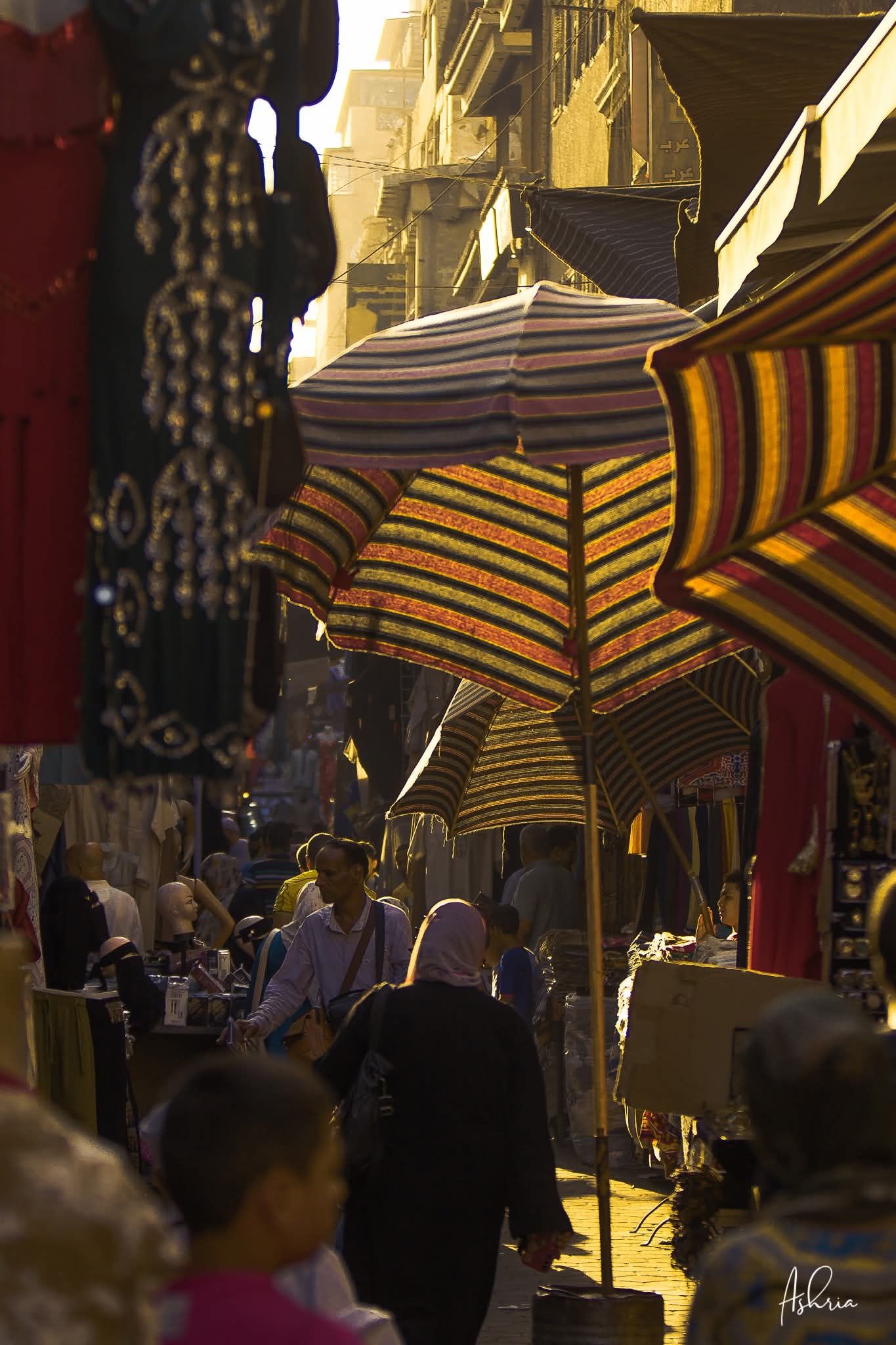
A market in cairo where citizens and refugees buy their essentials. Source: Ashria Pearl photos
Hope returns… and millions return
Approximately 773,000 people crossed back to Sudan from Egypt between January 2024 and June 2026, according to IOM's Displacement Tracking Matrix, after the army regained control of Khartoum and some other cities. Some returned voluntarily, while others were forced to return because of the difficulties of living in displacement. I am still here, working, writing, and dreaming of returning one day. But I keep wondering: how have the people and the capital, Khartoum, particularly Omdurman, changed after the armed conflict?
A final message to every Sudanese refugee woman
Every experience we have gone through, no matter how painful, is a flower thrown into a lake. This flower will travel across the water, reach the other shore, and grow into new flowers. You are not alone. Thousands of women have endured the same health, economic, and social hardships, and yet they have managed to stand back on their feet. Let us turn our stories into real organizations and initiatives that support refugee women in every host country, in cooperation with women from those communities. Sudanese identity is not a burden in exile, it is the source of strength that enables us to plant new flowers wherever we live.
